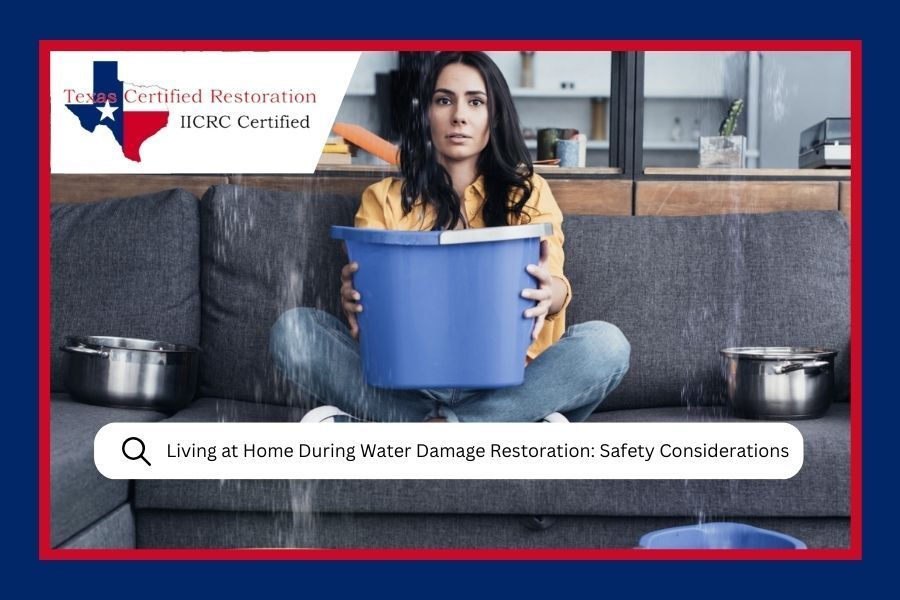
Living at Home During Water Damage Restoration: Safety Considerations
Updated on: December 9, 2025
Author: Tracy King
Jump to Section:
- → Understanding the Types of Water Damage
- → Health and Safety Risks You Need to Know About
- → When It's Safe to Stay at Home During Restoration
- → When You Should Definitely Find Temporary Housing
- → Practical Tips for Staying Safe If You Remain at Home
- → Safety Checklist: Questions to Ask Your Restoration Company
- → Understanding Your Insurance Coverage for Temporary Housing
- → Frequently Asked Questions
Water damage never happens at a convenient time. Whether it's a burst pipe at 2 AM or a slow leak you just discovered, one of the first questions homeowners ask is, "Do I really need to leave?" It's a fair question. Packing up your family, finding temporary housing, and disrupting your daily routine sounds like a major headache. But when it comes to water damage restoration in Austin, safety has to come first, even if staying home seems easier in the moment.
The truth is, whether you can safely stay at home during restoration depends on several factors: the extent of the damage, the category of water involved, and what specific work needs to be done. Let's walk through everything you need to know to make an informed decision that keeps your family safe while we work to restore your home.
Understanding the Types of Water Damage
Not all water damage is created equal, and this matters more than you might think when it comes to safety. The water damage restoration industry classifies water into three categories based on contamination level, and each one comes with different health risks.
Water Damage Categories & Risk Levels
Category 1: Clean Water
Source:
Supply lines, faucets, rainwater
Risk Level:
Low
Can You Stay Home?
Often yes, if damage is minor and localized
Category 2: Gray Water
Source:
Dishwashers, washing machines, toilet overflow (no feces)
Risk Level:
Moderate
Can You Stay Home?
Depends on extent; vulnerable individuals should leave
Category 3: Black Water
Source:
Sewage, flooding, standing water 48+ hours
Risk Level:
High
Can You Stay Home?
No, you must vacate immediately
Clean Water (Category 1) comes from sources like supply lines, faucets, or rainwater. This is the least dangerous type, though it can still cause problems if left untreated. In many cases, if the damage is minor and limited to one area, you might be able to stay in other parts of your home during cleanup.
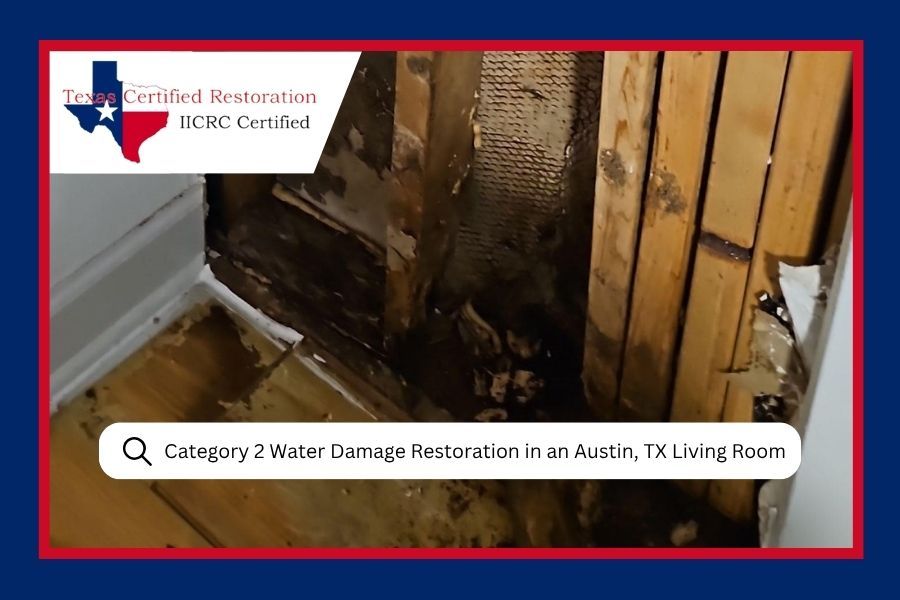
Gray Water (Category 2) contains some contamination and could make you sick if you're exposed to it. Think dishwasher overflow, washing machine leaks, or toilet water without feces. This water may contain bacteria, chemicals, or other contaminants that require professional handling.
Black Water (Category 3) is the most dangerous category and includes sewage, flooding from rivers or streams, or water that's been sitting for more than 48 hours. This water contains harmful bacteria, fungi, and other pathogens that pose serious health risks. If you're dealing with black water damage, you absolutely need to vacate your home during restoration work.
Understanding the three categories of water damage helps you assess the risks and make better decisions about your living situation during the restoration process.
Health and Safety Risks You Need to Know About
Even if the water itself seems "clean," there are other safety concerns that come into play during restoration work. Let's be real here: restoration isn't just wiping up some water and calling it a day. There's a lot going on, and some of it creates environments that aren't ideal for daily living, especially if you have kids, elderly family members, or anyone with respiratory issues. Understanding what not to do after water damage helps you avoid common mistakes that could compromise your safety or slow down the restoration process.
Air Quality Concerns
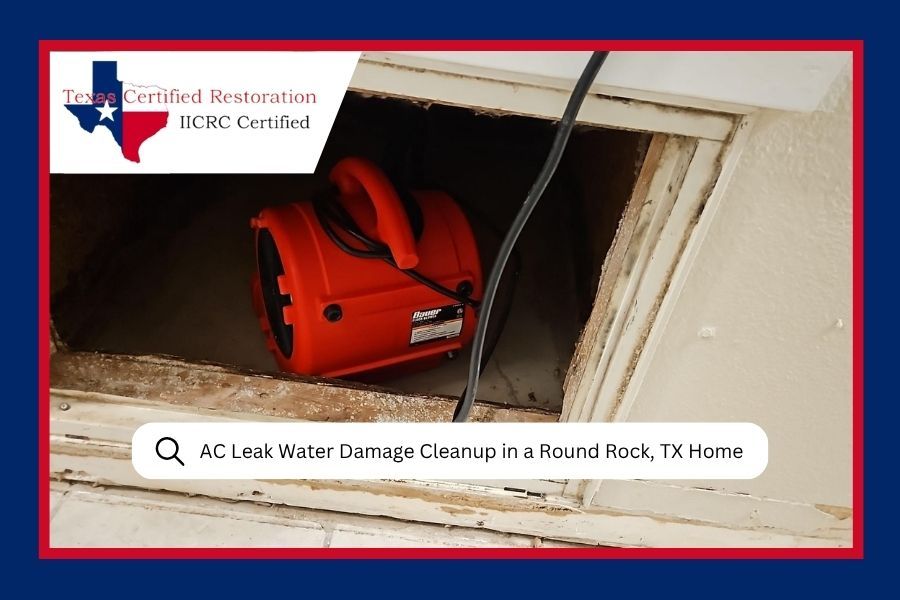
The biggest concern during water damage restoration is what you're breathing. Standing water creates a perfect breeding ground for mold, which can start growing within 24 to 48 hours. We use industrial dehumidifiers and air movers to dry out affected areas, and while these are essential for preventing mold growth, they do kick up dust, spores, and other particles into the air.
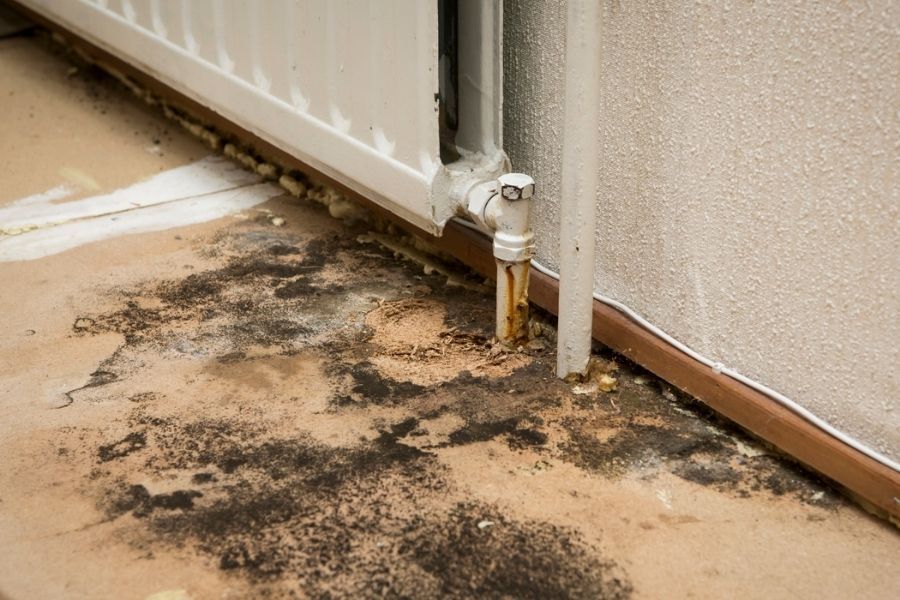
Mold can begin growing within 24-48 hours of water damage, creating serious air quality concerns that make living at home during restoration potentially hazardous.
The EPA notes that exposure to damp indoor environments can lead to respiratory issues, especially for people with asthma, allergies, or compromised immune systems. During the drying process, moisture gets released into the air before it's vented outside, temporarily increasing humidity throughout your home.
Structural Safety Issues
Water doesn't just damage surfaces, it can compromise the structural integrity of your home. Floors can become slippery or weakened, ceiling materials can sag or collapse, and electrical systems can become hazardous when exposed to water. We often need to remove sections of drywall, flooring, or ceiling to access hidden moisture and prevent mold growth.
Walking through an active restoration site means navigating around equipment, wet surfaces, and sometimes exposed subflooring or framing. It's not exactly the safe, comfortable environment you'd want for your family, especially if you have young children or pets who might not understand the hazards.
Noise and Disruption
Here's something people don't always consider: restoration equipment is loud. Really loud. We're talking industrial fans, dehumidifiers, and sometimes demolition work that can make your home sound like a construction zone. These machines often need to run 24/7 to dry everything properly, which means constant noise, even at night.
Need Help with Water Damage?
Our team is available 24/7 to assess your situation and provide honest guidance about whether staying home is safe during restoration.
Contact Us NowCall (512) 883-6760 anytime
When It's Safe to Stay at Home During Restoration
Now for the good news: in some situations, you absolutely can stay in your home during the restoration process. It just depends on the specific circumstances of your water damage and the work that needs to be done.
Minor, Localized Damage
If the water damage is limited to one area and doesn't involve Category 2 or 3 water, you might be able to stay in unaffected parts of your home. For example, if you had a small leak under the kitchen sink that we caught early, we can often isolate that area and let you use the rest of your house normally.
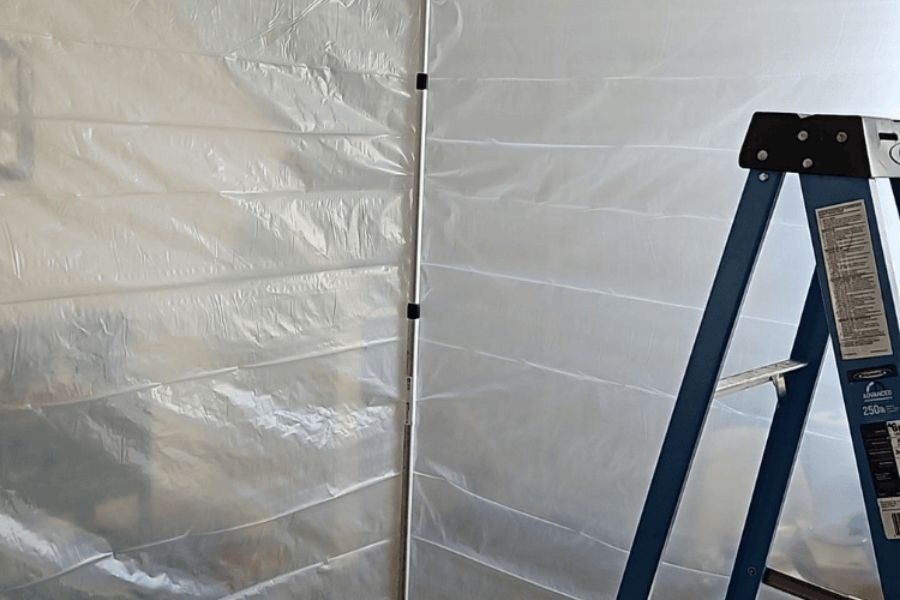
Containment barriers help isolate restoration work areas from living spaces, making it possible to stay home during minor, localized water damage projects.
We'll set up containment barriers to keep the work area separate from your living spaces. This helps contain dust, moisture, and noise. You might need to use a different bathroom or avoid one room for a few days, but you don't necessarily need to pack up and leave.
Quick Mitigation Projects
When we can complete the water damage mitigation work in a day or two, and the damage is minimal, many homeowners choose to tough it out at home. Maybe you can stay with a friend for one night while we do the noisiest work, then return home while the drying equipment runs.
Good Ventilation and No Mold
If your home has good ventilation, the affected area can be properly sealed off, and there's no mold growth, staying home becomes more feasible. We can strategically place equipment to minimize disruption to your daily routines while still doing thorough restoration work.
When You Should Definitely Find Temporary Housing
Let's be clear about situations where staying home isn't just inconvenient, it's genuinely unsafe. Your health and your family's wellbeing should always be the priority, even if leaving your home is a hassle.
Extensive Damage Throughout Multiple Rooms
When water damage affects most of your home, especially multiple floors, there's really nowhere safe and comfortable for you to be. The equipment needs to be everywhere, the noise is constant, and the air quality issues extend throughout the house. In these cases, finding temporary housing isn't optional, it's necessary.
Our team at Texas Certified Restoration has handled extensive water damage projects across Round Rock and North Austin, and we've seen firsthand how overwhelming it is for families trying to live in the middle of major restoration work. It's stressful, uncomfortable, and can actually slow down the restoration process because we have to work around your schedule and living needs.
| Situation | Stay Home? | Key Considerations |
|---|---|---|
| Minor leak in one room | Usually Yes | If containment is possible and no contamination |
| Multiple rooms affected | Maybe | Depends on severity and household members' health |
| Category 2 or 3 water | No | Contamination risk too high |
| Active mold remediation | No | Spore exposure during cleanup is hazardous |
| Structural damage present | No | Physical safety risk from weakened structures |
| Young children or vulnerable individuals | Caution | Higher sensitivity to air quality and noise |
Category 2 or 3 Water Contamination
This one's non-negotiable. If you're dealing with contaminated water, whether it's gray water from a sewage backup or black water from flooding, you need to leave. The health risks are too serious to take chances.
Contaminated water carries bacteria, viruses, and other pathogens that can make you seriously ill. Even after we remove the visible water, affected materials need to be properly cleaned, disinfected, or removed entirely. The process involves chemicals and techniques that aren't safe to be around, especially for extended periods.
Active Mold Remediation
If water damage has led to mold growth, the remediation process requires containment and sometimes the use of specialized cleaning agents. While we follow strict protocols to minimize exposure, you really don't want to be living in a home during active mold remediation.
Even "small" mold problems often turn out to be larger once we start investigating. What looks like a minor issue on your bathroom ceiling could extend into the walls or attic. Better to find temporary housing than risk exposure during the cleanup.
Compromised Structural Integrity
When water damage has weakened floors, ceilings, or structural supports, your home simply isn't safe to occupy until repairs are made. We've seen homes where water-damaged floors could collapse under weight, or ceilings ready to cave in. No amount of being careful makes up for genuine structural hazards.
Practical Tips for Staying Safe If You Remain at Home
If you and your restoration team have determined it's safe for you to stay home during the work, here are some practical steps to protect yourself and your family:
Create Clear Boundaries
Work with your restoration crew to establish which areas are off-limits. Don't just mentally note this, use physical barriers like plastic sheeting or caution tape. Make sure everyone in your family, especially kids, understands which rooms they can't enter.
Follow Your Restoration Team's Guidance
This might seem obvious, but it's worth saying: listen to what we tell you. If we say don't turn on certain lights, don't turn them on. If we say avoid walking in a specific area, avoid it. We're not being overly cautious, we're protecting you from real hazards.
Maintain Good Ventilation
Keep windows open when weather permits, and use fans to circulate fresh air through living areas. This helps dilute any particles or odors from the restoration work. If you have a whole-house air filtration system, run it continuously during the restoration process.
Protect Vulnerable Family Members
If anyone in your home has asthma, allergies, respiratory issues, or a compromised immune system, consider having them stay elsewhere even if the rest of the family remains home. The same goes for infants and elderly family members who may be more susceptible to air quality issues.
Keep Pets Secure
Pets can get stressed by the noise and activity of restoration work, and they might try to investigate equipment or work areas. Keep them in a safe, quiet part of the home, or consider boarding them temporarily if the work will be extensive.
Document Everything
Take photos and videos of the damage and the restoration process. This helps with insurance claims, but it also gives you a record if any disputes arise about what work was done or any new damage that occurs during restoration.
Safety Checklist: Questions to Ask Your Restoration Company
Before deciding whether to stay or go, have a clear conversation with your restoration team. Here's what you should ask:
- What category of water damage are we dealing with? This immediately tells you a lot about health risks and whether staying is even an option.
- How long will the restoration process take? A one-day project is very different from a two-week job when it comes to living conditions.
- What equipment will be running and for how long? Understanding the noise level and whether machines run 24/7 helps you plan accordingly.
- Will any demolition be required? Tearing out drywall, flooring, or other materials creates dust and debris that affects air quality.
- Are there any electrical hazards? Make sure you know which outlets, switches, or fixtures are unsafe to use.
- What areas of the home will be affected? Can you still use your kitchen, bathrooms, and bedrooms normally?
- Will there be any chemical treatments used? Some antimicrobial treatments or cleaning agents require ventilation time before the area is safe to occupy.
- What are the specific risks for children and pets? Get clear guidance on whether it's safe for your most vulnerable family members.
If you're working with Texas Certified Restoration, we'll walk through all of this with you before we start any work. Our goal is to restore your home safely and efficiently while keeping you informed every step of the way. If you need to discuss your specific situation, contact us and we'll give you honest guidance about whether staying home makes sense for your project.
Understanding Your Insurance Coverage for Temporary Housing
Here's something many homeowners don't realize until they're in the middle of water damage: most homeowners insurance policies include coverage for temporary housing if your home becomes uninhabitable due to covered damage. This is typically called "loss of use" or "additional living expenses" coverage.
If your insurance adjuster or restoration company recommends that you relocate during restoration, check with your insurance provider about coverage for:
- Hotel or rental home costs
- Increased food expenses (since you can't use your kitchen)
- Pet boarding if necessary
- Storage fees for furniture or belongings that need to be moved
Don't assume you can't afford to leave just because hotels are expensive. Your insurance may cover more than you think. And honestly, the peace of mind of staying somewhere safe and comfortable while professionals handle the restoration is often worth it, even if you have to pay some out-of-pocket costs.
We work with insurance companies regularly and can help you understand what's typically covered. Check out our guide on water damage insurance coverage for more details on what to expect from your claim.
Making the Right Decision for Your Family
At the end of the day, the decision about whether to stay home during water damage restoration is yours to make. But you shouldn't have to make it alone. A reputable restoration company will give you honest, straightforward information about the risks and realities of staying versus leaving.
We've worked with hundreds of Austin-area homeowners dealing with water damage, from minor leaks to major flooding. Some stay home with minimal issues. Others initially plan to stay but quickly realize it's not practical once work begins. There's no shame in changing your mind if you discover the situation is more disruptive or uncomfortable than you expected.
The most important thing is that you make an informed decision based on accurate information about your specific situation, not generic advice or assumptions. Every water damage scenario is different, and what works for one family might not work for another.
Get Expert Assessment of Your Water Damage
Not sure if you should stay or go? Our experienced team will evaluate your specific situation and provide honest recommendations based on your home's condition and your family's needs.
Available 24/7 for emergency response across Round Rock, Cedar Park, Georgetown, and all of Travis, Williamson, and Bell Counties
Frequently Asked Questions
How long does water damage restoration typically take?
Minor water damage can often be resolved in 3 to 5 days, while more extensive damage may take 1 to 2 weeks or longer. The timeline depends on the extent of damage, the category of water, how quickly we start mitigation, and whether any reconstruction is needed. Factors like humidity levels and the materials affected also influence drying time. Your restoration team should provide a specific timeline for your situation after the initial assessment.
Can I use my kitchen and bathroom during water damage restoration?
It depends on where the damage is located and which rooms need restoration work. If the water damage is in a bedroom or living area and your kitchen and bathrooms are unaffected, you can usually continue using them normally. However, if plumbing issues caused the damage or if bathrooms or kitchen areas are affected, you may need to avoid using certain fixtures. Always ask your restoration team which areas and utilities are safe to use.
What should I do with my belongings during restoration?
For items in unaffected areas, you can usually leave them in place. Contents in damaged areas will typically need to be moved so we can access floors, walls, and other structural elements. Some items may need professional cleaning if they were exposed to contaminated water. Your restoration company can provide content cleaning services or recommend what can safely remain in your home versus what should be moved to storage during the work.
Is the noise from restoration equipment really that disruptive?
Yes, industrial air movers and dehumidifiers are quite loud, similar to a vacuum cleaner running constantly. We use this equipment because it's effective at preventing mold growth and getting your home dry quickly, but it does create a lot of noise. Some homeowners can tolerate it, especially during the day, but sleeping through it at night can be challenging. If noise sensitivity is a concern for anyone in your family, that's definitely a factor to consider when deciding whether to stay home.
Trust the Experts at Texas Certified Restoration
Dealing with water damage is stressful enough without worrying about whether your home is safe to live in during restoration. Our team brings over 10 years of combined experience serving the Greater Austin area, and we're committed to giving you honest guidance about what's best for your specific situation.
Whether you're dealing with a minor leak or major flooding in Round Rock, Cedar Park, Georgetown, or anywhere in Travis, Williamson, or Bell County, we're here to help 24/7. We'll assess your damage, explain your options clearly, and work efficiently to get your home back to normal as quickly and safely as possible.
Have questions about your specific water damage situation? Give us a call at (512) 883-6760 anytime, day or night. We're always here when you need us.

Tracy King
About The Author:
Tracy King, of Texas Certified Restoration, brings over 10 years of combined industry experience to the disaster restoration field. Since the founding of the company, Tracy has been committed to providing professional and dependable restoration services to homeowners and businesses throughout the Greater Austin area. With a passion for helping clients navigate the challenges of water damage, fire damage, and other disaster-related situations, Tracy leads a certified team dedicated to delivering quality service that helps families and businesses resume normal life after unexpected emergencies.
Read More: