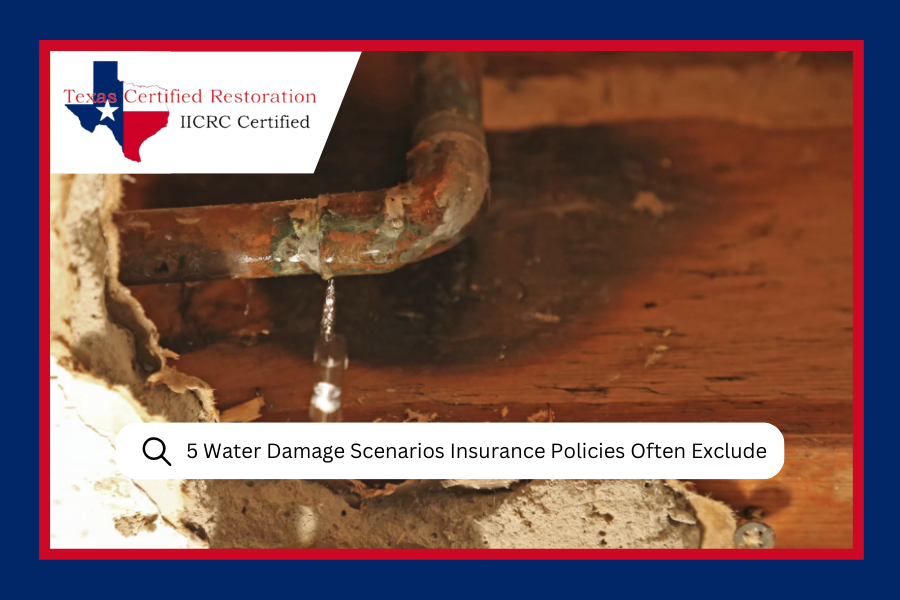
5 Water Damage Scenarios Insurance Policies Often Exclude
Updated on: December 23, 2025
Author: Tracy King
Quick Navigation
Look, nobody likes talking about insurance exclusions, but here's the thing: discovering your policy won't cover water damage after the fact is about as fun as finding a leak at 2 AM. And trust me, we've gotten calls from plenty of Austin homeowners who thought they were covered only to find out their situation fell into one of those frustrating policy gaps.
At Texas Certified Restoration, we work with insurance claims regularly, and we've seen the confusion and stress that comes when homeowners realize their policy doesn't quite cover what they expected. We specialize in water damage restoration throughout the Greater Austin area, so let's break down five common water damage scenarios that insurance policies often exclude, so you're not caught off guard when disaster strikes.
Understanding Water Damage Insurance Coverage Basics
Before we dive into the exclusions, here's the quick version of how most homeowners insurance works with water damage. Generally speaking, policies cover "sudden and accidental" water damage. That burst pipe in the middle of the night? Usually covered. The slow drip you ignored for six months? That's where things get complicated.
Insurance companies make a distinction between sudden disasters (good) and gradual damage or maintenance issues (not good, at least from a coverage standpoint). It's a fine line, and honestly, it trips up a lot of people.
Insurance Coverage: The Key Distinction
✓ Usually Covered
Sudden & Accidental
- Burst pipes
- Appliance malfunctions
- Accidental overflows
- Storm-damaged roofs
✗ Usually NOT Covered
Gradual & Neglected
- Slow leaks
- Flood damage
- Maintenance issues
- Old roof deterioration
1. Gradual Leaks and Maintenance-Related Water Damage
Here's the scenario: you've got a tiny leak under your sink. It's not dramatic, maybe just a few drops here and there. You think "I'll get to it this weekend" but life gets busy. Fast forward a few months, and now you've got warped cabinets, damaged flooring, and possibly even hidden mold growth behind the walls.
Why insurance won't cover it: Most policies have a "maintenance clause" that basically says homeowners are responsible for keeping their property in good shape. If damage happens because you didn't fix a known problem, that's on you. Insurance is designed to protect against sudden, unexpected events, not gradual deterioration.
What This Looks Like in Real Life:
- Slow drips from aging pipes
- Condensation buildup over time
- Seeping around deteriorating caulk or grout
- Small appliance leaks that gradually worsen
The takeaway: Regular maintenance and quick repairs aren't just good homeowner habits, they're insurance policy requirements. If you spot a leak, get it fixed promptly.
2. Flood Damage from Natural Disasters
This one surprises people more than it should. When heavy rains hit the Austin area (and if you've lived here through hurricane season, you know exactly what I'm talking about), water can enter your home from the ground level. Maybe it's coming through the foundation, seeping under doors, or rising from storm drains.
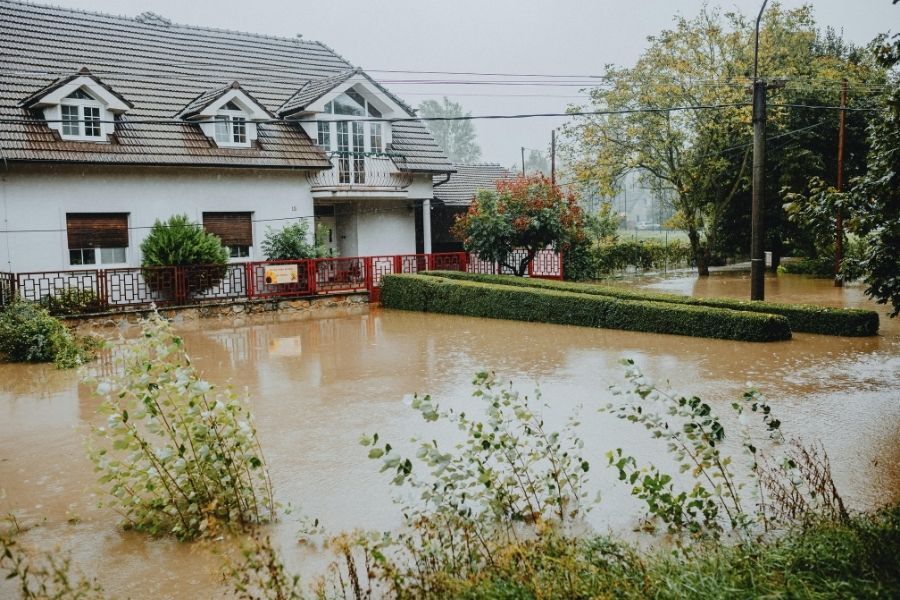
Heavy rains and flooding from hurricanes are the biggest weather challenges in the Greater Austin area, but standard homeowners insurance typically won't cover this type of water damage.
Why insurance won't cover it: Standard homeowners insurance specifically excludes flood damage. It doesn't matter if the water came from a hurricane, a flash flood, or just really aggressive rain, if it entered from outside and at ground level, it's classified as flooding.
According to FEMA's FloodSmart program, flood insurance is a separate policy that must be purchased through the National Flood Insurance Program or private insurers. And here's the kicker: there's typically a 30-day waiting period before a new flood insurance policy takes effect.
Common Flood Scenarios in Greater Austin:
- Hurricane-related heavy rains (our biggest weather challenge in the area)
- Flash flooding from severe thunderstorms
- Rising water from nearby creeks or drainage systems
- Overwhelmed storm drains backing up into properties
Our team has responded to plenty of flood damage restoration calls after severe weather hits Round Rock and surrounding areas. The cleanup process is intensive, but proper restoration can prevent long-term damage.
Need Help After Water Damage? Don't Wait.
Whether your insurance covers it or not, water damage gets worse the longer it sits. Our team responds 24/7 to water emergencies throughout the Greater Austin area.
Contact Us Now: (512) 883-67603. Sewer Backup and Drain Overflow
Okay, let's talk about the scenario nobody wants to think about: sewage coming up through your drains. It's disgusting, it's hazardous, and unfortunately, it's often not covered by standard homeowners insurance.
Why insurance won't cover it: Many policies specifically exclude damage from sewer backups, septic system failures, or water that comes up through drains. The reasoning is that these are often related to maintenance issues or municipal sewer system problems outside the homeowner's property.
Some insurance companies do offer sewer backup coverage as an optional rider or endorsement, usually for an additional premium. If you're in an area prone to these issues, it might be worth the extra cost.
What Causes Sewer Backups:
- Tree roots infiltrating sewer lines
- Aging municipal sewer systems (looking at you, older Austin neighborhoods)
- Heavy rainfall overwhelming drainage systems
- Clogs from improper items being flushed
The health risks from sewage exposure are no joke. This isn't regular water damage, it's Category 3 "black water" that contains harmful bacteria and pathogens. Professional cleanup is absolutely necessary.
4. Damage from Frozen or Burst Pipes (In Certain Circumstances)
Now, we don't get a lot of freezing weather in the Austin area, but when it does happen (hello, Winter Storm Uri), it can be catastrophic. However, whether your insurance covers frozen pipe damage depends heavily on the circumstances.
Why insurance might not cover it: If you left your home vacant during freezing weather without maintaining adequate heat or draining the pipes, many policies won't cover the resulting damage. Insurance companies view this as a preventable situation.
Coverage Typically Works Like This:
Usually Covered:
- You were home and took reasonable precautions
- The freeze was sudden and unexpected
- You maintained appropriate heat in the home
Often NOT Covered:
- You left the home vacant without winterizing
- You shut off heat to save money
- You didn't take basic freeze prevention steps
For more on protecting your home from pipe-related water damage, take preventive measures during cold snaps.
5. Water Damage from Old or Deteriorating Roofs
Your roof has a tough job, especially dealing with Texas weather. But when an aging roof starts letting water in during storms, insurance companies get picky about coverage.
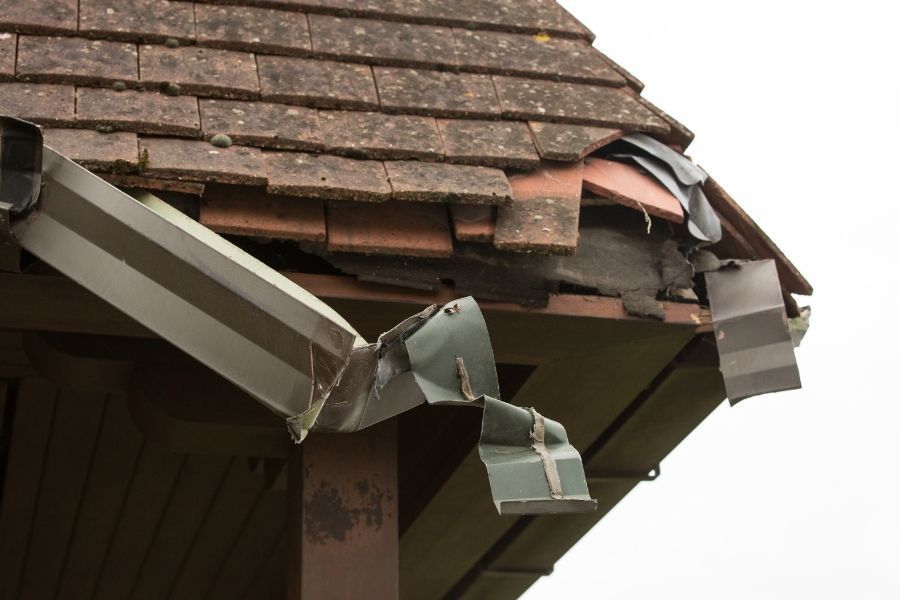
Insurance adjusters look for pre-existing roof deterioration. If damage resulted from lack of maintenance rather than storm damage, your claim may be denied.
Why insurance won't cover it: If your roof was already past its useful life or showing signs of wear, insurance might deny a claim by arguing the damage resulted from lack of maintenance rather than storm damage. They'll send out adjusters to determine if the leak was caused by the storm itself or by existing roof deterioration.
The Gray Areas:
This exclusion gets complicated because:
- Storm damage to an old roof might be partially covered
- Pre-existing conditions can affect claim amounts
- You might get depreciated value rather than replacement cost
Insurance adjusters look for things like missing shingles, worn flashing, or visible deterioration that existed before the storm. The better documented your roof's condition and maintenance history, the stronger your claim.
After severe storm damage, quick action is essential. According to the EPA's guidance on flood cleanup, water can cause secondary damage quickly, leading to more extensive (and expensive) repairs.
Quick Reference: Insurance Coverage Checklist
Here's a handy guide to help you understand what's typically covered and what's not:
| Coverage Status | Water Damage Scenarios |
|---|---|
| ✓ Usually Covered | • Sudden pipe bursts • Appliance malfunctions (without prior warning) • Roof leaks from covered storm damage • Accidental overflow from plumbing fixtures • Fire suppression water damage |
| ✗ Usually NOT Covered | • Gradual leaks and seepage • Flood damage from outside sources • Sewer backups (without additional coverage) • Neglected maintenance issues • Damage to older roofs without storm evidence |
| ? Optional Coverage | • Flood insurance (separate policy) • Sewer backup endorsement • Equipment breakdown coverage • Water backup coverage Ask your insurance agent about these options |
What To Do When Water Damage Happens
Whether insurance covers your situation or not, the immediate steps are the same:
- Stop the water source if possible and safe to do so
- Document everything with photos and videos
- Call your insurance company right away to file a claim
- Contact a professional restoration company for assessment
- Don't delay cleanup, even if coverage is uncertain
The longer water sits, the more damage it causes. We've seen too many situations where homeowners waited to start restoration because they were unsure about coverage, only to end up with more extensive damage and higher costs, regardless of insurance.
Looking for more information about what to do immediately after discovering water damage? Our action plan can help.
Working With Insurance Companies After Water Damage
Here at Texas Certified Restoration, we work with insurance claims regularly, and we've learned a thing or two about working with adjusters. While we can't guarantee your claim will be approved, we can help document the damage properly and provide detailed reports that support your claim.
We've worked with homeowners throughout Round Rock, Cedar Park, Georgetown, and the greater Austin area to navigate the insurance process. Sometimes claims are approved, sometimes they're not, but proper documentation and professional assessment always help.
The Bottom Line on Water Damage Insurance
Insurance policies are complicated, and water damage coverage has more exceptions than rules. The best approach is to:
- Know your policy and what it actually covers
- Maintain your home to prevent gradual damage
- Consider additional coverage for floods and sewer backups
- Act quickly when water damage occurs
- Document everything for potential claims
And remember, even if insurance doesn't cover your situation, professional restoration is still essential. Water damage doesn't get better with time, it only gets worse and more expensive to fix.
Frequently Asked Questions
24/7 Emergency Water Damage Restoration
Texas Certified Restoration provides emergency water damage restoration services throughout Round Rock, Cedar Park, Georgetown, and the Greater Austin area. Our team has over 10 years of combined experience handling insurance claims and restoring properties after water damage.
Call (512) 883-6760 anytime for immediate assistance.

Tracy King
About The Author:
Tracy King, of Texas Certified Restoration, brings over 10 years of combined industry experience to the disaster restoration field. Since the founding of the company, Tracy has been committed to providing professional and dependable restoration services to homeowners and businesses throughout the Greater Austin area. With a passion for helping clients navigate the challenges of water damage, fire damage, and other disaster-related situations, Tracy leads a certified team dedicated to delivering quality service that helps families and businesses resume normal life after unexpected emergencies.
Read More: