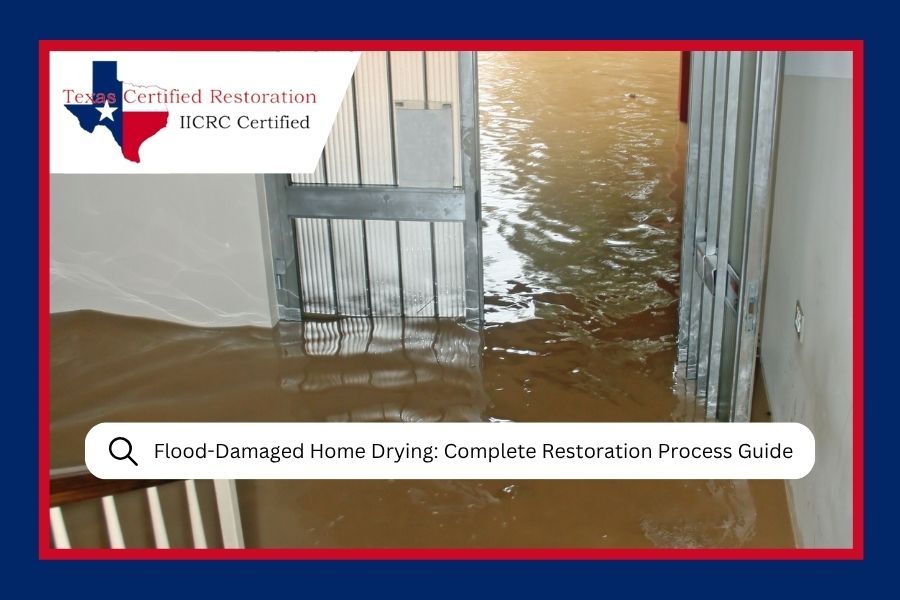
Flood-Damaged Home Drying: Complete Restoration Process Guide
Updated on: June 2, 2026
Author: Tracy King
If your home just took on flood water, the single most urgent question is probably: how do we get it dry again? Our team at Texas Certified Restoration handles flood damage restoration across Round Rock, Cedar Park, Pflugerville, Georgetown, and the broader Greater Austin area, and we want to give you a real, straightforward answer. No fluff, no scare tactics. Just the process, explained clearly.
Drying a flood-damaged home is not just pointing a fan at wet carpet and hoping for the best. It's a structured, science-backed process that follows IICRC S500 standards for water damage restoration. When it's done right, your home comes back. When it's rushed or skipped, you end up dealing with mold, warped floors, and structural damage for years. Let's walk through exactly how it works.
Why Proper Drying Makes or Breaks Your Recovery
Water doesn't just sit on the surface. After a flood, moisture moves. It soaks into drywall, travels through wood framing, saturates insulation, and gets trapped inside wall cavities where you can't see it. That hidden moisture is what causes long-term problems if it isn't pulled out completely.
Structural drying is about getting every material back to its pre-loss moisture content, not just making the floor feel dry to the touch. A floor that feels dry on the surface can still have moisture levels in the subfloor that will cause buckling, warping, and mold growth within weeks. At Texas Certified Restoration, our IICRC-certified technicians treat every flood job with that standard in mind. We're not done until the numbers say we're done.
Dealing with flood damage right now?
Our team responds 24/7 across Round Rock, Austin, Cedar Park, and surrounding communities.
Contact Our Team TodayStep 1: Assessment and Water Extraction
Before any drying equipment goes in, we assess the full scope of what we're dealing with: mapping affected materials, measuring moisture levels in walls, floors, and ceilings, and classifying the water source. Clean water from a burst pipe is handled differently than floodwater from your yard, which can carry contaminants from storm drains and soil.
Water Extraction Comes First
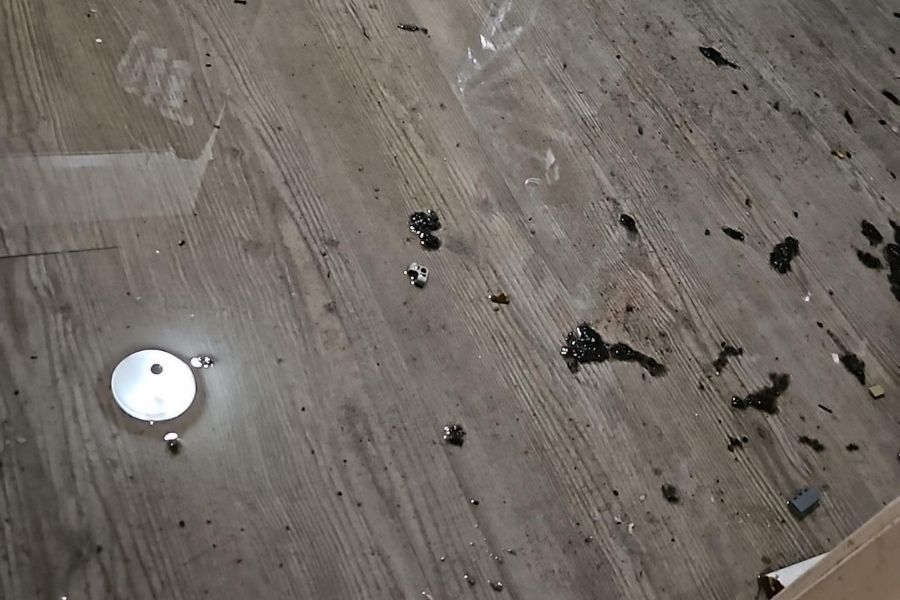
Standing water has to come out before structural drying can begin. We use truck-mounted and portable extraction units to pull out water quickly, including from carpet, padding, and hard-to-reach areas. The more water we remove mechanically, the faster the overall drying time.
In Central Texas, where slab foundations are standard, we pay close attention to the perimeter of slabs and the gap between concrete and wood framing. That's a common spot for water to pool without being obvious. Homeowners in Leander, Manor, and Hutto know what we mean, even a modest flood can push water under cabinetry and along the slab edge without any surface evidence.
Step 2: Structural Drying (The Real Work Begins)
Once standing water is out, structural drying equipment goes in. This is where most of the timeline happens, and where cutting corners causes the most long-term damage. Our team uses commercial-grade air movers and dehumidifiers sized for the affected space, not residential hardware store fans.
Air Movers and Dehumidifiers: How They Work Together
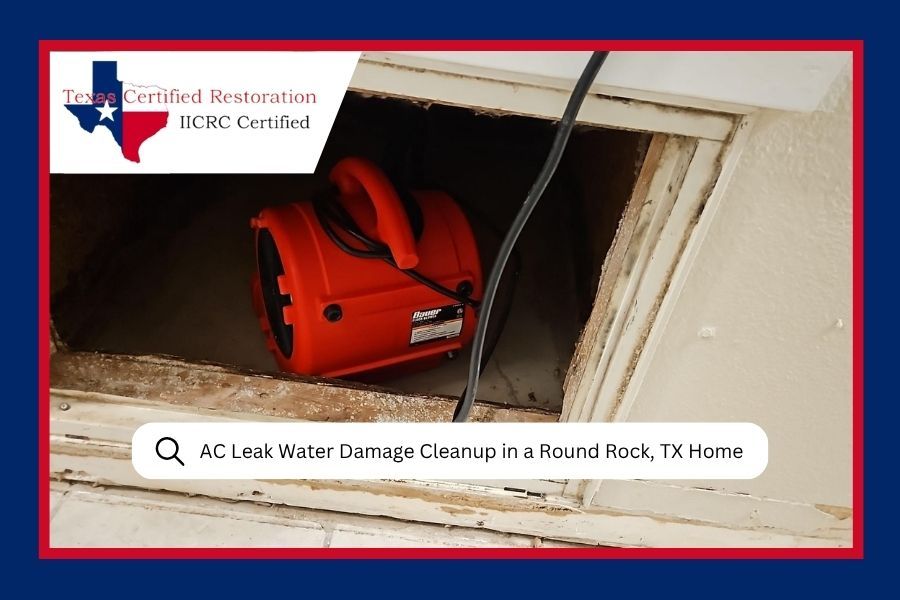
Air movers create high-velocity airflow across wet surfaces, which speeds evaporation. That moisture gets pushed into the air. Dehumidifiers then pull that moisture out of the air before it has a chance to settle back into building materials. These two work as a system, and running one without the other slows drying significantly. For areas behind walls or under cabinets, we sometimes use injection systems to push dry air directly into enclosed cavities.
What Happens with Walls and Insulation?
Drywall absorbs water quickly. Depending on saturation level and how long it sat wet, it may be salvageable through drying or may need to come out. Fiberglass batt insulation almost never dries properly and typically needs removal. It holds moisture tightly and becomes a mold habitat if left in place. Our technicians make these calls based on moisture readings. We're upfront about what can be saved and what needs to go. For a deeper look at the gear behind this process, check out this breakdown of professional equipment used in flood restoration.
How Long Does Drying Actually Take?
Most residential flood drying jobs take between 3 and 5 days under good conditions. That said, the honest answer is: it depends. Class 3 damage with saturated wall cavities can take 7 days or longer. Concrete, hardwood, and materials with low porosity can take even more time.
Factors that affect your timeline include how long the water sat before extraction, how much of the structure was affected, the type of materials involved, and ambient humidity conditions. Central Texas summers work against us here. High outdoor humidity means the air inside a flood-damaged home doesn't naturally want to dry quickly, which is exactly why commercial-grade dehumidification matters in the Austin and Round Rock area. For more detail on timelines, see our post on water damage restoration timeframes.
Moisture Monitoring: How We Know When It's Truly Dry
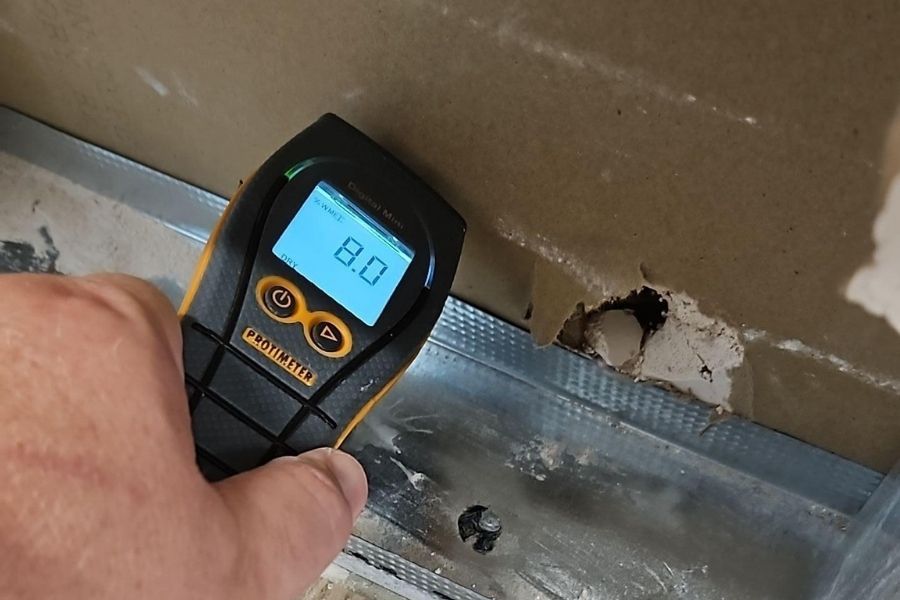
Professional restorers don't eyeball the job. We measure. Every day during an active drying project, our technicians return to take moisture readings from the affected materials and compare them to the dry standard for that material type. Drying is complete when those readings reach target levels across the board.
The Tools We Use
Moisture meters measure the moisture content of specific materials. Thermal hygrometers track the temperature and relative humidity of the air. Together, these give us a complete picture of what's happening inside the structure. We document every reading throughout the drying process, which matters for your insurance claim and gives you a clear record that the job was completed properly. The CDC's guidance on returning home after a flood emphasizes verifying thorough drying before reoccupying flood-affected spaces, and our documentation process supports exactly that.
What Needs to Come Out (and What Can Stay)
Not everything gets ripped out. Carpet padding almost always needs to go since it traps moisture. Saturated drywall that sat wet more than 24-48 hours is at high mold risk and typically gets flood-cut. Fiberglass insulation won't dry reliably and should come out. Particleboard subfloor may need replacement depending on saturation time.
On the save side: solid hardwood can sometimes be dried with specialized mats, ceramic tile is generally salvageable, and solid wood cabinetry can often stay if addressed quickly. Our goal is always to preserve what genuinely can be preserved. See the full flood restoration process overview for a broader picture.
The Mold Clock: Why Speed Matters So Much
Mold can begin to develop in wet building materials within 24 to 48 hours. In Central Texas summers, with high humidity and heat, that window can be even shorter. Speed of response is one of the single biggest factors in overall outcome. Homeowners in Georgetown, Pflugerville, West Lake Hills, and Bee Cave who get professional drying started quickly consistently see better results and lower overall costs than those who wait.
If mold does develop, that becomes a separate remediation scope from drying. Delaying or skipping drying is how flood jobs turn into much larger projects. Our water damage restoration services include early-stage mitigation designed specifically to stop that clock before mold gets a foothold. For more on your options in the Round Rock and Greater Austin area, our team is here to walk you through what you're dealing with.
Time is working against you after a flood.
Texas Certified Restoration is available 24/7 to begin drying immediately across Round Rock, Austin, Cedar Park, and surrounding Williamson and Travis County communities.
Get Help NowThe Drying Process: Quick Reference Summary
| Phase | What Happens | Timeframe |
|---|---|---|
| Assessment | Moisture mapping, water classification, scope defined | Day 1 |
| Extraction | Standing water removed; carpet and padding out | Day 1 |
| Demo | Unsalvageable materials removed; flood cuts made | Days 1-2 |
| Active Drying | Air movers and dehumidifiers running continuously | Days 1-5+ |
| Monitoring | Daily moisture readings; equipment adjusted as needed | Daily |
| Clearance | Final readings confirm target moisture levels reached | Day 3-7+ |
Frequently Asked Questions
Can I run my own fans and dehumidifiers instead of hiring a restoration company?
Consumer-grade equipment can't move enough air or remove enough moisture to dry a flood-damaged structure properly. Commercial restoration equipment is far more powerful, and drying must be monitored with moisture meters to confirm completion. DIY drying often leaves hidden moisture that triggers mold weeks later.
Do I need to leave my home during the drying process?
Not always. In many cases, homeowners can stay in unaffected parts of the home while equipment runs in damaged areas. Your restoration team will advise based on the scope of work and any safety factors present.
How do I know the drying is actually complete and not just "good enough"?
A certified restoration company will document daily moisture readings and provide a final clearance showing that materials reached their target moisture content. Ask for that documentation. It protects you and supports your insurance claim. If a contractor can't show you numbers, that's a red flag.
What should I do in the first hour after flooding to help the drying process?
Stop the water source, move valuables out of affected areas, and call a certified restoration company right away. Don't run ceiling fans in rooms with wet ceilings. Every hour counts when it comes to preventing mold growth.

Tracy King
About The Author:
Tracy King, of Texas Certified Restoration, brings over 10 years of combined industry experience to the disaster restoration field. Since the founding of the company, Tracy has been committed to providing professional and dependable restoration services to homeowners and businesses throughout the Greater Austin area. With a passion for helping clients navigate the challenges of water damage, fire damage, and other disaster-related situations, Tracy leads a certified team dedicated to delivering quality service that helps families and businesses resume normal life after unexpected emergencies.
Read More: