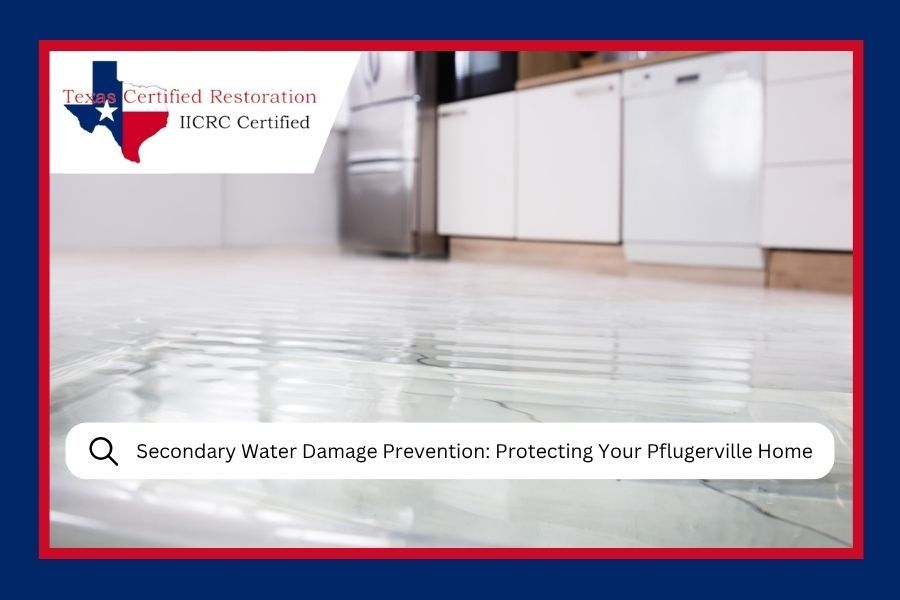
Secondary Water Damage Prevention: Protecting Your Pflugerville Home
Updated on: July 7, 2026
Author: Tracy King
You stopped the water. The pipe is fixed, the leak is patched, the wet towels are in the wash. Crisis over, right? Not quite. Water damage restoration professionals will tell you the original leak is often just the beginning. Secondary water damage (the mold growth and structural deterioration that follows untreated moisture) can quietly take hold within 24 to 72 hours. For Pflugerville homeowners, Central Texas humidity makes that window even tighter.
At Texas Certified Restoration, our IICRC-certified team has seen this play out across Pflugerville, Round Rock, Georgetown, and the wider Williamson County area. People handle the obvious water just fine. It's what gets left behind inside walls and under flooring that turns a manageable cleanup into a full restoration project.
Dealt with a recent water event and not sure if everything dried out?
Contact Our Team TodayWhat Is Secondary Water Damage?
Secondary water damage is any damage caused by moisture that wasn't fully removed after a water event. The original leak or flood is the primary cause. Everything that follows, including mold colonies, warped flooring, rotting subfloor, swollen drywall, and failing insulation, is secondary damage.
It's sneaky. Moisture hiding inside a wall cavity or beneath a slab-on-grade foundation (the standard build across Pflugerville and the Austin metro) doesn't announce itself. It sits there, feeding mold spores and degrading materials until you notice a smell, a stain, or a soft spot underfoot. Here's what most homeowners miss: water travels. A burst pipe in the kitchen can wick through subfloor and reappear in a hallway wall two rooms away. Secondary damage is almost entirely preventable when the initial drying is done completely and verified with the right equipment. The floor feeling dry is just step one.
How Trapped Moisture Leads to Mold in Central Texas Homes
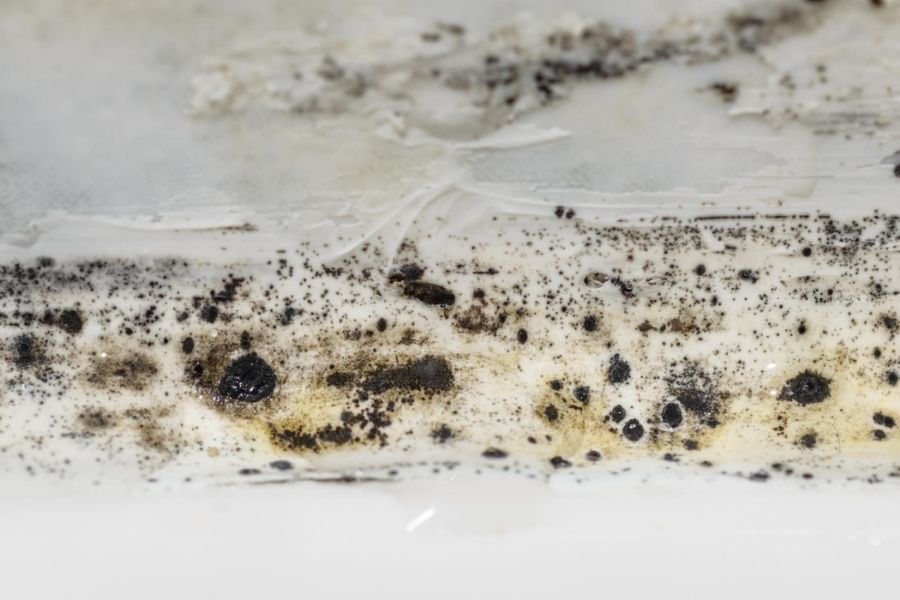
Mold needs organic material, warmth, and moisture. Central Texas supplies two of those three year-round. Add unresolved water damage and you've got a mold-friendly environment, especially in spots with limited airflow like wall interiors.
According to the EPA's Guide to Mold, Moisture, and Your Home, mold can begin forming within 24 to 48 hours when conditions are right. In Pflugerville, where summer relative humidity regularly runs above 60 percent, those conditions are essentially the default from May through October. You don't even need standing water. Elevated humidity inside a wall cavity from condensation alone can be enough: warm humid air hits a cooler interior surface and deposits moisture, quietly, repeatedly. Our guide on the common causes of mold covers the triggers in plain terms.
Mold Growth Timeline After a Water Event
| Timeframe | What's Happening |
|---|---|
| 0-24 Hours | Moisture absorbs into drywall, insulation, and framing. Spores begin activating. |
| 24-48 Hours | Mold colonies can start forming. Structural materials begin swelling and weakening. |
| 3-7 Days | Visible mold likely. Drywall may require demolition. Subfloor warping begins. |
| 1-2 Weeks+ | Significant structural damage. Remediation scope grows, and so does the cost. |
Warning Signs of Secondary Damage You Shouldn't Ignore
The most serious problems hide out of sight, but early signals do appear if you know what to look for. Catching these within the first week or two after a water event can mean the difference between a drying job and a mold remediation project.
- Persistent musty smell: Almost always mold. If it's there after surfaces appear dry, moisture is still present somewhere hidden.
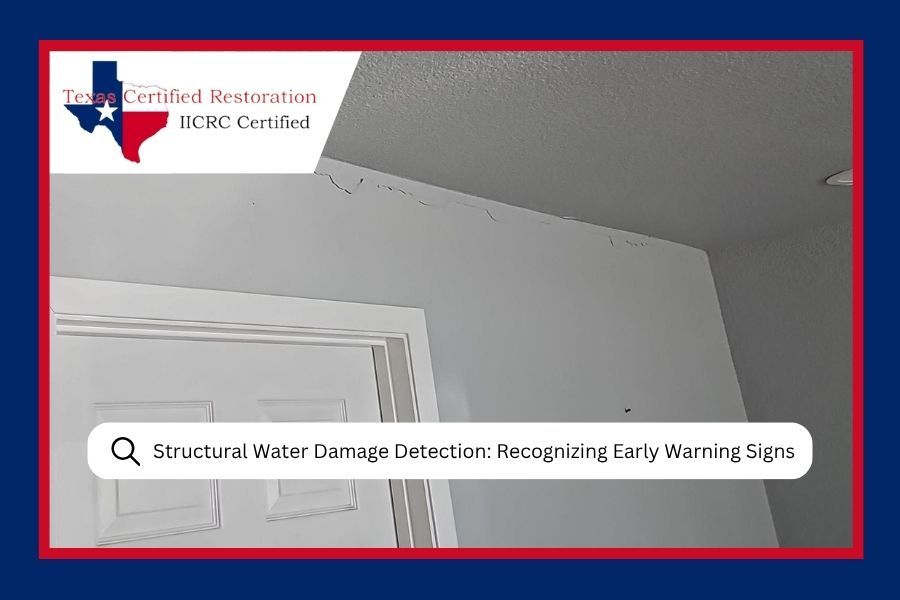
- Discoloration on walls or ceilings: Yellow, brown, or gray patches are moisture working through drywall.
- Soft, spongy, or buckling flooring: Hardwood, laminate, and tile grout telegraph subfloor moisture before it's visible.
- Paint or wallpaper bubbling: Moisture vapor pressure behind the wall pushes the surface loose.
- Sticky indoor air despite AC running: Residual moisture from a water event can keep indoor humidity elevated.
- Worsening respiratory symptoms in household members: Mold spores travel through HVAC systems. Don't ignore this after a water event.
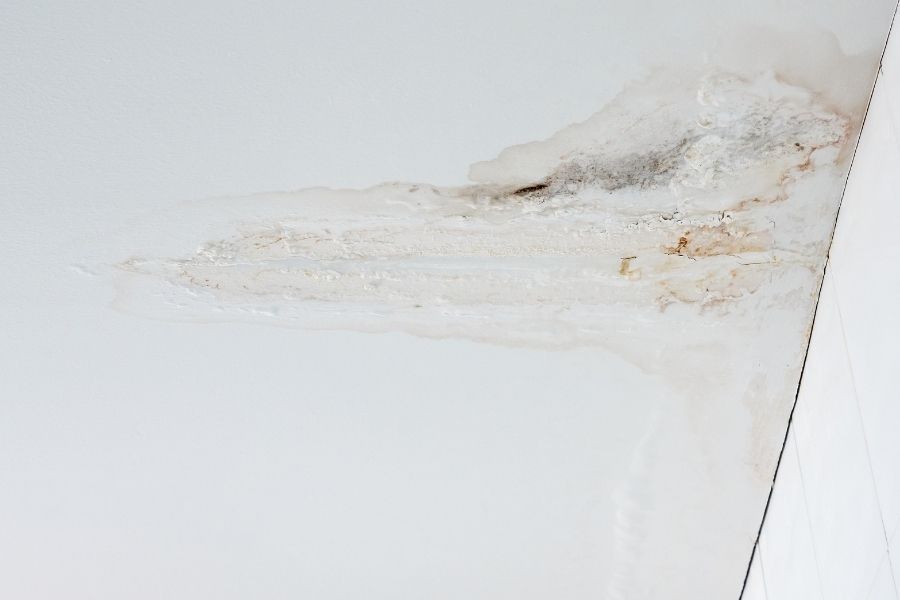
These signs don't always appear right away. Check back at 7 and 14 days post-event. Our case study on cabinet mold remediation in Pflugerville shows exactly how this plays out: mold behind cabinetry after a slow leak that looked minor on the surface.
Secondary Water Damage Prevention Checklist
The core principle is simple: dry everything completely, not just what you can see. Here's what to do after any water event in your home.
| Task | Why It Matters |
|---|---|
| Remove standing water within 1-2 hours | Every hour increases absorption into flooring and walls |
| Pull back wet carpet and padding | Padding retains moisture long after the surface feels dry |
| Run a dehumidifier continuously | Target indoor relative humidity below 50% to inhibit mold |
| Inspect behind baseboards and in wall cavities | Water travels; the moisture and the source are rarely in the same spot |
| Re-check at 7 and 14 days | Secondary symptoms often emerge after the initial cleanup |
| Document with photos throughout | Essential for insurance claims and tracking damage progression |
When Should You Call a Professional?
Some situations call for professional help immediately. Call right away if: the water source was sewage or drain backup; water affected more than one room; flooring or drywall is visibly saturated; or you can already see or smell mold. For smaller events caught quickly on hard flooring, a careful DIY response may be sufficient, but only if you can verify dryness with a moisture meter, not just by feel.
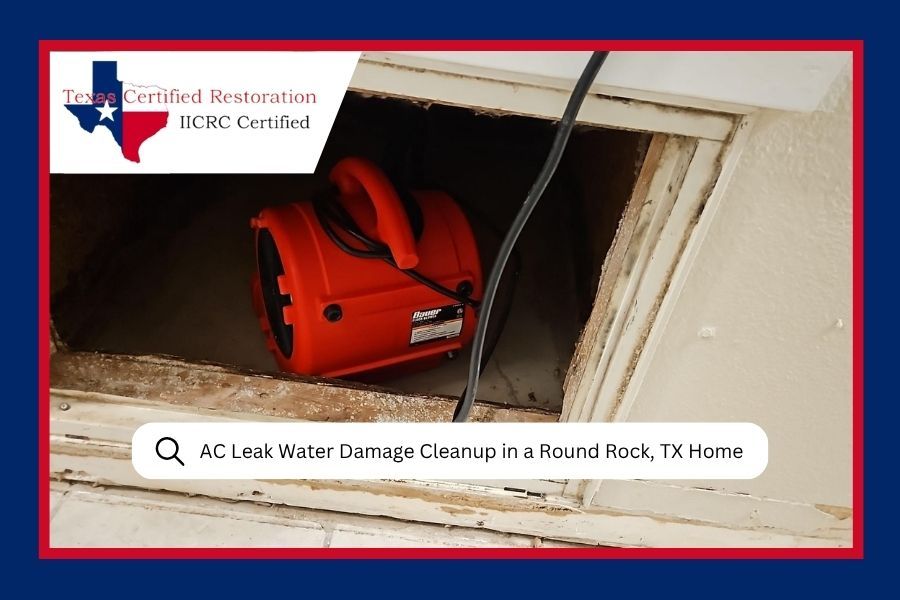
Box fans and consumer dehumidifiers don't reach inside wall assemblies or under slab flooring. Professional drying uses high-capacity air movers calibrated to the moisture load of the space, plus thermal imaging to find hidden wet pockets you can't otherwise locate. Homeowners across Hutto, Manor, Cedar Park, and Round Rock ask us the same thing: "How do I know if it dried out?" The honest answer is you can't know without measuring. The CDC recommends assuming mold may be present any time a space has stayed wet for more than 24 hours.
Not sure if your home dried out completely after a water event?
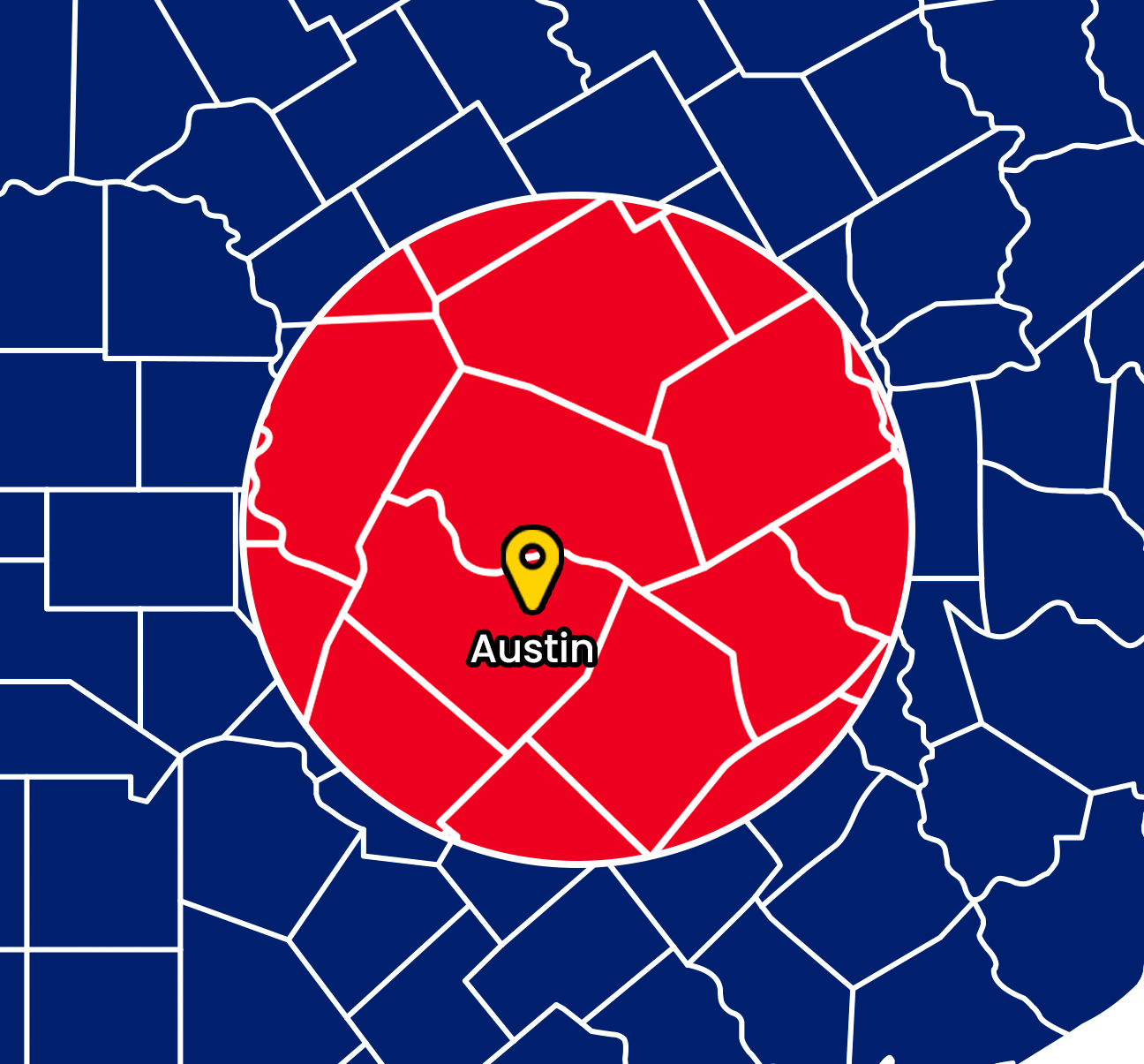
Texas Certified Restoration's IICRC-certified team serves Pflugerville, Round Rock, Georgetown, and greater Williamson County. We'll tell you exactly what's going on and what needs to happen next.
See Our Pflugerville ServicesFrequently Asked Questions
How quickly can mold develop after water damage in a Pflugerville home?
Mold can begin colonizing within 24 to 48 hours when materials stay damp and temperatures are warm. In Central Texas, where summer humidity accelerates growth conditions, that window can be even shorter. Acting within the first 24 hours is critical.
What is secondary water damage and how is it different from the original water event?
The original flood or leak is the primary damage. Secondary water damage is everything that results from moisture not fully extracted afterward: mold growth, structural rot, warped flooring, and deteriorating drywall. It's often more expensive to fix.
Can high indoor humidity cause mold even without a visible leak?
Yes. Elevated moisture from condensation or poor ventilation can support mold growth inside wall cavities without visible standing water. This is especially relevant in Central Texas homes where temperature differences between conditioned air and wall cavities produce repeated condensation.
How do I confirm my home is fully dry after a water event?
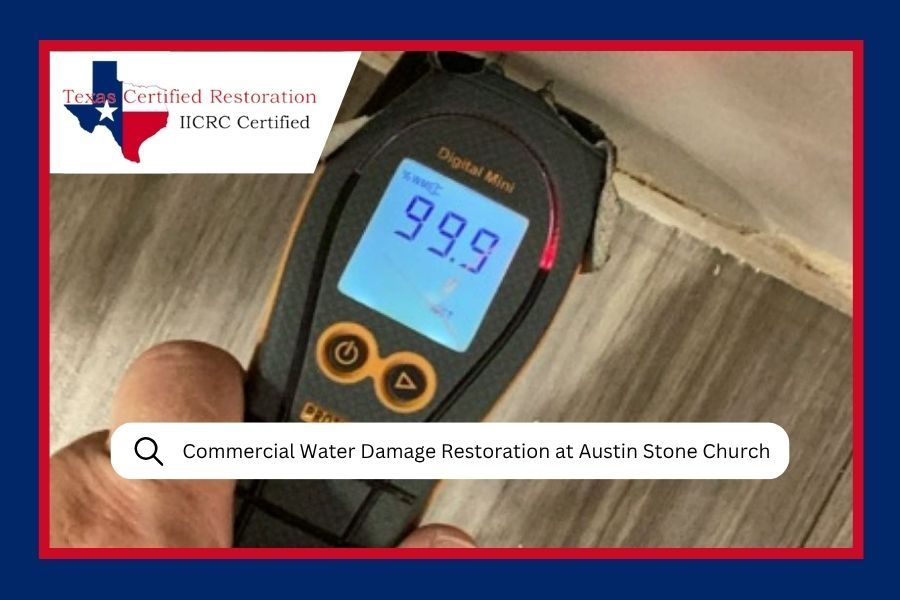
Surface feel is not reliable. A calibrated moisture meter measures moisture content inside the material, not just at the surface. IICRC-certified technicians also use thermal imaging cameras to find hidden wet pockets and confirm all affected materials have returned to dry standard readings before closing a project.

Tracy King
About The Author:
Tracy King, of Texas Certified Restoration, brings over 10 years of combined industry experience to the disaster restoration field. Since the founding of the company, Tracy has been committed to providing professional and dependable restoration services to homeowners and businesses throughout the Greater Austin area. With a passion for helping clients navigate the challenges of water damage, fire damage, and other disaster-related situations, Tracy leads a certified team dedicated to delivering quality service that helps families and businesses resume normal life after unexpected emergencies.
Read More: