
How a Small Under-Sink Leak Spread to Four Rooms in This Pflugerville Home
Updated on: July 28, 2026
Author: Tracy King
A water filtration system under a kitchen sink isn't something most homeowners think about much. It quietly does its job, day after day. Until one day, it doesn't. A small component broke off the filter housing, and what started as a slow drip turned into a water damage restoration job that spread well beyond the kitchen. Our team at Texas Certified Restoration got the call from this Pflugerville homeowner, arrived that same afternoon, and got to work.
A Small Leak With a Surprisingly Big Reach
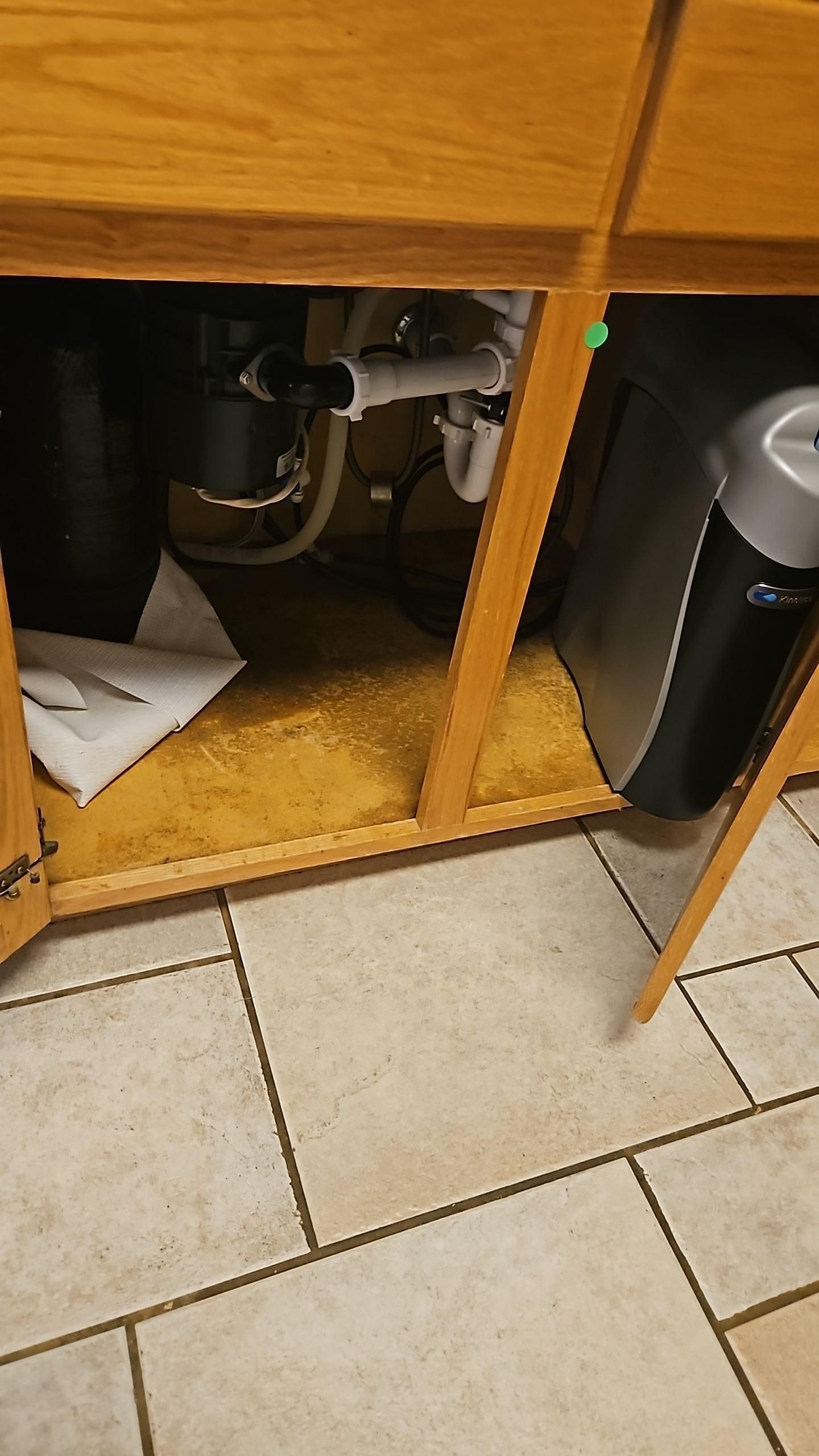
The source of the problem was Category 1 water, meaning clean water from a supply line. That's the best-case scenario for water damage. But clean water doesn't stay clean for long once it starts soaking into walls, flooring, and cabinetry. And this one had time to travel.
By the time we arrived, moisture had migrated from the kitchen into the adjacent living room and laundry room, and had even reached the garage. That kind of spread happens more often than people realize. Water follows the path of least resistance, and in a slab-foundation home like most in Pflugerville, that often means it travels along the flooring and into neighboring spaces before anyone notices it.
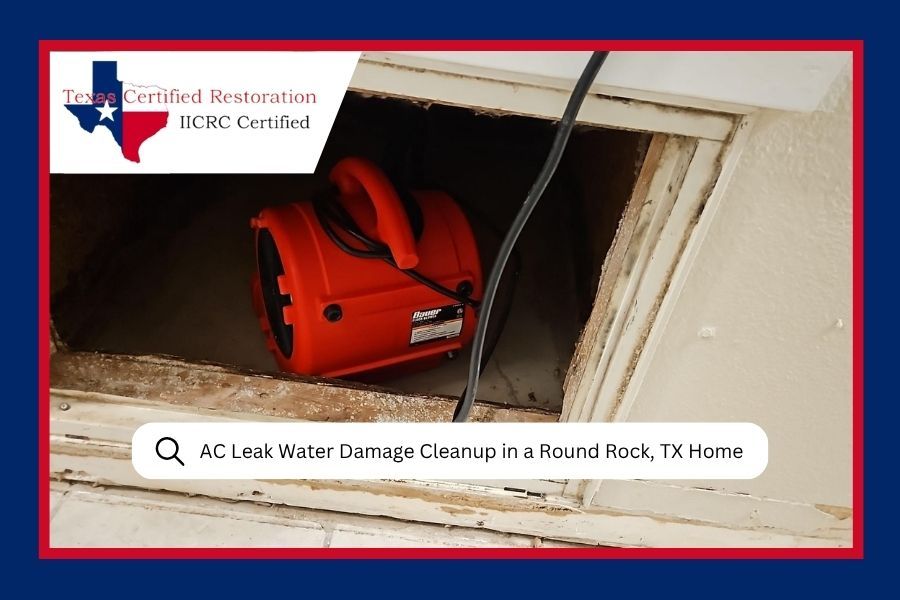
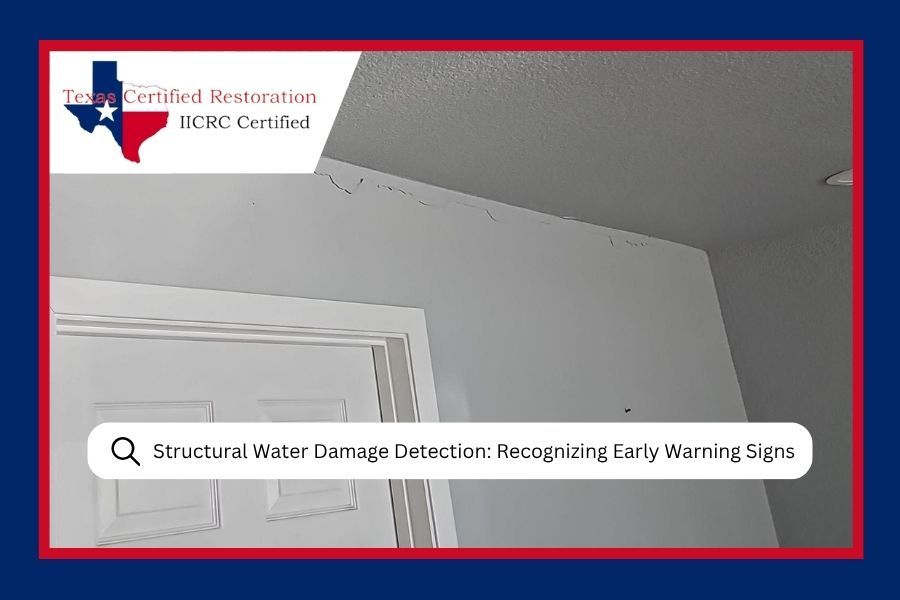
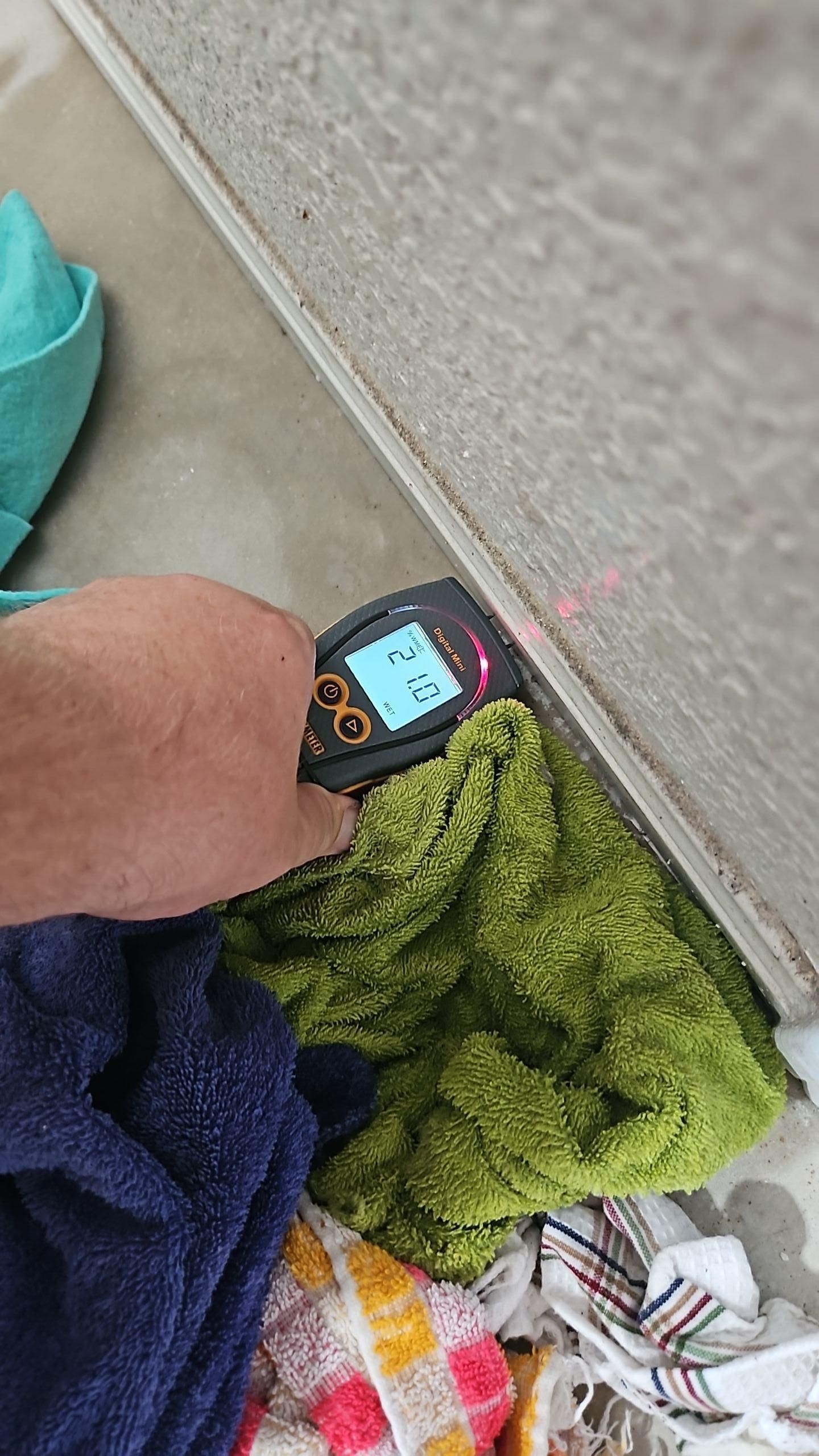
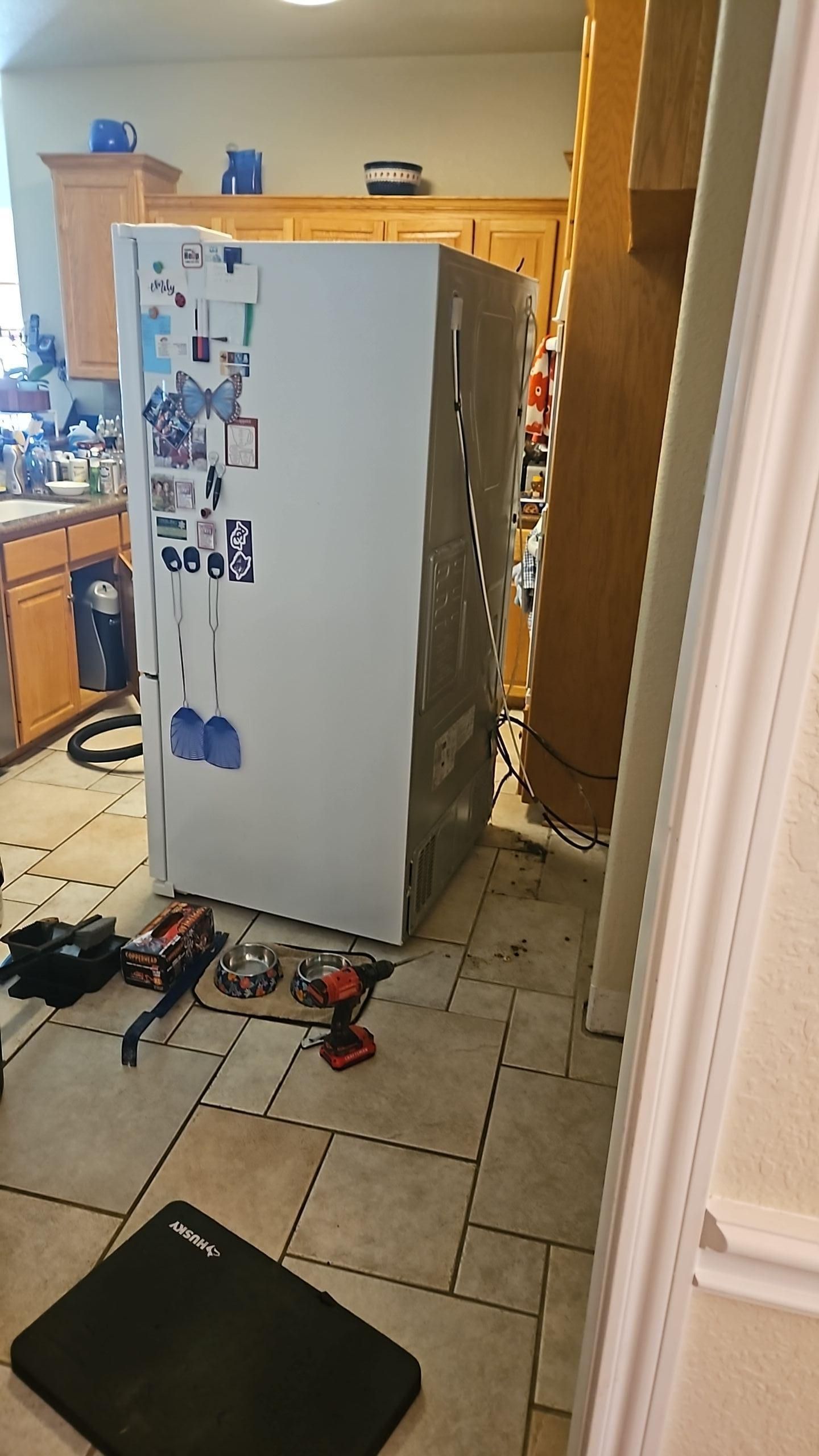
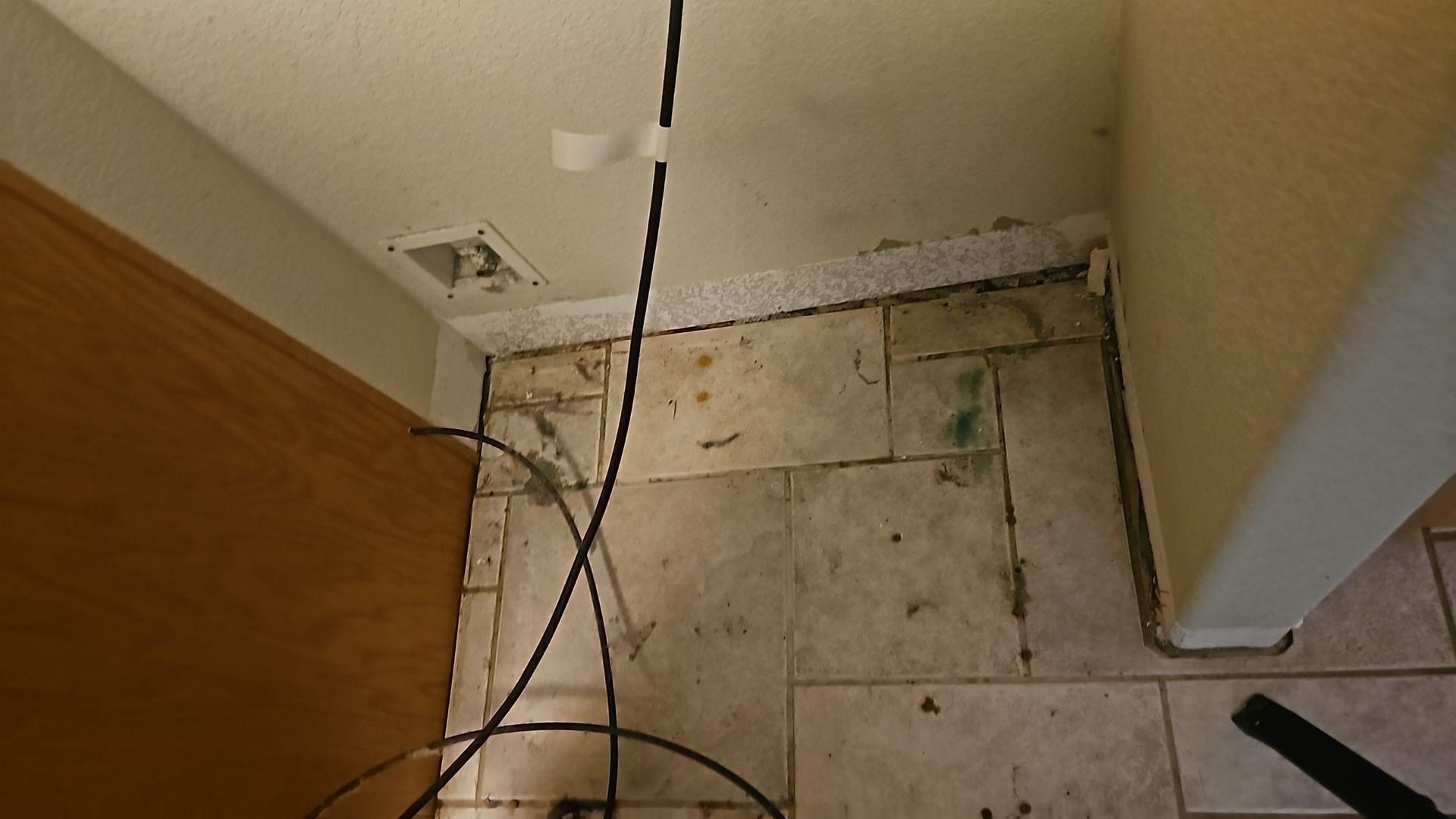
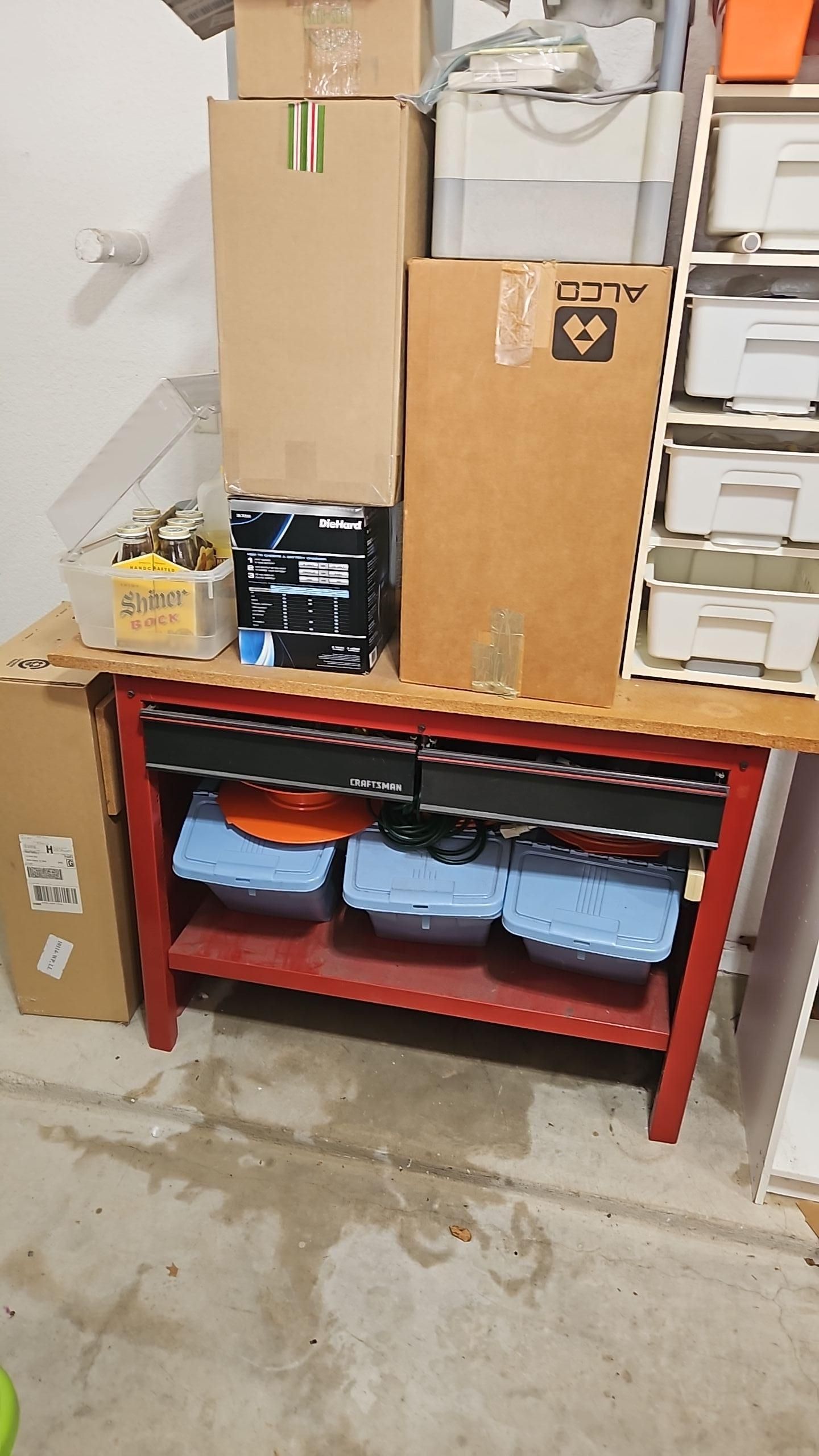
Here's a look at what we found on arrival:
 |
 |
 |
 |
 |
How We Assessed the Damage Room by Room
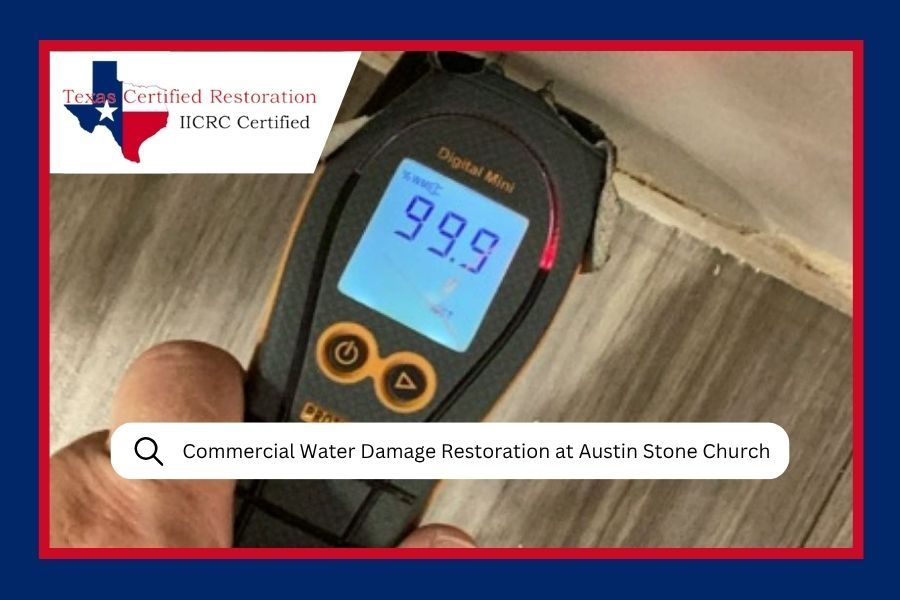
Before any equipment goes down, we map the moisture. Using calibrated meters, we track exactly where the water went and how far into the walls and subfloor it reached. This step matters more than most people realize. Skipping it, or rushing it, means equipment gets placed in the wrong spots and drying takes longer than it should.
Here's what the scope looked like across each affected area:
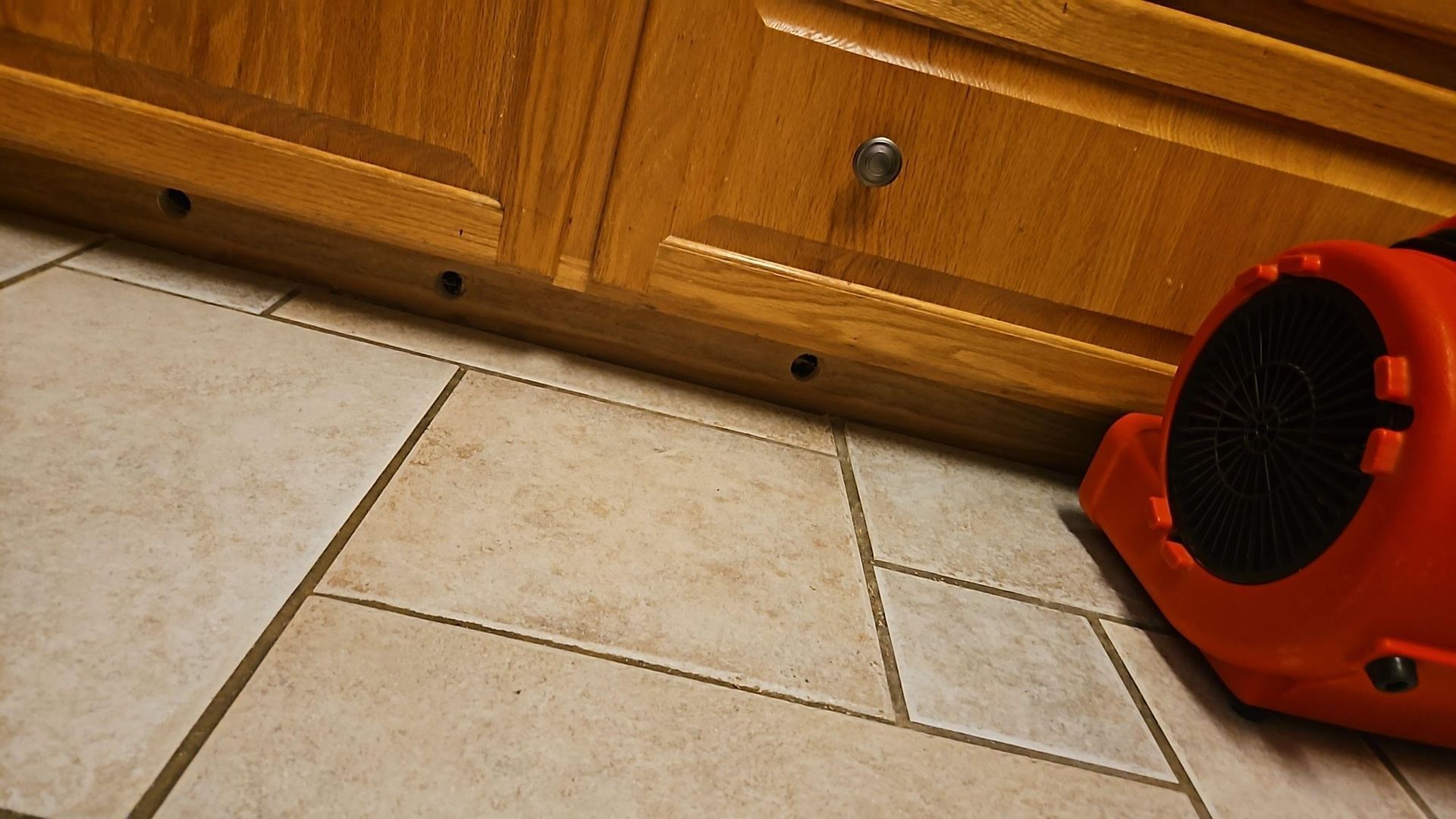
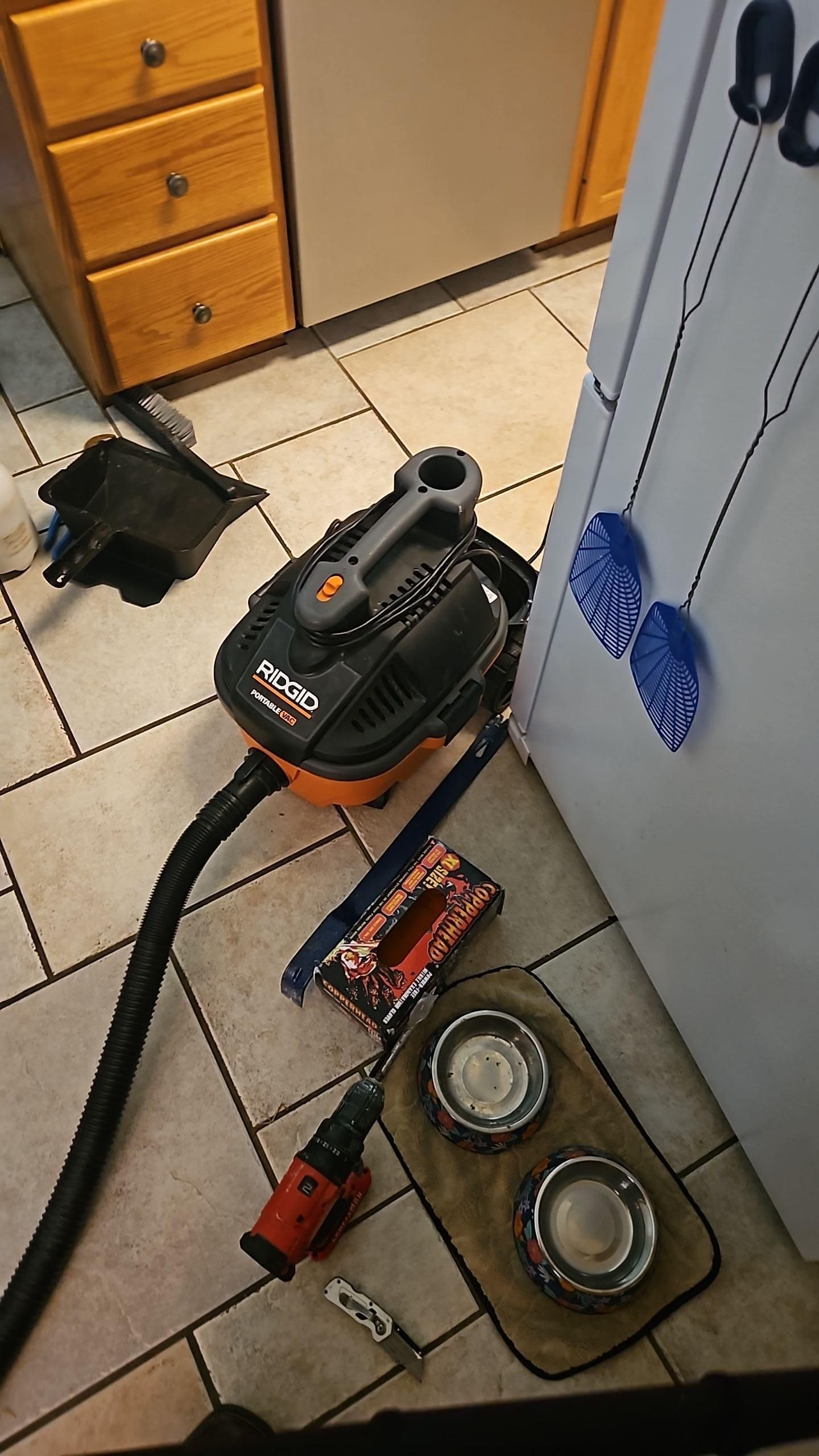
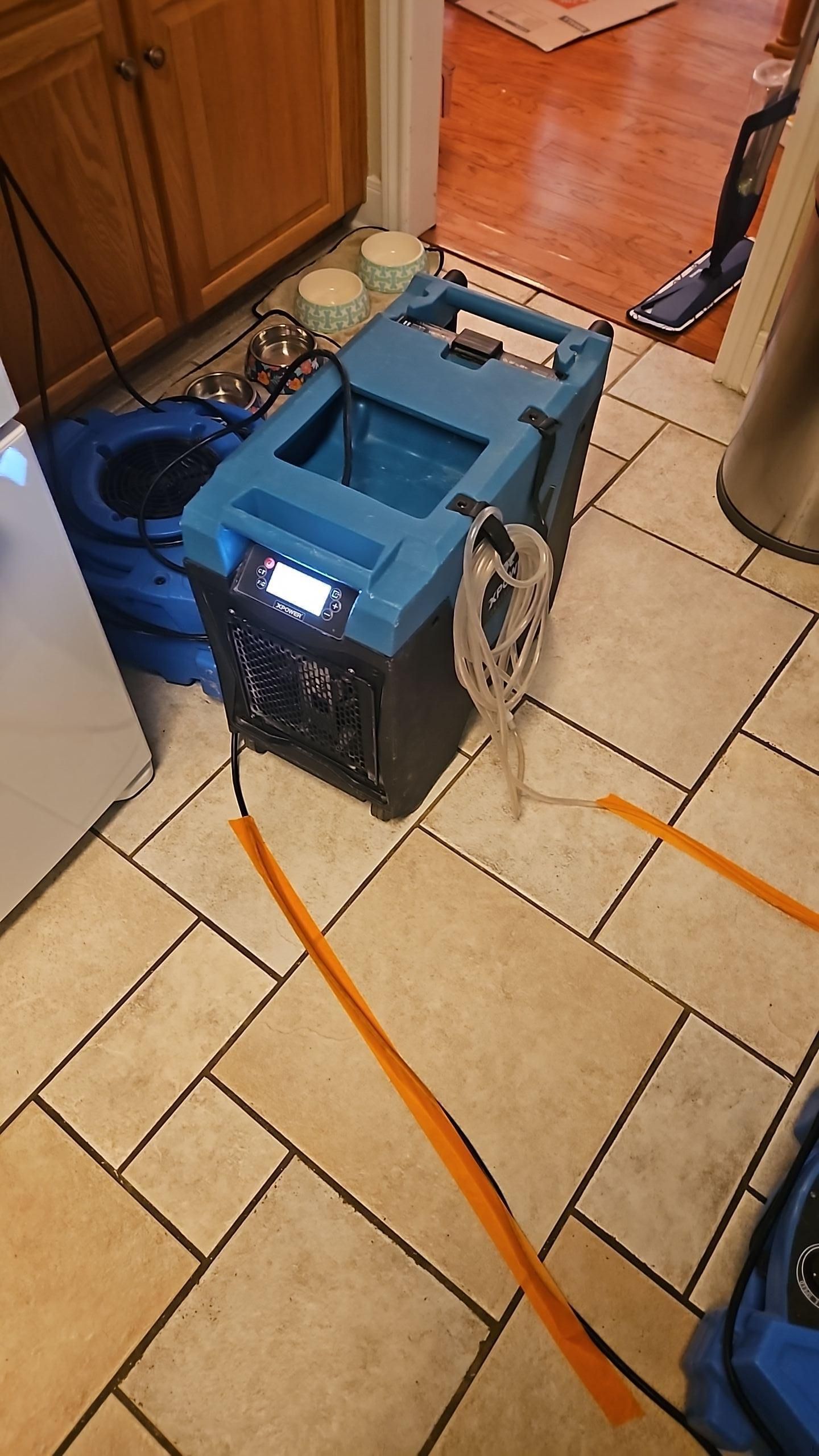
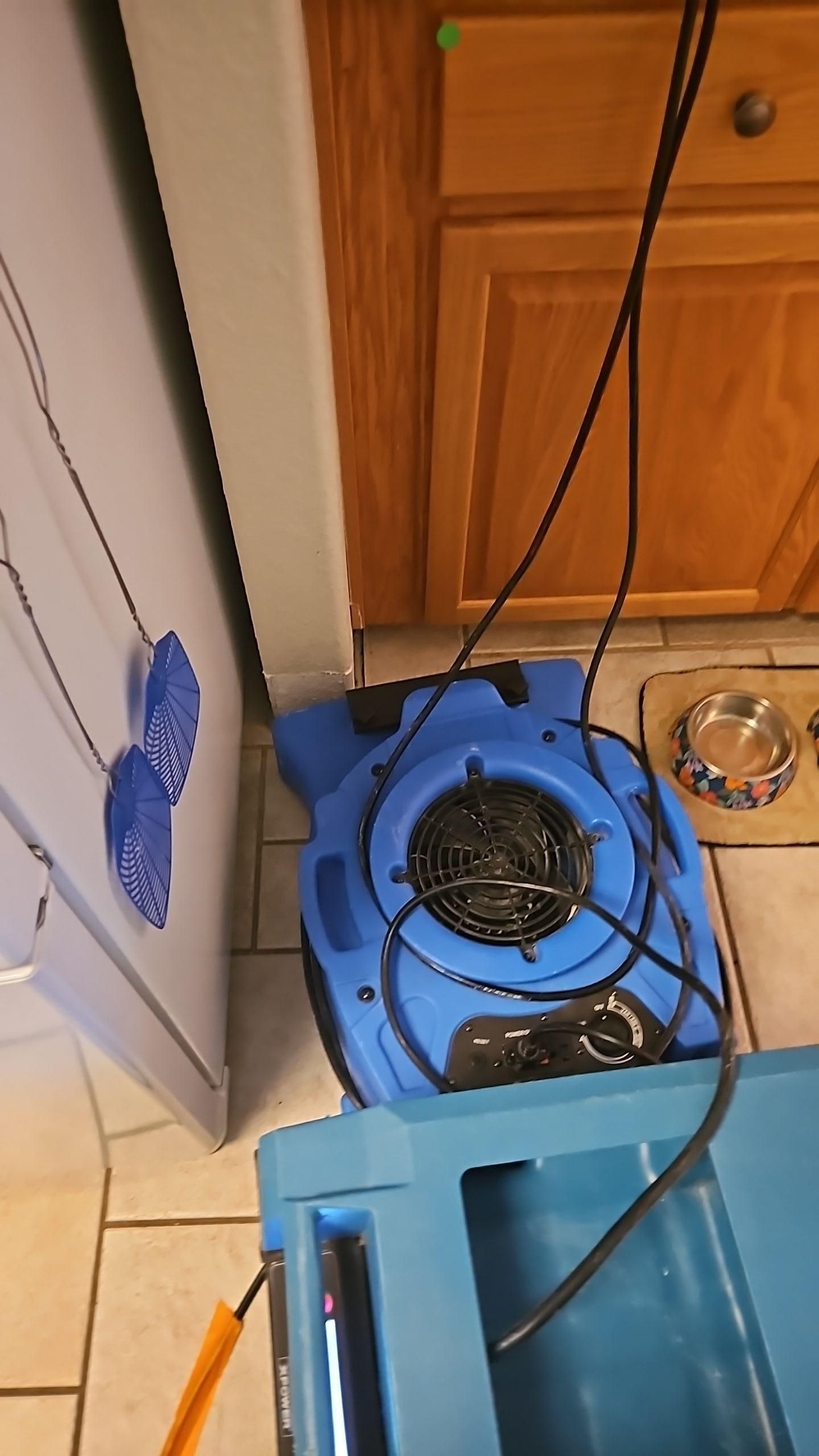
- Kitchen: Quarter rounds and baseboards removed along multiple walls. Thirteen holes drilled to allow airflow behind the drywall. Five air movers and one LGR dehumidifier deployed.
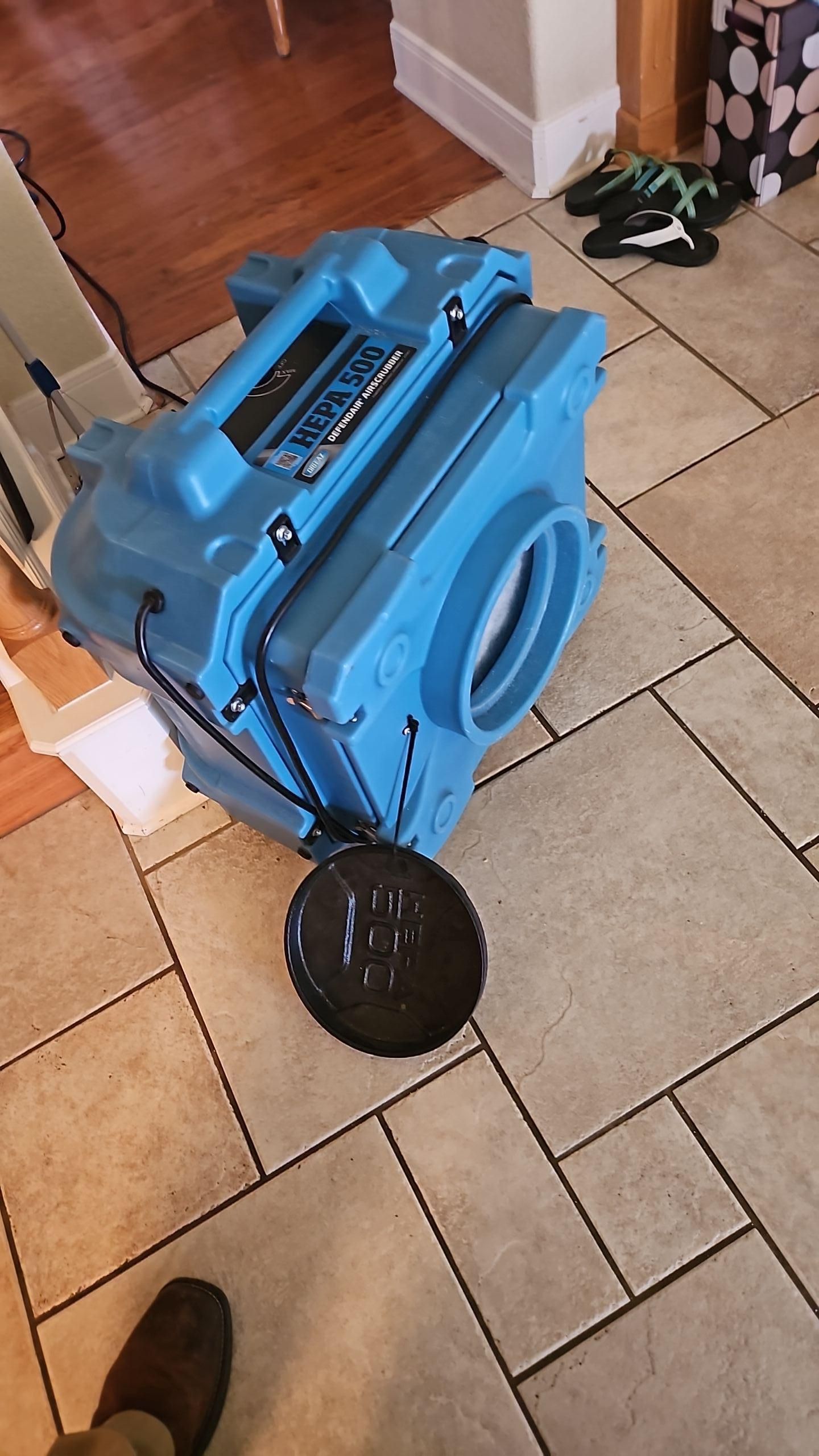
- Living Room: Baseboards and quarter rounds pulled along 9.7 linear feet. One air mover and one air scrubber placed to address air quality and keep drying on track.
- Laundry Room: Baseboards and quarter rounds removed along 11.5 linear feet. One air mover set up to dry the wall cavity and flooring.
- Garage: Two air movers deployed to address moisture that had traveled through the shared wall.
According to the IICRC S500 standard for water damage restoration, proper drying requires controlled airflow across all affected materials, not just visible wet spots. Drilling holes and removing trim isn't damage. It's the right way to dry a wall.
 |
 |
 |
 |
 |
Day 2: Monitoring and Equipment Removal
We returned the following afternoon. All moisture readings had reached their dry standard targets. Every affected area passed. Equipment was pulled, and the home was ready for the next steps.
Two-day jobs like this one are a good reminder of why acting fast on water damage pays off. Category 1 water can degrade quickly once it sits in walls and flooring. Getting equipment in on day one is how you keep a manageable situation from turning into a much bigger one. If you're dealing with something similar anywhere in the Pflugerville area, our flood damage restoration team is available 24/7.
Curious how this kind of job usually unfolds from start to finish? We've written about that process in depth: what to expect during flood restoration and how long it takes.
What to Know About Under-Sink Water Damage
Under-sink leaks are sneaky. They often go unnoticed for days because the cabinet door stays closed and there's nothing dramatic like flooding or a visible stain on the ceiling. By the time you open that door, the water has already been traveling. A few things worth knowing:
- Check under sinks every few months, especially if you have a filtration system, garbage disposal, or older supply lines.
- Discoloration on cabinet floors or a musty smell are early warning signs.
- Even small leaks can saturate the cabinet base and wick moisture into adjacent walls and flooring over time.
Want to know more about where water damage hides in a home before it becomes obvious? Take a look at our post on hidden water damage warning signs homeowners often miss.
Working Directly with USAA
This job was filed through USAA. Our team handles the documentation, moisture logs, and photo reporting that insurance companies need to process claims smoothly. We work directly with adjusters so the homeowner isn't stuck playing middleman during an already stressful situation.
If you're dealing with water damage and need to file a claim, we've got experience on that side of things too. It's part of what we do.
Water damage doesn't wait. Neither do we.
Texas Certified Restoration is available 24/7 for emergency water damage response in Pflugerville and across Central Texas. We handle the work and the insurance paperwork.
Contact Our Team
Tracy King
About The Author:
Tracy King, of Texas Certified Restoration, brings over 10 years of combined industry experience to the disaster restoration field. Since the founding of the company, Tracy has been committed to providing professional and dependable restoration services to homeowners and businesses throughout the Greater Austin area. With a passion for helping clients navigate the challenges of water damage, fire damage, and other disaster-related situations, Tracy leads a certified team dedicated to delivering quality service that helps families and businesses resume normal life after unexpected emergencies.
Read More: