Structural Water Damage Detection: Recognizing Early Warning Signs
Updated on: September 15, 2026
Author: Tracy King
Jump To:
Structural water damage starts quiet and gets costly fast. A small ceiling stain. A door that won't close right. By the time most Central Texas homeowners notice, moisture has been soaking into framing and drywall for weeks.
Finding the problem early can save you from a full water damage restoration project. At Texas Certified Restoration, our IICRC-certified team has spent over ten years handling water emergencies in Round Rock, Pflugerville, and Georgetown. The good news? Most structural damage leaves clues before it gets out of hand.
What Does Structural Water Damage Look Like?
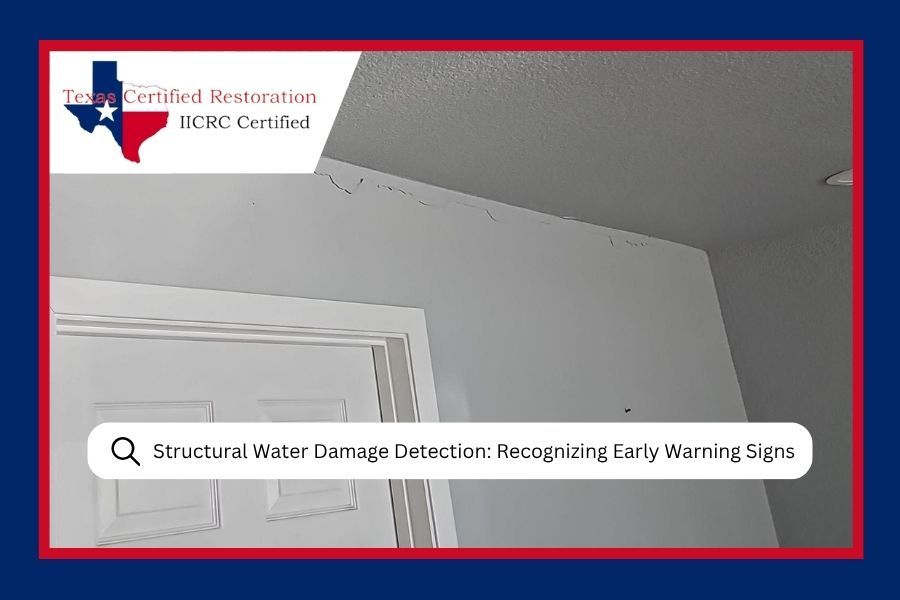
Structural water damage often looks like normal wear and tear. Cracked drywall. Soft spots in flooring. Sticky doors. Musty smells. These all signal that moisture is reaching load-bearing materials. Catching them early keeps costs down.
Foundation and Slab Warning Signs
Nearly every home in Central Texas sits on a slab. That means water damage below your feet shows up differently here. Watch for these red flags:
- New cracks in tile or concrete. Moisture can shift the slab in our clay soil. Cracks in tile, grout, or concrete may mean water is pooling below.
- Warped or buckling floors. Trapped moisture makes hardwood and laminate cup, crown, or lift at seams.
- Damp or stained baseboards. Water wicking up through the slab often shows at the baseboard line first.
- Water bill spikes. A hidden slab leak can run for weeks before you see any signs on the surface.
Clay soils in Williamson and Travis Counties make this worse. The clay swells when wet and shrinks when dry, which puts steady pressure on your slab. So if you see new cracks after heavy rain, don't assume it's just settling.
Wall and Ceiling Red Flags
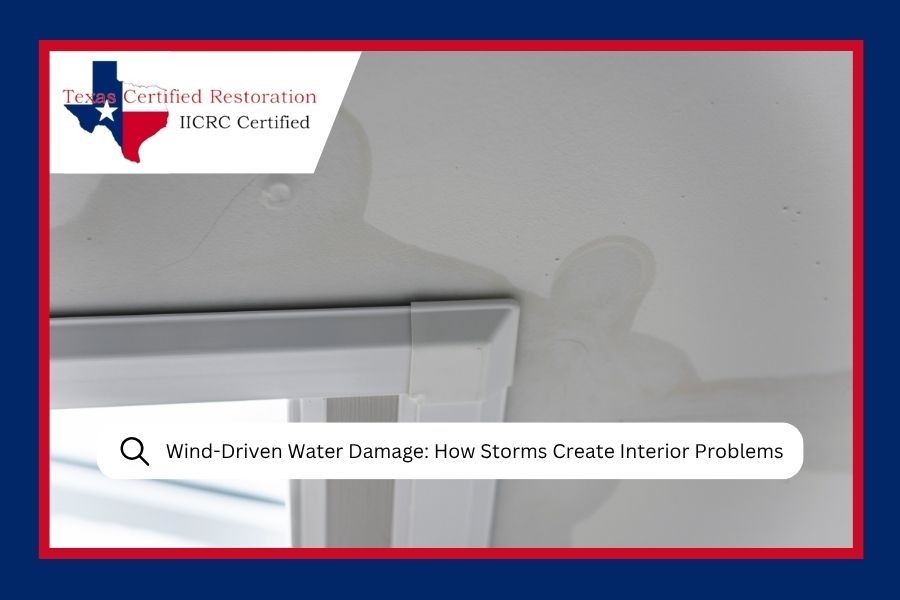
Peeling or bubbling paint is one of the first clues. Moisture behind drywall breaks the bond between paint and the wall. You might also see brown or yellow rings spreading from one spot. That's where water enters from a roof leak, supply line, or AC drip.
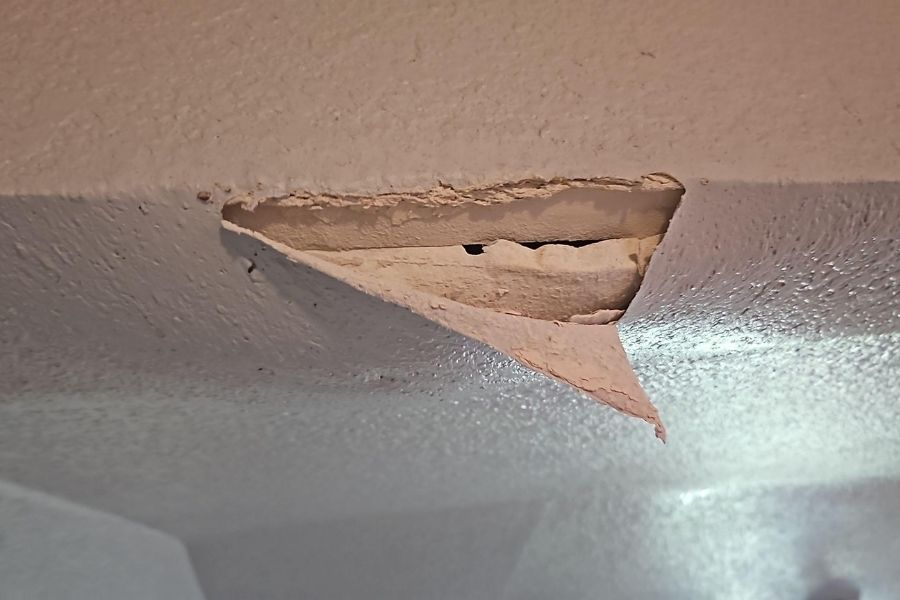
Spongy drywall means the damage has gone deeper. Press gently on any stained area. If the wall gives, moisture has soaked through.
Sagging ceilings are serious. A ceiling that bows is holding water, and wet drywall gets heavy fast. If you spot sagging, contact our team right away.
Think You've Spotted Structural Water Damage?
The sooner you act, the less damage spreads. Our certified team responds 24/7 across the Greater Austin area.
Get Professional Help NowHow Does Water Damage Affect Your Home's Structure Over Time?
Water doesn't just stain things. It weakens them. Wood framing swells, warps, and rots. Drywall loses strength within hours of steady contact.
The EPA's guide on mold and moisture says damp materials should be dried within 24 to 48 hours to stop secondary damage. Here's how key materials hold up over time:
| Material | First 24 Hours | 1 to 7 Days | 7+ Days |
|---|---|---|---|
| Drywall | Absorbs moisture, staining begins | Softens, crumbles | Full deterioration, must be replaced |
| Wood Framing | Swelling at contact points | Warping, early decay | Rot compromises load-bearing capacity |
| Subfloor | Edges swell, slight buckling | Delamination, soft spots | Structural weakness, needs replacement |
| Insulation | Absorbs water, sags | Loses R-value | Biological growth, must be removed |
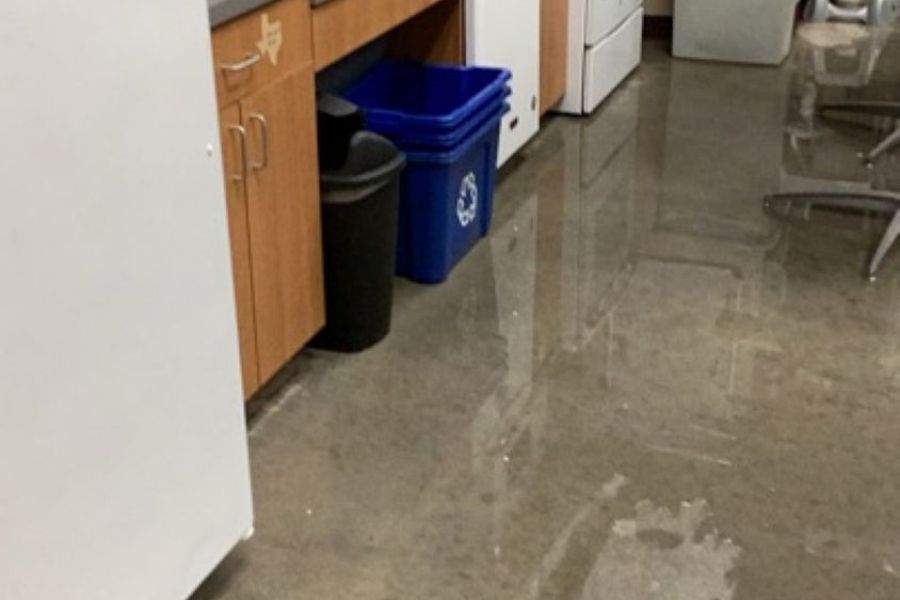
That timeline is why speed matters. A burst supply line in Pflugerville can go from "wet carpet" to "bad subfloor" in under a week. We've seen it in Hutto, Cedar Park, and Leander, where homeowners thought the problem was small while damage spread behind the walls.
Detection Checklist: Where to Look Room by Room
Not sure where to start? Grab a flashlight and walk through your home. These signs are easy to miss day to day but obvious once you know what to look for.
🔍 Structural Water Damage Detection Checklist
Kitchen & Bathrooms
- Check under sinks for dampness, drips, or warped cabinet floors
- Feel for soft spots near toilet bases and tub surrounds
- Look for peeling paint on ceilings below upstairs bathrooms
Living Areas & Bedrooms
- Test doors and windows for sticking or misalignment
- Run your hand along baseboards feeling for dampness or swelling
- Check ceiling corners for discoloration or hairline cracks
Utility Areas & Exterior
- Inspect the water heater base and AC drip pan for overflow or rust stains
- Check washing machine hoses for bulging or dampness at connections
- Look for pooling water near the foundation after rain
For a deeper look at what's happening underfoot, our guide on signs of water damage under your floor covers the specific indicators most homeowners overlook. And for what's behind your drywall, check out our walkthrough on detecting water damage behind walls.
When Should You Call a Professional?
Some water damage you can keep an eye on. Other kinds need fast action. Call a pro if you notice:
- Visible sagging in ceilings or bulging in walls
- Persistent musty odors you can't trace
- Multiple rooms showing signs of water intrusion at once
- Damage that keeps coming back after you've cleaned or painted over it
Central Texas weather adds risk. Flash floods, spring storms, and hurricane remnants can overwhelm even solid homes. FEMA's flood prep resources say to have a plan before bad weather hits. Part of that plan is knowing who to call when water gets in.
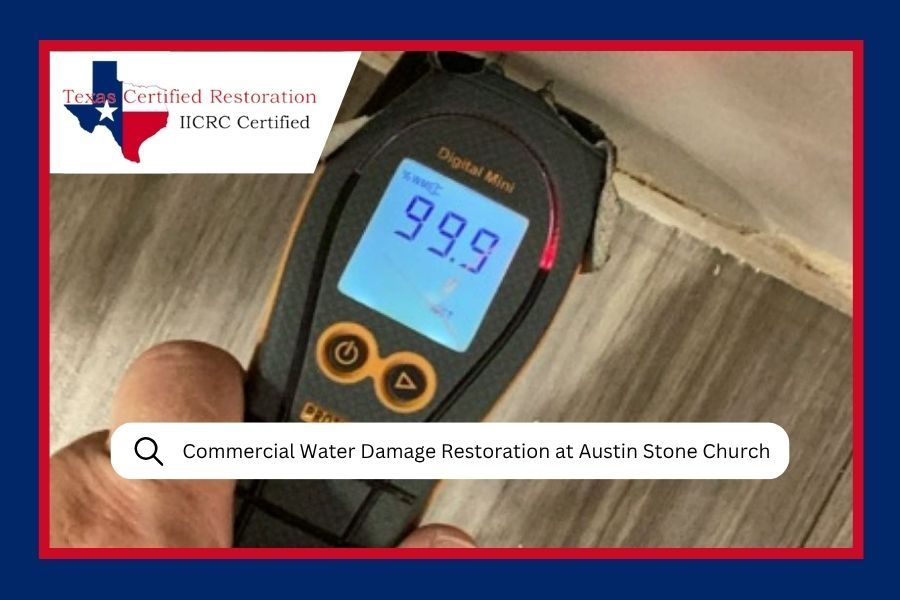
At Texas Certified Restoration, we respond 24/7 across Round Rock, Pflugerville, Georgetown, Cedar Park, Leander, and nearby areas. Our team uses moisture meters, thermal imaging, and industrial drying gear to find hidden moisture and stop damage from spreading.
For a complete picture beyond structural concerns, we've also covered the broader warning signs of water damage. If something looks off, trust your instincts. Waiting rarely makes water damage cheaper.
Don't Let Hidden Water Damage Compromise Your Home
Texas Certified Restoration serves the Greater Austin area with 24/7 emergency response and IICRC-certified expertise.
Schedule Your AssessmentFrequently Asked Questions
How can I tell if water damage is structural or just cosmetic?
Cosmetic damage stays at the surface as flat stains or minor spots. Structural damage goes deeper. Press gently on any stained area. If the wall gives, moisture has reached the framing behind it.
How fast can water damage become structural in a Central Texas home?
In Central Texas heat and humidity, water damage can go from surface-level to structural in 48 to 72 hours. Drywall soaks up moisture fast, wood framing warps within days, and clay soil under slab foundations can shift quickly.
Can I detect structural water damage without professional equipment?
You can catch many early signs on your own. Check for sticking doors, soft floors, ceiling stains, and musty odors. But moisture trapped behind walls or under a slab often needs moisture meters or thermal imaging to find.
Does homeowners insurance cover structural water damage in Texas?
Most Texas policies cover sudden water damage like a burst pipe or appliance failure. Gradual damage from slow leaks is usually excluded, and flood damage needs a separate policy. Take photos and file your claim as soon as possible.

Tracy King
About The Author:
Tracy King, of Texas Certified Restoration, brings over 10 years of combined industry experience to the disaster restoration field. Since the founding of the company, Tracy has been committed to providing professional and dependable restoration services to homeowners and businesses throughout the Greater Austin area. With a passion for helping clients navigate the challenges of water damage, fire damage, and other disaster-related situations, Tracy leads a certified team dedicated to delivering quality service that helps families and businesses resume normal life after unexpected emergencies.
Read More: