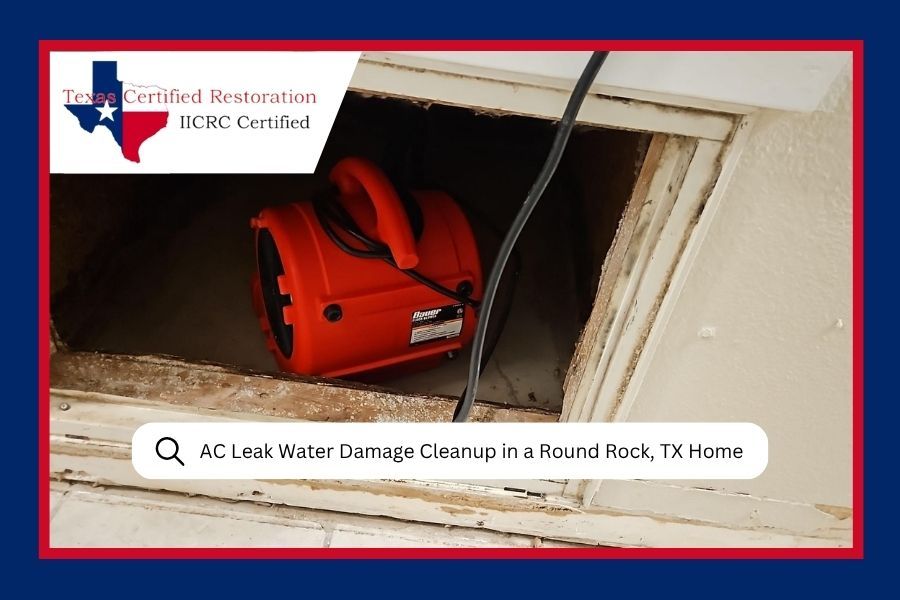
AC Leak Water Damage Cleanup in a Round Rock, TX Home
Updated on: September 22, 2026
Author: Tracy King
When an AC unit starts leaking inside a Round Rock home, the water doesn't just sit in one spot. It travels. It seeps under baseboards, works into closets, and spreads down hallways before anyone notices. That's exactly what happened with this water damage restoration project, where a slow AC leak affected the office, office closet, hallway, and bedroom.
The homeowner noticed soft flooring near the hallway. By the time they traced the problem back to the AC closet, moisture had already spread behind walls and under floors. Our team at Texas Certified Restoration headed out to assess the full scope.
How Did an AC Leak Cause This Much Damage?
AC leaks are sneaky. A clogged condensate drain line or a cracked drip pan can release water that pools behind walls or under flooring for days, sometimes weeks, before anyone notices. In Central Texas, where homes sit on slab foundations, that water has nowhere to drain. It spreads laterally, wicking into baseboards, drywall, and flooring along the way.
In this home, the office closet backed up directly to the AC unit and took the worst hit. Water had saturated the lower drywall and warped the baseboards. From there, moisture followed the path of least resistance into the hallway and eventually reached the bedroom.
This is why we always tell homeowners: if you notice any dampness near your HVAC system, don't wait. The EPA recommends drying water-damaged areas within 24 to 48 hours to prevent secondary issues like mold growth.
Assessing the Damage Across Four Rooms
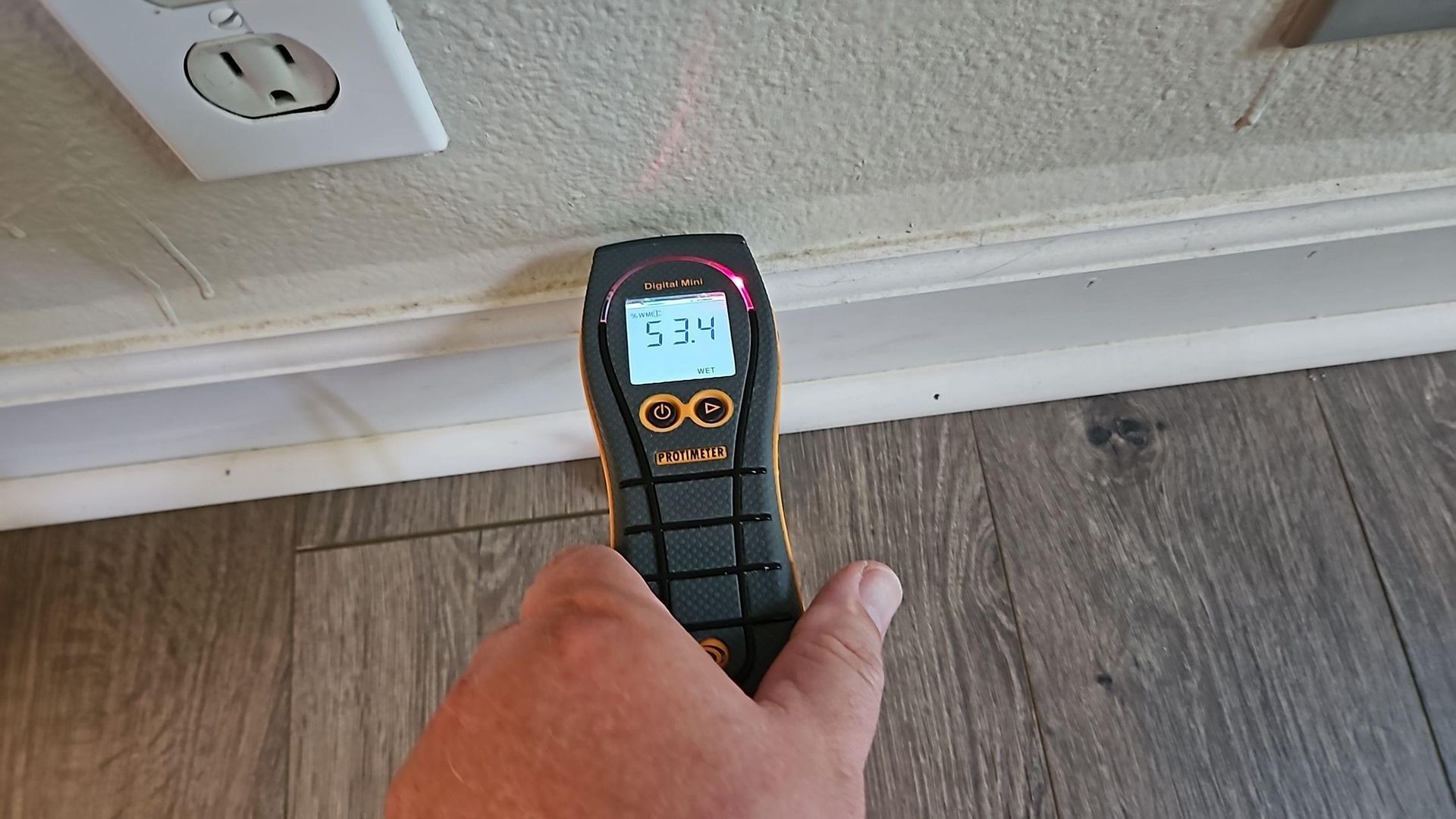
Our technicians started with a full moisture mapping of the affected areas using professional-grade meters. Moisture readings confirmed that the damage extended well beyond what was visible to the naked eye. Here's what we found in each area:
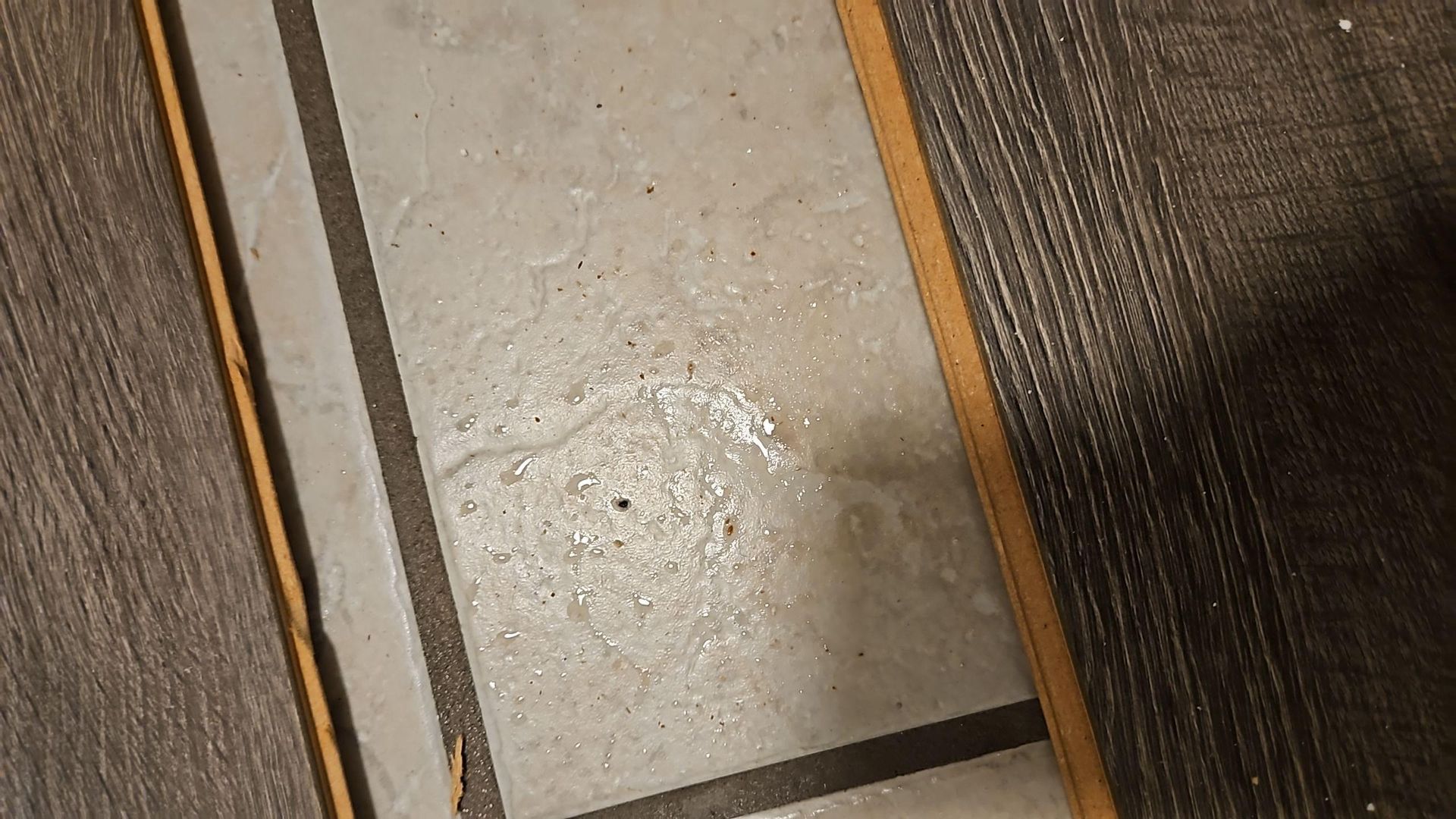
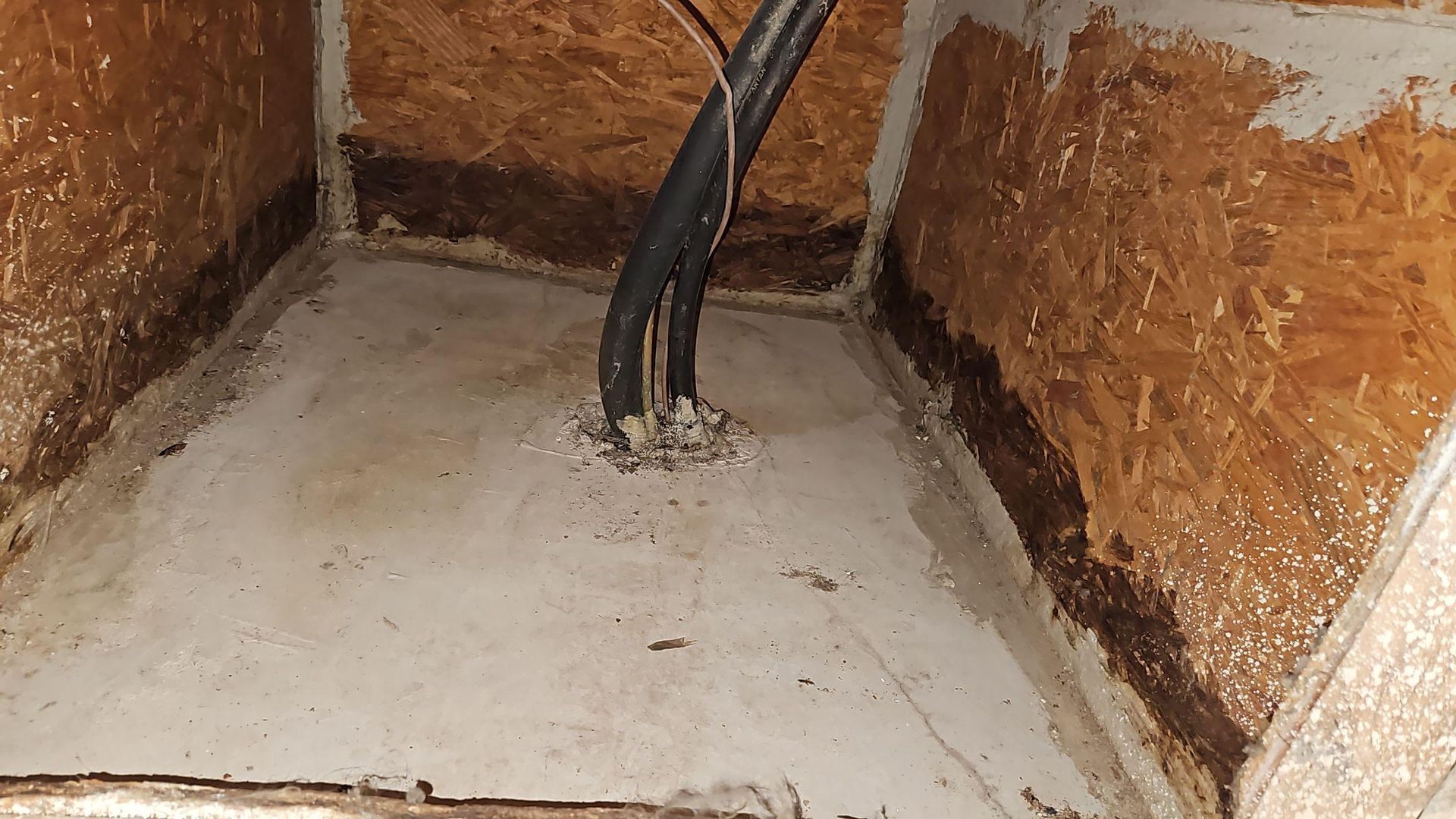
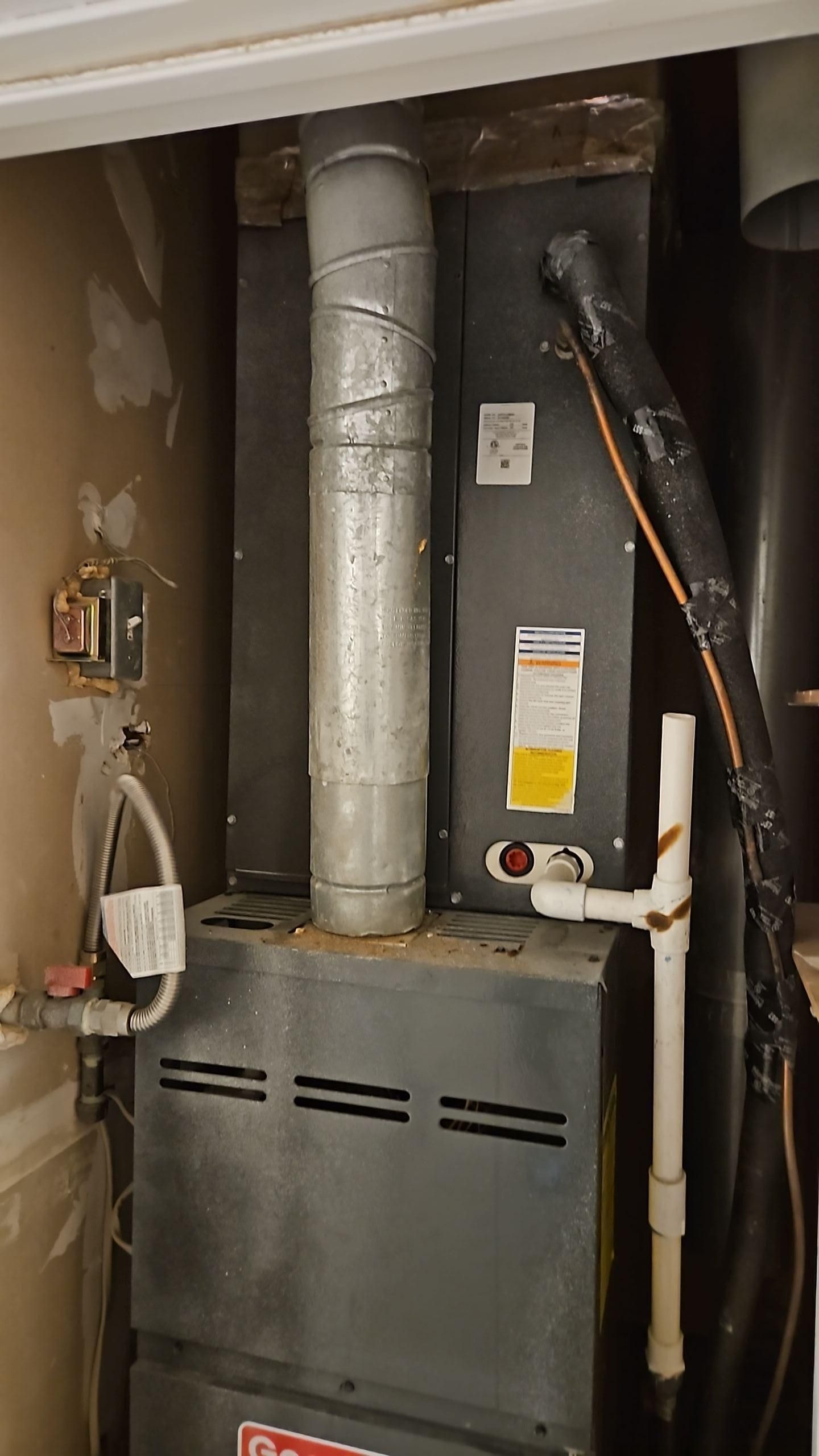
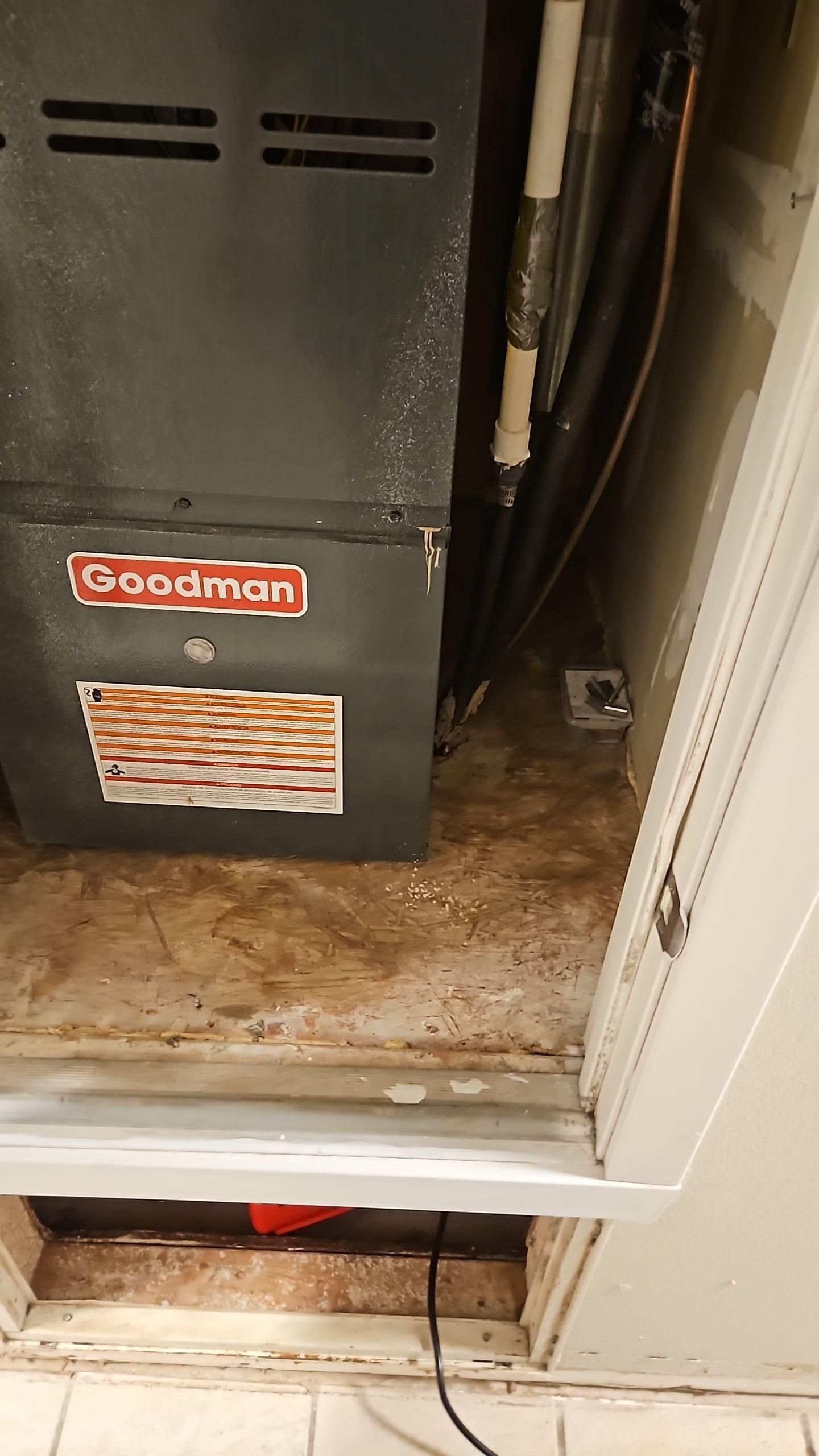
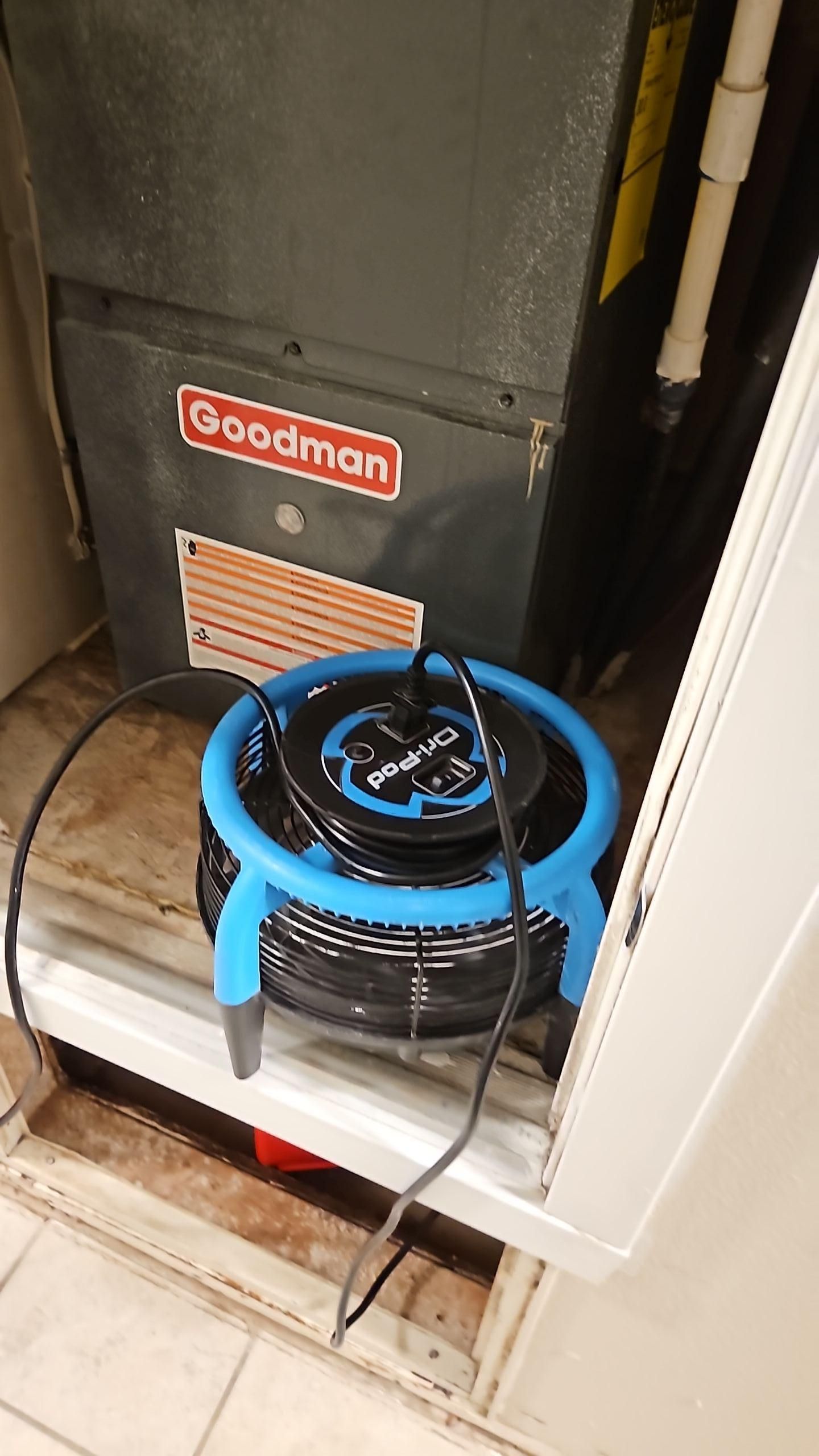
- AC Closet: Standing water and saturated materials around the base of the HVAC unit
- Office and Office Closet: Moisture trapped behind baseboards and absorbed into the lower portions of drywall
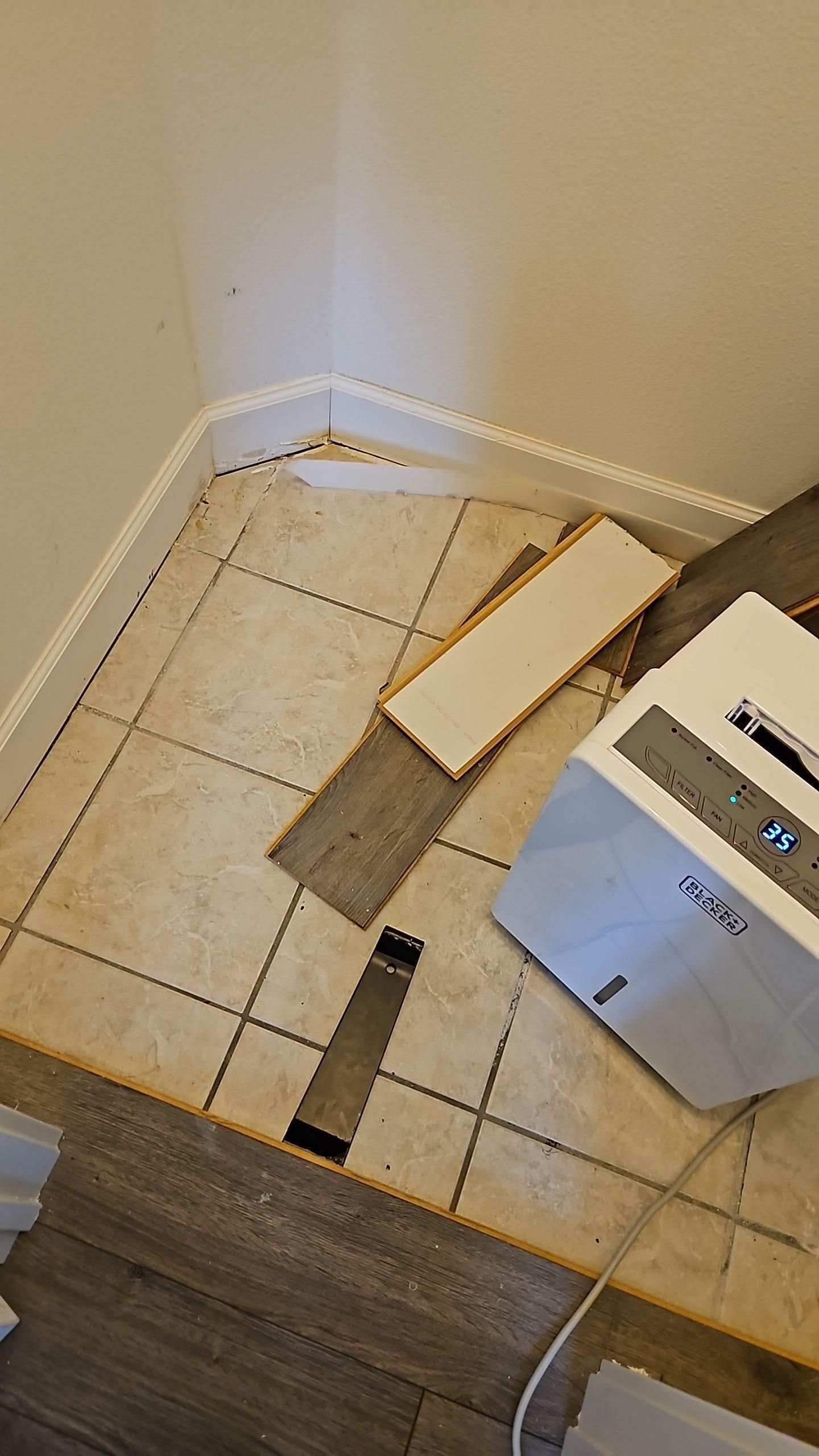
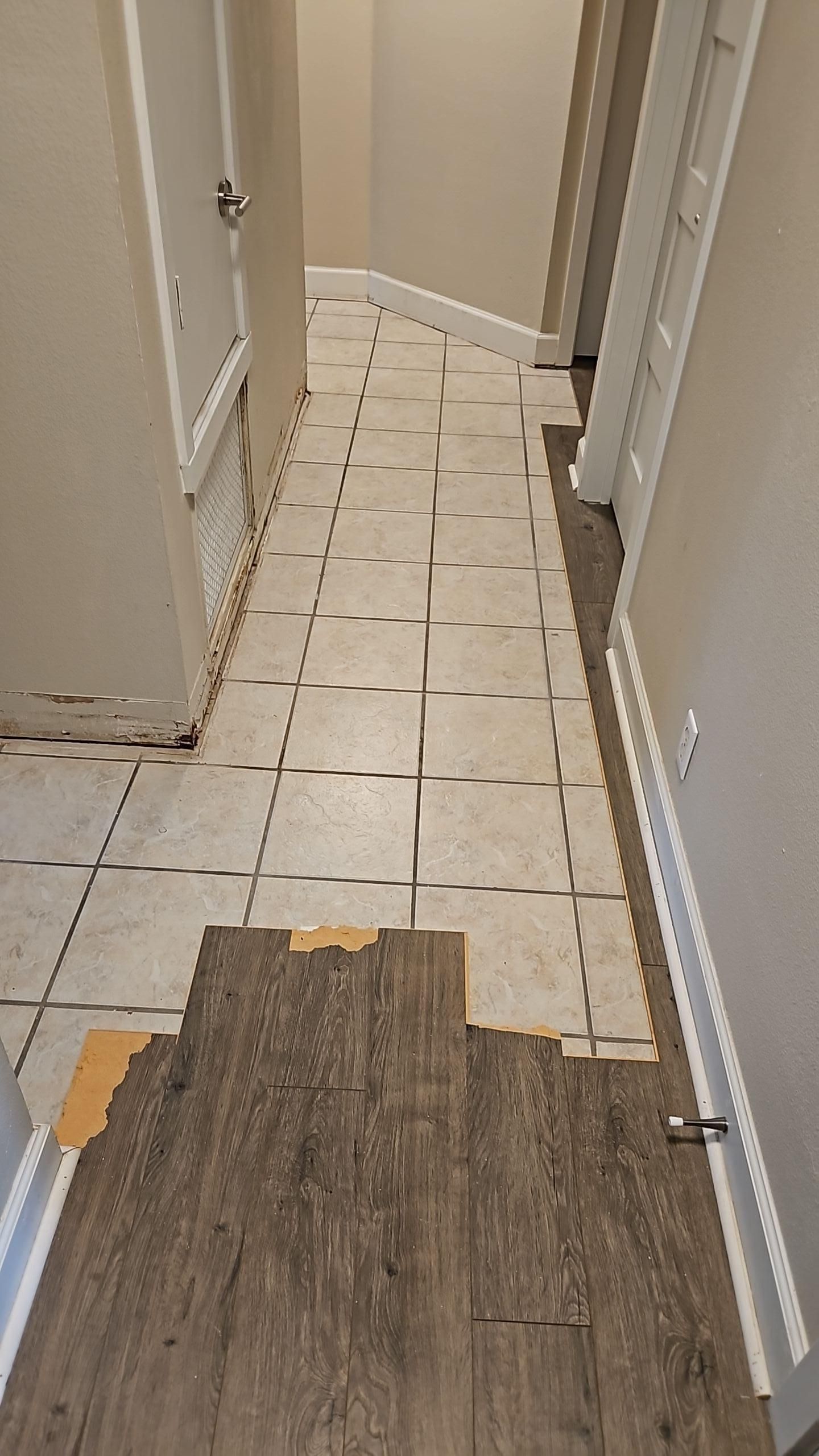
- Hallway: Wet baseboards and compromised laminate flooring with moisture underneath
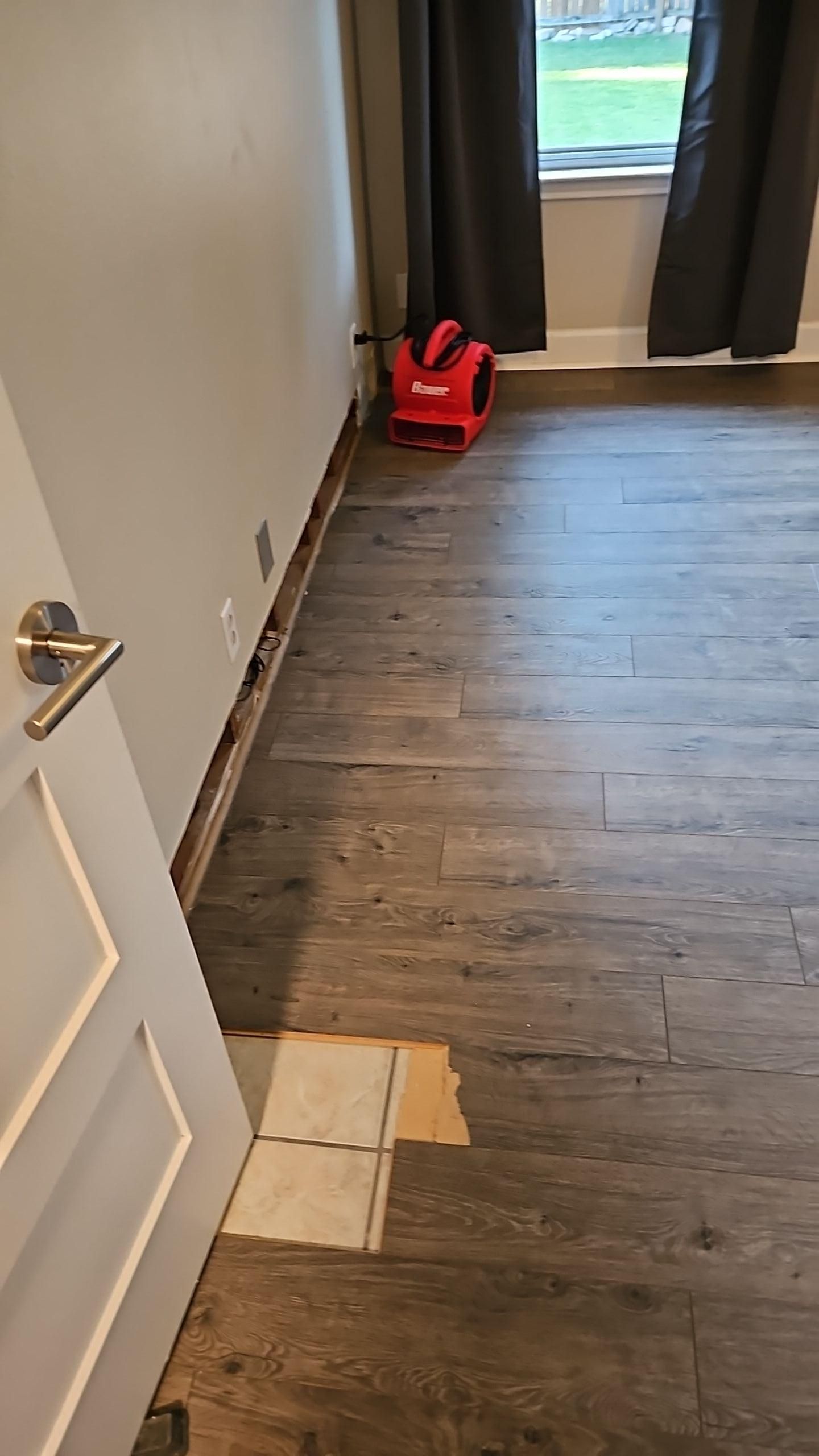
- Bedroom: Moisture behind the baseboards and a small section of flooring affected near the doorway
The photos below show the initial conditions across the home before we started any demo or drying work.
 |
 |
 |
 |
 |
 |
What Did the Mitigation Process Look Like?
Every room needed a slightly different approach, but the overall goal was the same: remove the wet materials, dry the structure, and prevent any further damage. Our crew followed IICRC S500 water damage restoration standards throughout the project.
AC Closet
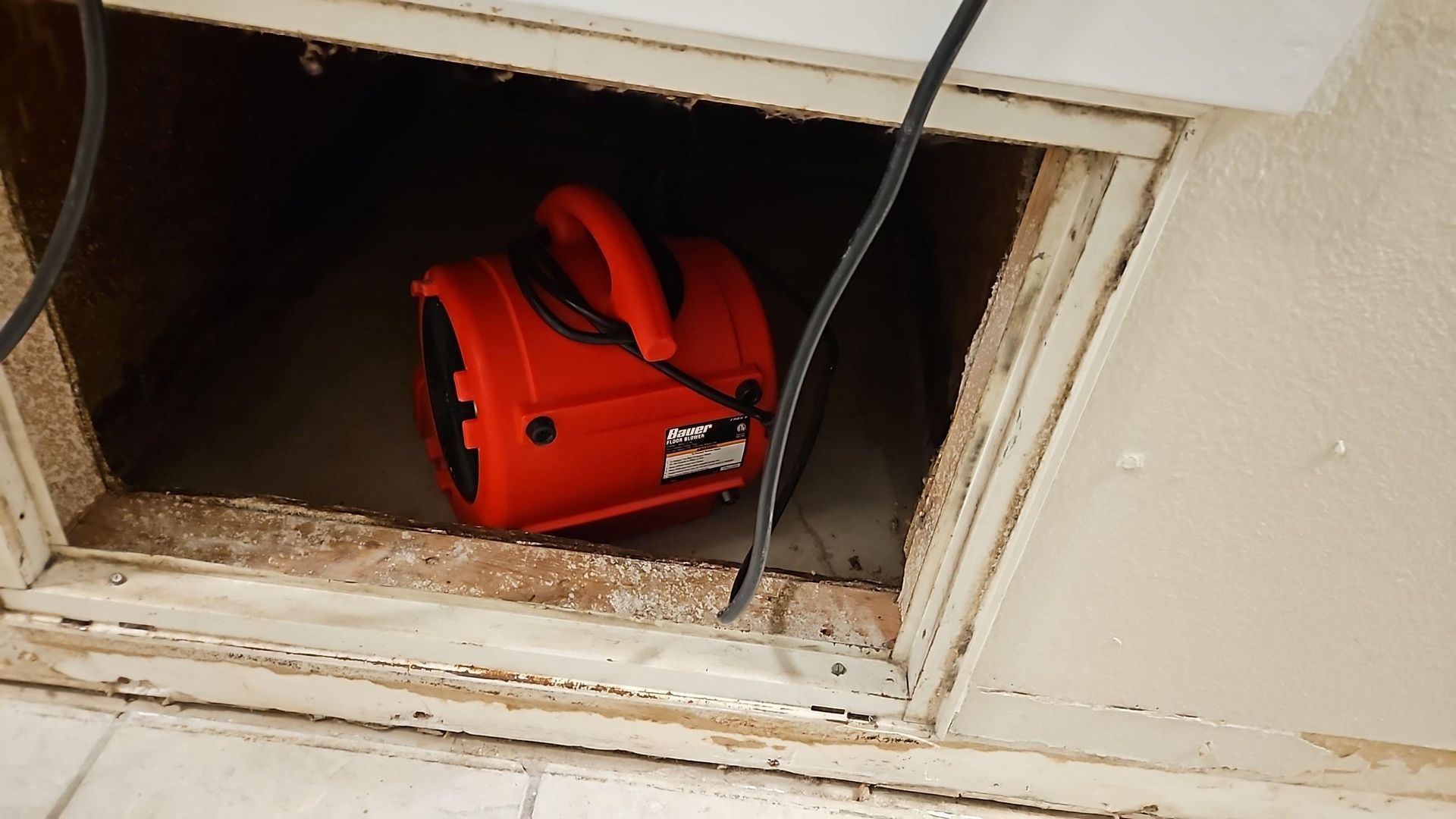
We started at the source. The AC closet was dried out thoroughly using commercial dehumidifiers and air movers to pull moisture out of the surrounding materials. Getting this area dry first was critical, because leaving moisture at the source would have undermined everything else we did downstream.
Office and Office Closet
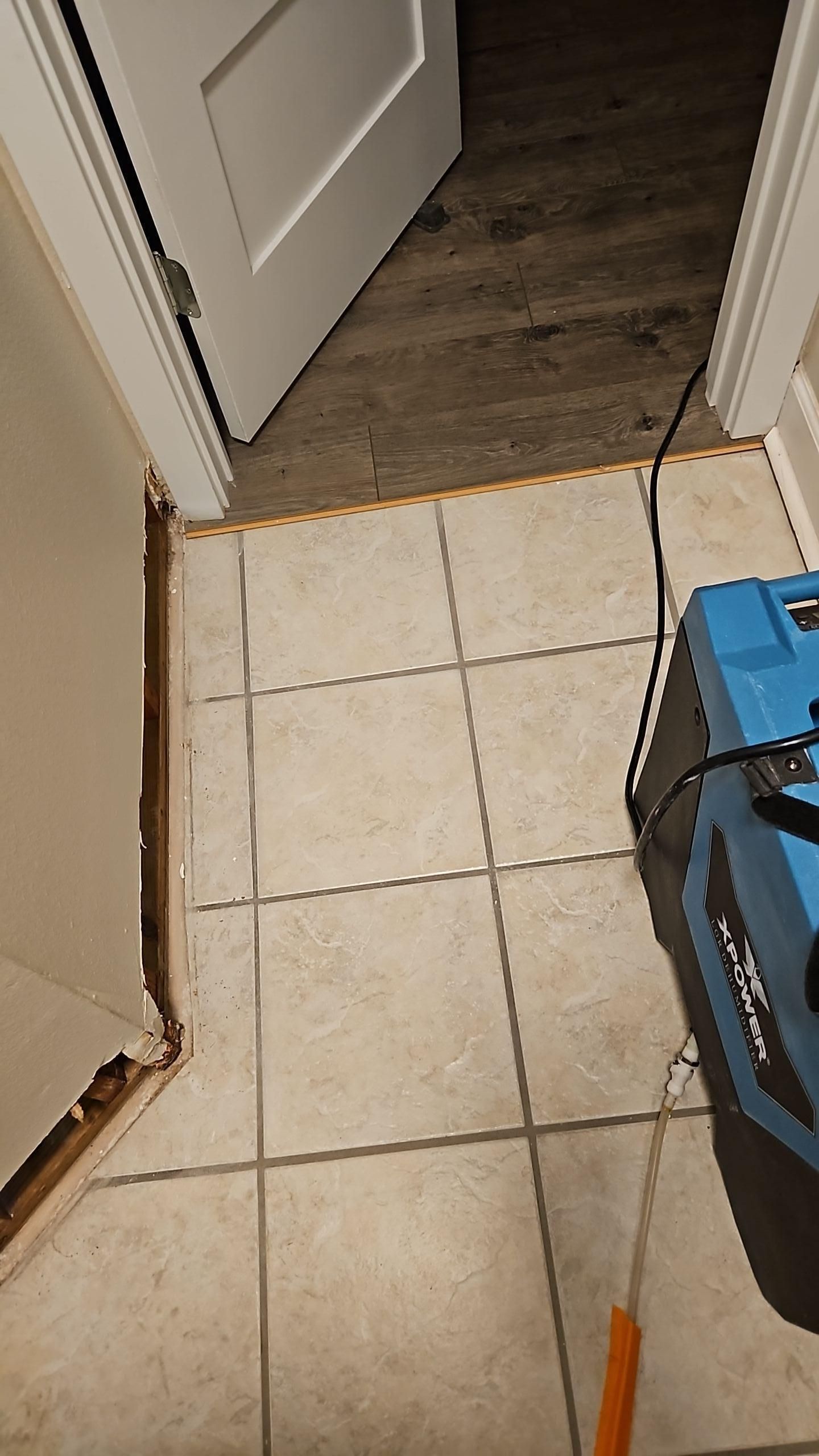
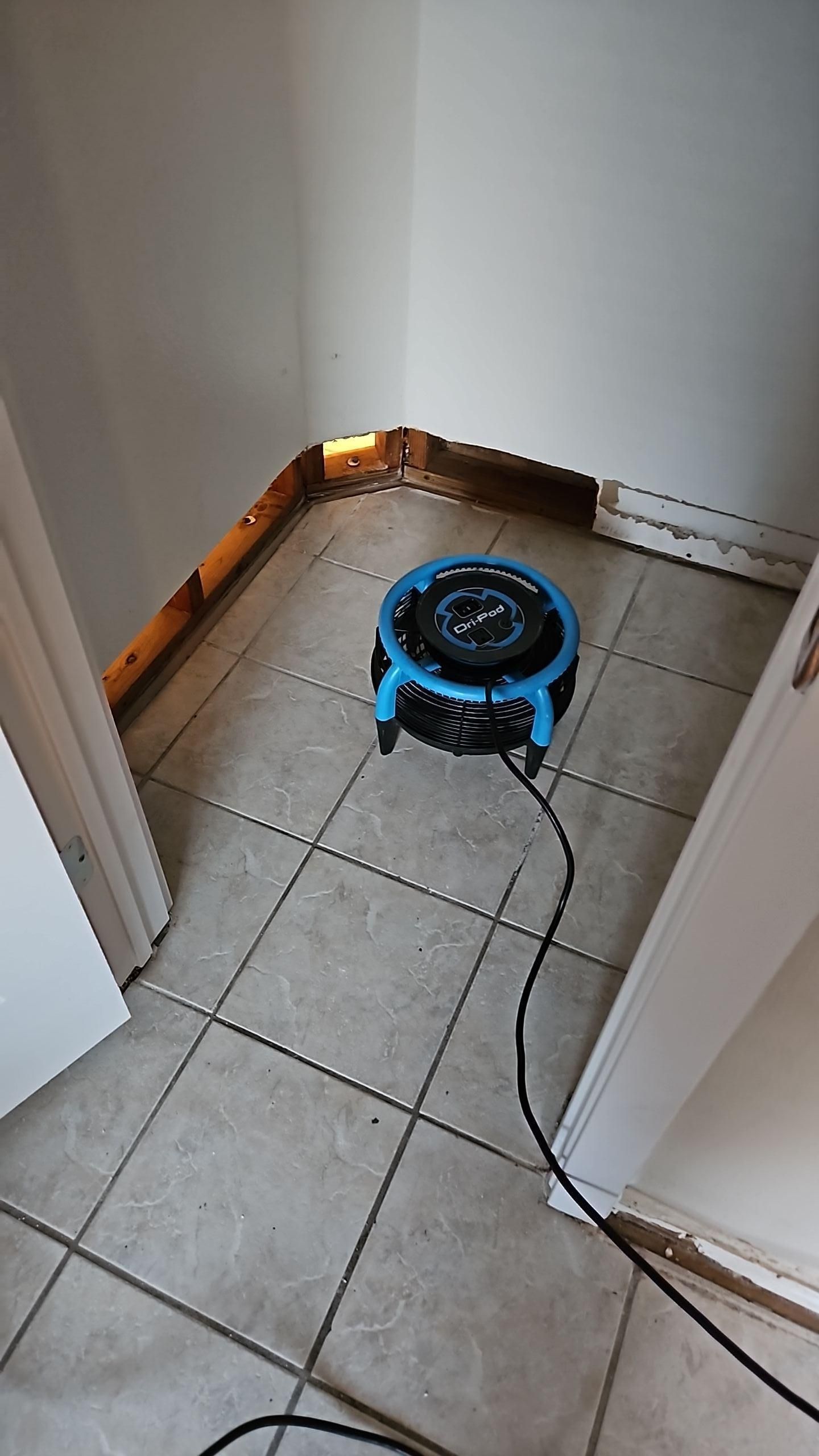
In both the office and the office closet, we detached the baseboards and cut away the damaged sections of drywall behind them. The lower portions of the walls had absorbed enough moisture that they couldn't simply be dried in place. Removing the affected material gave us direct access to the wall cavities, where we set up drying equipment to pull moisture from the studs and sheathing.
Hallway
The hallway required the most visible work. We detached the baseboards, then removed a section of the laminate flooring that had been compromised by the moisture underneath. If you've seen the photos, you'll notice the original tile exposed beneath the laminate, which is common in many residential restoration projects around here. Once the wet flooring was out, we dried the area completely before it could be prepped for new flooring installation.
Bedroom
The bedroom had less extensive damage, but it still needed attention. We removed the baseboards and pulled up one small section of the flooring planks where moisture had collected. Our team placed drying equipment to make sure the subfloor and slab were completely dry before anything was put back together.
These photos show the drying and demo work in progress across the home.
 |
 |
 |
 |
 |
 |
Why AC Leaks Need Professional Water Damage Restoration
A lot of homeowners assume an AC leak is minor. A little water, a few towels, no big deal. But by the time you can see the water, it's usually been spreading behind walls and under floors for a while. Moisture meters don't lie, and they almost always tell a bigger story than what's visible.
If this homeowner had tried to handle it alone, the trapped moisture behind the drywall and under the flooring would have created perfect conditions for mold growth. That's a much bigger problem. Our post on common causes of water damage in homes covers more scenarios like this one. You can also see how we handled an HVAC leak in a Round Rock hallway with a similar approach.
How to Catch an AC Leak Early
A few simple habits can save you from dealing with a situation like this one:
- Check your drip pan regularly. If it's holding water or looks corroded, that's a red flag.
- Keep the condensate drain line clear. A clogged line is one of the most common causes of AC leaks in Central Texas homes.
- Watch for soft spots in flooring near your HVAC unit, especially if you have laminate or vinyl plank over a slab foundation.
- Schedule regular HVAC maintenance. A technician can spot potential leak issues before they turn into water damage.
For more on what to watch for, our guide on signs of water damage under your floor is a solid starting point.
Dealing with Water Damage from an AC Leak?
If you've noticed dampness near your HVAC unit, soft flooring, or water stains along your baseboards, don't wait for the problem to spread. Our IICRC-certified team at Texas Certified Restoration is available 24/7 to assess the damage, start drying immediately, and walk you through the entire restoration process.
Serving Round Rock, Pflugerville, Georgetown, Cedar Park, and the Greater Austin area.

Tracy King
About The Author:
Tracy King, of Texas Certified Restoration, brings over 10 years of combined industry experience to the disaster restoration field. Since the founding of the company, Tracy has been committed to providing professional and dependable restoration services to homeowners and businesses throughout the Greater Austin area. With a passion for helping clients navigate the challenges of water damage, fire damage, and other disaster-related situations, Tracy leads a certified team dedicated to delivering quality service that helps families and businesses resume normal life after unexpected emergencies.
Read More: