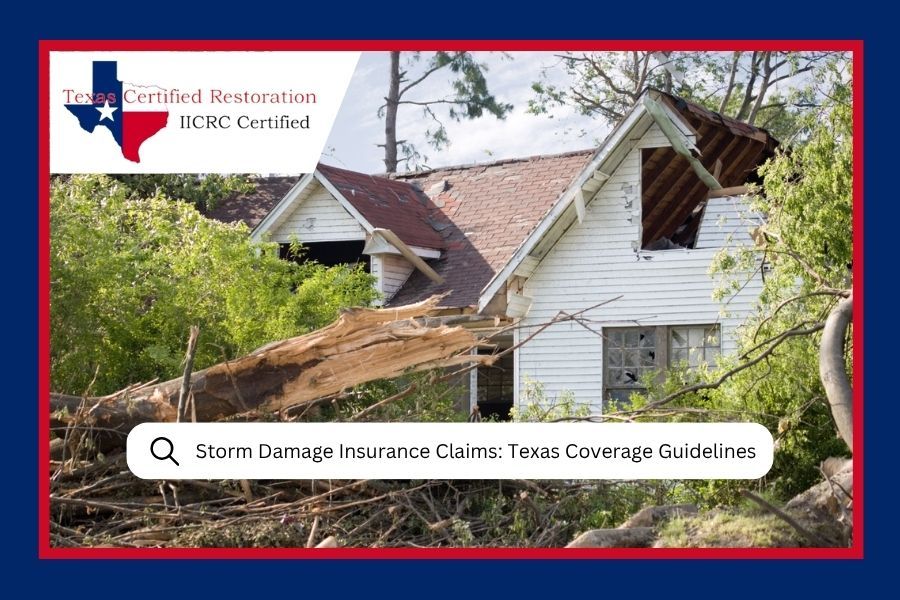
Storm Damage Insurance Claims: Texas Coverage Guidelines for Property Owners
Updated on: October 13, 2026
Author: Tracy King
Jump To:
A severe storm rolls through Central Texas, and suddenly you're staring at a soaked ceiling or a tree limb through your roof. Your first thought is probably, "Will insurance cover this?" The answer is usually yes, but how you handle the next 48 hours makes a big difference in what you actually get paid. If your property has taken a hit, storm damage restoration should be your immediate next step, even before the adjuster shows up. At Texas Certified Restoration, we've walked homeowners in Round Rock, Pflugerville, Georgetown, and across Williamson County through this exact process.
Does Homeowners Insurance Cover Storm Damage in Texas?
Most standard homeowners policies in Texas do cover storm damage, including wind, hail, and rain that enters through a storm-created opening. The tricky part is understanding what falls outside your coverage and how your deductible works.

Texas policies often have a separate wind and hail deductible. It's usually 1% to 2% of your home's insured value, not a flat dollar amount. Say your home is insured for $350,000 with a 2% deductible. You'd pay the first $7,000 out of pocket.
| Usually Covered | Usually NOT Covered |
|---|---|
| Wind damage to roof, siding, windows | Flood damage (requires separate policy) |
| Rain through a storm-created opening | Gradual damage or neglected maintenance |
| Fallen tree removal and structural damage | Landscaping (limited coverage) |
| Temporary living expenses | Cosmetic damage without functional impact |
Here's a big one: standard policies don't cover flooding. You need a separate policy through the National Flood Insurance Program (NFIP) for that.
Rain blowing through a broken window? Covered. Creek water rising into your garage? That's flood, not storm. Big difference.
What Should You Do First After Storm Damage?
The steps you take right after storm damage directly affect your claim outcome. Insurers expect you to take "reasonable steps" to prevent further damage. Skip this, and they can reduce your payout or deny portions of your claim.
Storm Damage? Don't Wait for It to Get Worse.
Our team responds 24/7 across Round Rock, Pflugerville, Cedar Park, and Greater Austin.
Get Help NowYour immediate action checklist:
- Stay safe. Don't enter rooms with sagging ceilings or standing water near outlets.
- Document everything. Photos and video of all visible damage before you touch anything. Wide shots and close-ups with timestamps.
- Prevent further damage. Tarp a damaged roof, board up windows, move furniture from wet areas. Keep receipts for these expenses because they're typically reimbursable.
- Call your insurance company. Report the damage promptly and get your claim number.
- Contact a restoration company. A certified team can start emergency mitigation while you wait for the adjuster.
The biggest mistake we see homeowners in Hutto, Leander, and across Travis County make? Waiting. Every hour water sits in your walls, the damage gets worse. What starts as a straightforward water damage restoration job can escalate quickly if moisture isn't addressed fast.
How to File a Storm Damage Insurance Claim in Texas
File it right the first time, and you'll save weeks of hassle. Call your insurer's claims line. Have your policy number ready, the date the damage happened, a short description, your photos, and any receipts from emergency repairs.

Texas law says your insurer must respond to your claim within 15 days. They then have 15 business days to make a decision after getting all your paperwork. FEMA's flood prep resources can also help you stay ahead of future storms.
When the adjuster comes out, walk them through every room. Show them what's not obvious: water stains behind drywall, soft spots in the floor, moisture readings. Share any professional assessment reports. They help your case.
Did You Know?
According to FEMA, just one inch of floodwater can cause up to $25,000 in damage to a home. That's why documenting everything early matters for your insurance claim.
Common Mistakes That Hurt Your Storm Damage Payout
Good claims get reduced all the time because of simple errors. These are the ones we see most with families in Georgetown, Cedar Park, and across Williamson County.
Throwing Away Damaged Materials Too Early
You'll want to rip out soggy carpet and toss wet drywall. Don't. If the adjuster hasn't seen it, you're tossing your proof. Take photos, then wait for the adjuster or their written OK before you throw anything out.
Not Understanding Your Deductible
That percentage deductible catches people off guard every year. Know your numbers before a storm hits. If the damage costs less than your deductible, filing may not be worth it. Small claims can also raise your rates.
Accepting the First Offer Without Review
Their first number isn't always the right number. Compare it to your restoration company's scope of work. If there's a gap, ask for a second look. You have every right to push back.
When Should You Call a Restoration Company?
Call before the adjuster shows up. Not after. A restoration team's job is to stop things from getting worse. That's called mitigation. Your insurance company expects you to do it. If you wait days for an adjuster while water sits in your walls, that actually hurts your claim.
At Texas Certified Restoration, we work with insurance companies every week. We use the same tools and terms adjusters use. That means our reports, moisture readings, and photos back up your claim instead of causing confusion.
You can also check out our guide on what Texas homeowners need to know about insurance coverage for more on how policies work with restoration. And our post on flash flood recovery covers the full restoration timeline. If lightning caused fire damage, we handle that too.
Need Help With a Storm Damage Claim?
Texas Certified Restoration serves Round Rock, Pflugerville, Georgetown, Cedar Park, Leander, Hutto, and communities throughout Williamson and Travis Counties. Available 24/7.
Contact Our TeamStorms in Central Texas don't give you much warning. But knowing how insurance works puts you ahead when it counts. Document everything, get a professional on-site fast, and don't settle for less than your policy covers.
Frequently Asked Questions
How long do I have to file a storm damage insurance claim in Texas?
Most policies say you need to file within one to two years. But sooner is always better. The longer you wait, the harder it is to prove the damage came from a storm and not normal wear.
Can I start repairs before the insurance adjuster arrives?
Yes, and you should. Your policy requires reasonable steps to prevent further damage, such as tarping a roof or extracting standing water. Document everything with photos and keep receipts. Emergency mitigation costs are typically reimbursable.
What's the difference between a wind/hail deductible and a standard deductible?
A standard deductible is a set dollar amount, like $1,000. A wind/hail deductible is a percentage of your home's value, usually 1% to 2%. That means you could owe much more out of pocket for storm claims.
Does homeowners insurance cover flooding from a storm?
No. Flood damage needs its own policy, usually through the National Flood Insurance Program. Your regular homeowners policy covers rain that comes in through storm damage (like a hole in the roof), but not rising water from the ground.

Tracy King
About The Author:
Tracy King, of Texas Certified Restoration, brings over 10 years of combined industry experience to the disaster restoration field. Since the founding of the company, Tracy has been committed to providing professional and dependable restoration services to homeowners and businesses throughout the Greater Austin area. With a passion for helping clients navigate the challenges of water damage, fire damage, and other disaster-related situations, Tracy leads a certified team dedicated to delivering quality service that helps families and businesses resume normal life after unexpected emergencies.
Read More: