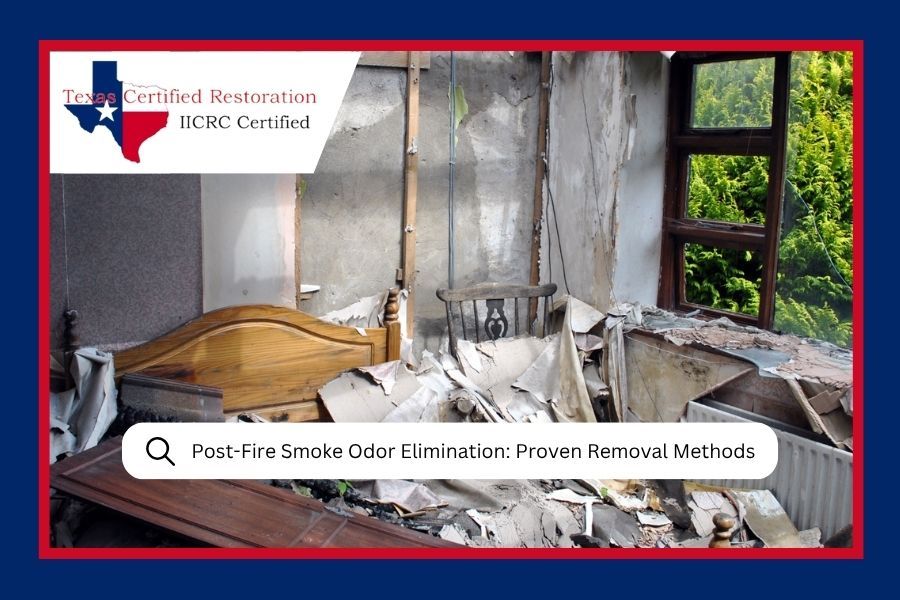
Post-Fire Smoke Odor Elimination: Proven Removal Methods
Updated on: July 14, 2026
Author: Tracy King
Smoke smell after a house fire seems like it should be easy to fix. You open the windows, spray some air freshener, and the smell is still right there, greeting you every time you walk inside. That's not a cleaning problem. It's a chemistry problem. At Texas Certified Restoration, we've helped homeowners across Round Rock, Pflugerville, Cedar Park, and the greater Austin area tackle this during fire damage restoration work. Here's what actually works.
Dealing with smoke smell after a fire?
Our certified team responds 24/7 across the Austin area, including Round Rock, Pflugerville, and surrounding communities.
Get Help TodayWhy Does Smoke Smell Linger So Long?
Smoke odor is stubborn because it isn't just sitting on surfaces. Tiny particles and acidic gases penetrate porous materials at a microscopic level. Drywall, wood framing, carpet fibers, and upholstery absorb these particles deeply, then release them slowly over time. That's why you can still smell smoke weeks later.
The type of smoke matters too. Wet smoke from smoldering fires leaves thick, sticky residue that's hard to neutralize. Dry smoke spreads broadly but is less sticky. Protein smoke from burning food is nearly invisible yet produces one of the most intense odors of all.
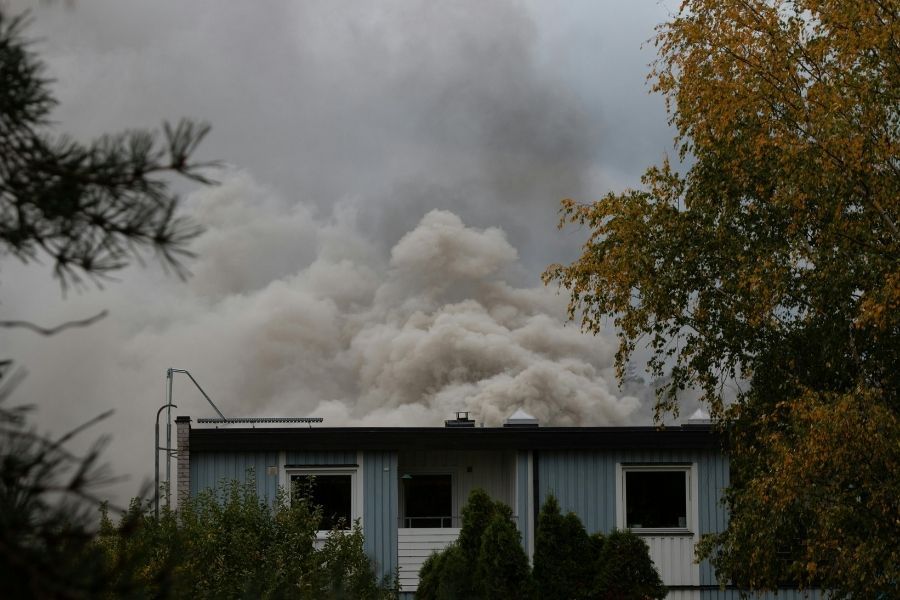
The Three Types of Smoke Residue
| Smoke Type | Source | Character | Removal Difficulty |
|---|---|---|---|
| Dry Smoke | Fast, high-heat fires | Powdery, widespread | Moderate |
| Wet Smoke | Smoldering, low-heat fires | Sticky, pungent | High |
| Protein Smoke | Burning food or organic matter | Nearly invisible, very strong | Very High |
7 Proven Smoke Odor Removal Methods
Effective odor elimination usually means working through several methods in sequence. Here are the approaches that actually move the needle, from what you can do right now to what requires professional equipment.
1. Ventilate First and Aggressively
Open every window and door. Position box fans to push air out rather than just circulate it. Fresh air alone won't fix the problem, but it reduces concentration and makes every other method more effective. Do this before anything else.
2. Clean Hard Surfaces with the Right Products
Smoke residue coats walls, ceilings, and cabinets with acidic particles. Plain water won't remove them. Use a TSP (trisodium phosphate) solution or a commercial smoke and soot cleaner, working top to bottom so you don't re-contaminate areas you've already cleaned. Wear gloves and rinse surfaces thoroughly after.
3. Seal Porous Surfaces Before Repainting
Even after scrubbing, drywall and unfinished wood can keep releasing odor. That's where odor-blocking primers come in. Products like Kilz or BIN shellac-based primer seal smoke molecules so they can't continue off-gassing. Skipping this step is the most common reason smoke smell comes right back after a paint job.
4. Deep-Clean or Replace Soft Materials
Carpets, curtains, upholstered furniture, and mattresses absorb smoke deeply. Machine-washable items should be laundered with white vinegar in the rinse. Heavily contaminated pieces may need professional cleaning or replacement.
5. Use Odor Absorbers for Lingering Smells
Bowls of activated charcoal or baking soda placed throughout affected rooms work slowly but consistently. Replace them every few days. They won't solve heavy contamination alone, but they're a useful complement to more aggressive surface cleaning.
6. Professional Thermal Fogging
This is where professional methods go beyond DIY. Thermal fogging heats a solvent into fine particles sized to match smoke molecules, so they penetrate porous materials and neutralize odor at a molecular level. Ready.gov's home fire guidance specifically recommends professional restoration companies for fire and smoke cleanup because of the specialized equipment involved.
7. Hydroxyl Generators or Ozone Treatment
Both are professional-grade air treatment tools. Hydroxyl generators are safe with occupants present and break down odor molecules in the air. Ozone treatment is highly effective but requires complete vacating of the space. Consumer air purifiers simply don't compare to either.
Common Mistakes That Make Smoke Odor Worse
Some cleanup approaches actually make smoke smell harder to remove.
- Painting without sealing first. Regular paint won't trap odor molecules. The smell bleeds back through within weeks every time.
- Relying on air fresheners or candles. These mask odor temporarily and can actually make it harder to identify where the worst contamination is hiding.
- Using a wet mop on dry smoke residue. Dry smoke is powdery. Introducing water smears it deeper into surfaces.
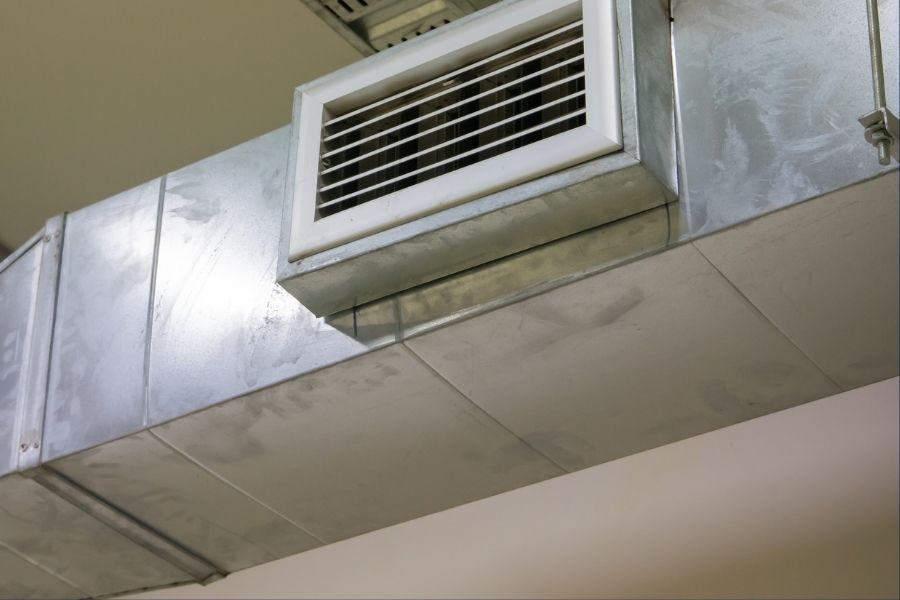
- Skipping HVAC duct cleaning. Smoke travels through ductwork. If ducts aren't cleaned, the system redistributes particles every time it runs.
- Assuming it'll fade on its own. Minor smoke exposure can improve with ventilation, but significant contamination usually gets worse as particles keep off-gassing from walls and materials.
Our article on 8 overlooked smoke damage signs after house fires covers what else to watch for beyond the smell.
DIY vs. Professional Smoke Odor Removal
Not every smoke situation needs professional intervention. Here's how to know where the line is.
DIY is reasonable when:
- Smoke exposure was minor, like a small kitchen incident with limited spread
- No structural materials were affected and smell is mild
Call a professional when:
- Visible char or soot is spread across multiple rooms
- The smell is strong, widespread, or returning after cleaning
- HVAC ducts or wall cavities are involved
- You're filing an insurance claim and need documented remediation
The U.S. Fire Administration's homeowner guide recommends contacting your insurance company right away and working with professional restoration companies. Documentation from a certified team matters when filing your claim.
Our team at Texas Certified Restoration handles smoke damage restoration across Austin and surrounding areas, including Pflugerville, Georgetown, Leander, and Manor. We're IICRC-certified and work directly with insurance companies. If you're curious about what fire restoration actually costs, our guide on fire damage restoration pricing for homeowners covers it clearly.
Ready to get rid of that smoke smell for good?
Texas Certified Restoration serves Round Rock, Pflugerville, Cedar Park, and the Greater Austin area, 24 hours a day.
See Our Round Rock Fire ServicesFrequently Asked Questions About Smoke Odor Removal
How long does smoke smell last in a house after a fire?
Without treatment, smoke smell can persist for months or years. Smoke particles embed in drywall, wood, carpet, and insulation and keep releasing odor as they off-gas. Professional remediation with surface cleaning, odor-blocking primer, and thermal fogging can clear smoke odor in days to a few weeks depending on severity.
Can you paint over smoke-damaged walls to remove the smell?
Not with regular paint. Standard latex or oil-based paint won't seal in smoke odor molecules, and the smell bleeds back through within weeks. You need an odor-blocking primer such as Kilz or BIN shellac-based primer before painting. These products encapsulate smoke particles and stop the continued off-gassing that brings the smell back.
Does homeowners insurance cover professional smoke odor removal?
In most cases, yes. Smoke damage and odor remediation are typically covered under standard homeowners insurance when the damage results from a covered peril like a house fire. Policy details vary, so contact your insurer right away and document all damage. For more on what's typically covered, see our breakdown of whether homeowners insurance covers fire damage.
What is thermal fogging and does it actually eliminate smoke odor?
Thermal fogging heats a deodorizing solvent into fine particles that penetrate porous materials the same way smoke did. This neutralizes odor molecules at the source rather than masking them. It's one of the most effective professional methods for deep smoke contamination and a standard technique used by IICRC-certified restoration companies.

Tracy King
About The Author:
Tracy King, of Texas Certified Restoration, brings over 10 years of combined industry experience to the disaster restoration field. Since the founding of the company, Tracy has been committed to providing professional and dependable restoration services to homeowners and businesses throughout the Greater Austin area. With a passion for helping clients navigate the challenges of water damage, fire damage, and other disaster-related situations, Tracy leads a certified team dedicated to delivering quality service that helps families and businesses resume normal life after unexpected emergencies.
Read More: