Biohazard Safety Classifications: Understanding Risk Levels
Updated on: April 21, 2026
Author: Tracy King
Jump To:
Most people never think about biohazard risk levels until they're standing in the middle of a situation that demands answers. Maybe it's a plumbing backup that flooded your bathroom with contaminated water, or an accident that left blood on surfaces throughout a room. Suddenly, the word "biohazard" isn't abstract anymore. Our biohazard cleanup team in Austin handles these situations regularly, and understanding risk levels makes a big difference in how you respond.
So let's break it down together. No medical jargon overload. Just the practical stuff you actually need to know.
What Are Biohazard Safety Classifications?
Biohazard safety classifications are a ranking system developed by the Centers for Disease Control and Prevention (CDC) to categorize biological hazards based on the risk they pose to human health. There are four levels, ranging from minimal threat to life-threatening danger. Each level comes with specific containment requirements, personal protective equipment (PPE) standards, and cleanup protocols.
You might be thinking, "Isn't this just for laboratories?" Fair question. The formal BSL system was designed for lab environments. But the principles, particularly proper containment, protective gear, and safe disposal, apply directly to residential and commercial biohazard situations too.
The classification system gives professionals a shared language for assessing risk. When your restoration company shows up and identifies the level of contamination, they're drawing on the same science that governs hospital protocols and research facilities.
The Four Biohazard Risk Levels Explained
Each biosafety level builds on the one before it, adding more containment measures and stricter protocols as the danger increases. Here's what each level involves and how it connects to real-world scenarios you might encounter.
| Level | Risk Level | Common Examples | PPE Required |
|---|---|---|---|
| BSL-1 | Minimal | Non-pathogenic bacteria (e.g., E. coli strains used in education) | Gloves, basic eye protection |
| BSL-2 | Moderate | Bloodborne pathogens, Staph infections, Hepatitis B and C | Gloves, face shields, lab coats, biosafety cabinets |
| BSL-3 | High | Tuberculosis, anthrax, SARS-related coronaviruses | Respirators, full PPE, negative pressure environments |
| BSL-4 | Extreme | Ebola, Marburg virus (no vaccine or treatment available) | Full-body air-supplied suits, complete facility isolation |
BSL-1: Low Risk, Basic Precautions
This is the baseline. BSL-1 covers agents that don't cause disease in healthy adults, like the harmless bacteria strains used in high school biology labs. Standard hand-washing and gloves are usually enough here.
BSL-2: Moderate Risk, the Most Relevant for Homeowners
This is where it gets personal. BSL-2 covers pathogens that pose moderate hazards through skin contact, ingestion, or membrane exposure, including bloodborne pathogens like Hepatitis B, Hepatitis C, and HIV. According to the OSHA Bloodborne Pathogens Standard (29 CFR 1910.1030), all human blood and certain body fluids must be treated as if they're infectious.
This is the level most likely to show up in your world. Crime scenes, unattended deaths, accidents with significant blood loss, and hoarding situations with accumulated bodily fluids all fall into BSL-2 territory.
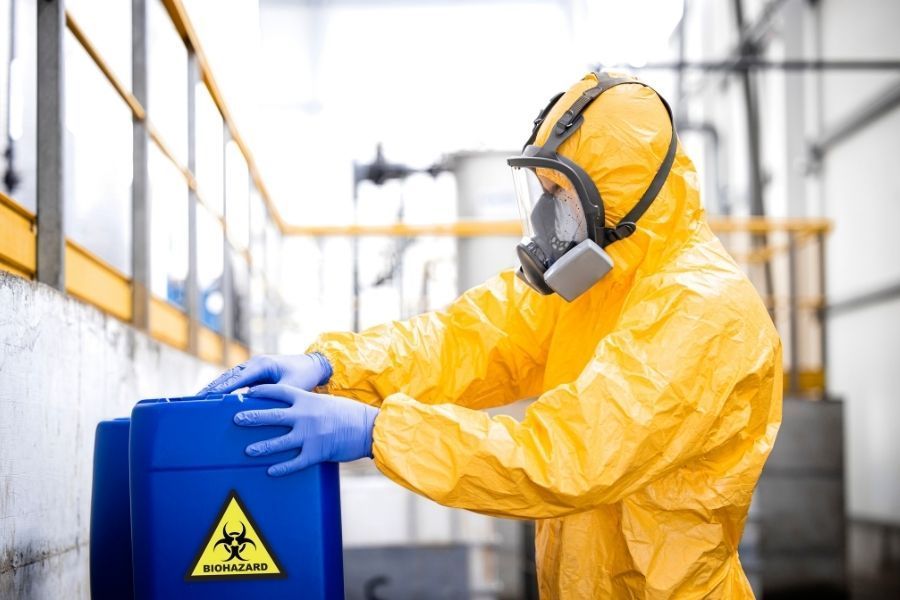
Proper PPE is non-negotiable for biohazard cleanup. Technicians suit up with full protective gear before entering any contaminated space.
BSL-3 and BSL-4: Severe to Extreme Risk
These levels deal with pathogens capable of causing serious or fatal disease. BSL-3 involves agents transmitted through respiratory exposure, like tuberculosis. BSL-4 is reserved for the most dangerous known pathogens, with no available vaccines or treatments. For homeowners, BSL-3 and BSL-4 scenarios are extremely rare, but knowing they exist helps you appreciate why even "lower level" situations still demand serious precautions.
Dealing with a Biohazard Situation at Your Property?
Our certified technicians at Texas Certified Restoration are available 24/7 for emergency biohazard response in the Greater Austin area.
Get Help NowWhere Residential Biohazard Cleanup Fits In
Most residential biohazard situations fall within BSL-2 classification because they involve human blood, bodily fluids, or other potentially infectious materials (OPIM). That's not a small deal. BSL-2 still requires trained professionals, proper containment, hospital-grade disinfectants, and regulated waste disposal.
Here's a quick look at the most common residential biohazard scenarios and why each one requires professional attention:
- Unattended death or decomposition: Body fluids penetrate porous surfaces like carpet, padding, and subfloor. Airborne pathogens can also be present.
- Crime or trauma scenes: Blood spatter and tissue matter require specialized cleaning agents and techniques that go far beyond household products.
- Hoarding with biohazard contamination: Accumulated waste, animal feces, and bodily fluids create layered contamination that demands systematic remediation.
- Accidents involving significant blood loss: Even a single significant blood event on porous materials requires professional-grade treatment.
A common mistake we see is homeowners trying to clean up after these events with bleach and paper towels. We get it, the instinct to "just take care of it" is strong. But standard cleaning products can't eliminate bloodborne pathogens from porous materials. In fact, improper cleanup can actually spread contamination into areas that weren't originally affected. If you've experienced water damage restoration challenges before, you know that what you can't see is often the biggest problem. Biohazard contamination works the same way.
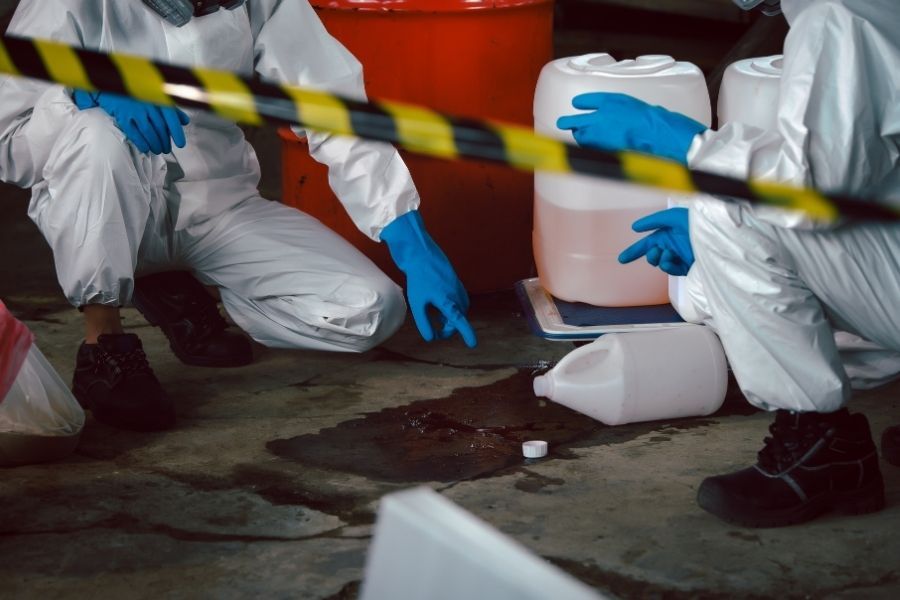
Biohazard assessment includes checking for contamination in areas that aren't immediately visible, like subfloor layers and wall cavities.
OSHA Standards and PPE Requirements for Biohazard Cleanup
OSHA's Bloodborne Pathogens Standard isn't just for hospitals. It applies to any worker who encounters blood or other potentially infectious materials, including biohazard remediation crews working in homes.
⚠ Key OSHA Requirements for Biohazard Remediation
Exposure Control Plan
Every employer must have a written plan identifying tasks with exposure risk and outlining protective measures.
Universal Precautions
All human blood and body fluids are treated as potentially infectious, regardless of the source.
Regulated Waste Disposal
Contaminated materials go in labeled, color-coded containers and must be disposed of per federal and state regulations.
PPE Standards
Gloves, gowns, face shields, eye protection, and respirators as needed. Employer provides and maintains all PPE.
According to the CDC's biosafety training resources, proper protective measures are directly tied to the classification level of the hazard. For residential biohazard work (BSL-2 equivalent), that typically means full Tyvek suits, N95 or higher respirators, double-layered nitrile gloves, and boot covers.
This is exactly why DIY biohazard cleanup is such a bad idea. Without the right gear, training, and disposal protocols, you're putting yourself and your family at genuine risk. Hepatitis B can survive on surfaces for over two weeks. That's not a typo. Two full weeks of invisible danger on your floor or countertop.
When Should You Call a Professional Biohazard Cleanup Company?
Short answer? Whenever blood, bodily fluids, or decomposition are involved. Here's a simple checklist to help you decide:
Call a Professional If:
- Blood or bodily fluids have contacted porous materials (carpet, wood, drywall)
- An unattended death or decomposition has occurred
- The scene involves a crime, trauma, or suicide
- You can detect strong, persistent odors from biological contamination
- You're unsure whether the situation is safe to handle yourself
- The affected area is larger than roughly one square foot of hard, non-porous surface
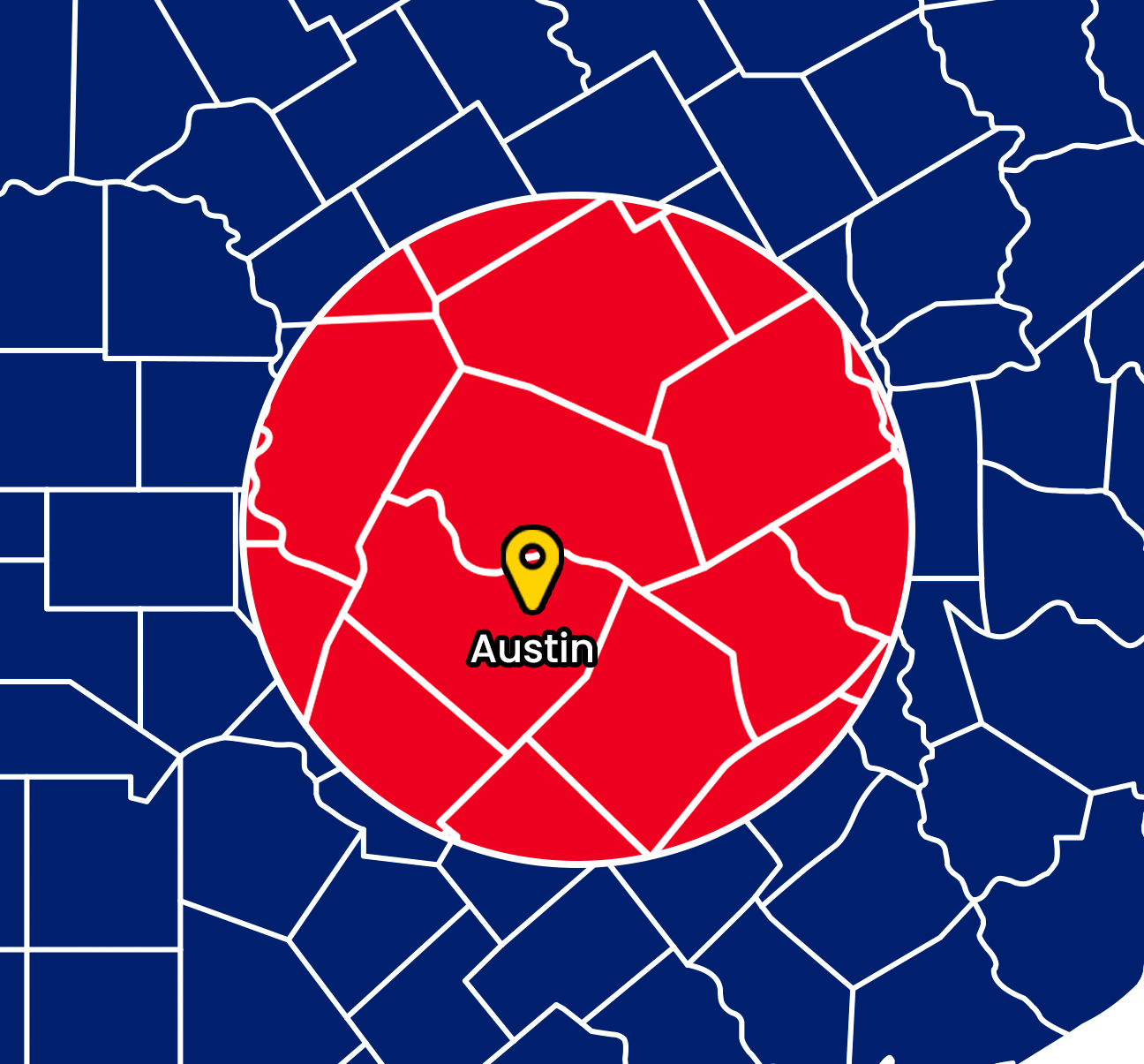
Our team at Texas Certified Restoration responds to biohazard emergencies 24/7 across the Round Rock and Greater Austin area. With over 10 years of combined industry experience and IICRC certification, we handle everything from containment and cleaning to proper waste disposal. We also work directly with your insurance company to make the process as painless as possible.
If you've been through a similar unexpected property emergency, like when a water damage discovery caught you off guard, you already know the value of acting quickly. Biohazard situations are no different. You might also find our guides on house fire recovery and delayed water damage consequences helpful for understanding how fast response prevents bigger problems.
Don't Risk Your Safety with DIY Biohazard Cleanup
Texas Certified Restoration is IICRC certified and available 24/7 for biohazard emergencies in the Greater Austin area.
Contact Our TeamFrequently Asked Questions
What biohazard level is blood cleanup in a home?
Most residential blood cleanup situations fall under Biosafety Level 2 (BSL-2) classification. This means the materials involved, primarily human blood and bodily fluids, pose a moderate health risk and require trained professionals with proper PPE, containment procedures, and regulated waste disposal methods.
Can I clean up a small amount of blood myself?
If a very small amount of blood (less than one square foot) has only contacted hard, non-porous surfaces like tile or sealed countertops, you may be able to clean it with a 1:10 bleach solution while wearing gloves. However, if blood has contacted porous materials like carpet, wood, or drywall, professional biohazard remediation is strongly recommended because standard cleaning cannot fully eliminate pathogens that have been absorbed.
Does homeowners insurance cover biohazard cleanup?
Many homeowners insurance policies do cover biohazard cleanup, particularly when it results from a covered event like an accident or crime. Coverage varies by policy and insurer, so it's best to contact your insurance provider directly. Professional restoration companies like Texas Certified Restoration can work with your adjuster to help navigate the claims process.
How long do bloodborne pathogens survive on surfaces?
Survival time varies by pathogen. Hepatitis B virus (HBV) can remain infectious on environmental surfaces for more than two weeks. Hepatitis C can survive up to two weeks. HIV is more fragile outside the body but can still pose risk in the right conditions. This is why prompt, professional cleanup with hospital-grade disinfectants is critical after any biohazard event.
Tracy King
About The Author:
Tracy King, of Texas Certified Restoration, brings over 10 years of combined industry experience to the disaster restoration field. Since the founding of the company, Tracy has been committed to providing professional and dependable restoration services to homeowners and businesses throughout the Greater Austin area. With a passion for helping clients navigate the challenges of water damage, fire damage, and other disaster-related situations, Tracy leads a certified team dedicated to delivering quality service that helps families and businesses resume normal life after unexpected emergencies.
Read More: