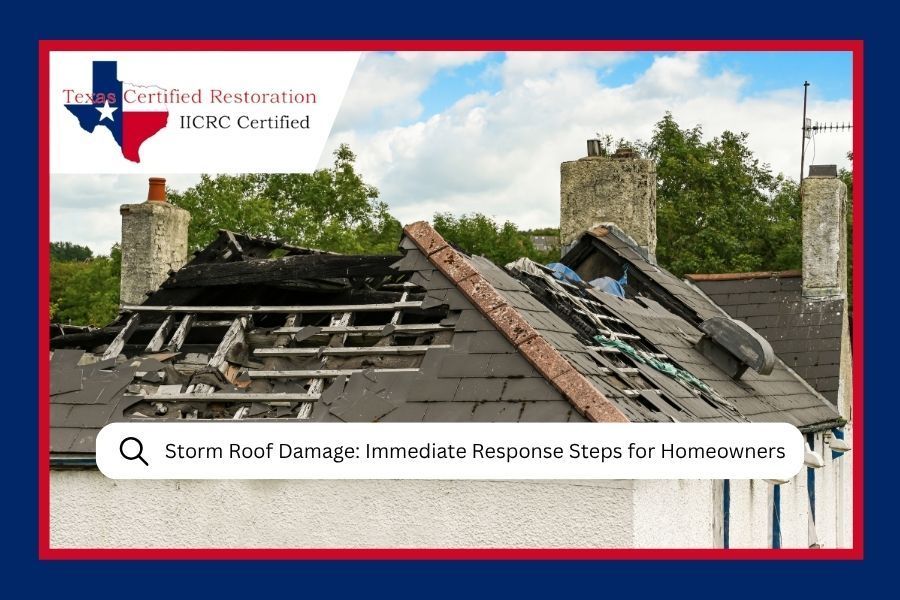
Storm Roof Damage: Immediate Response Steps for Homeowners
Updated on: May 12, 2026
Author: Tracy King
Central Texas storms don't ease you in. One minute it's overcast, and the next there's hail and a branch through your gutters. If your roof just took damage, what you do in the first hour matters more than most people realize. At Texas Certified Restoration, our IICRC-certified team handles storm damage restoration across Round Rock, Austin, Georgetown, Cedar Park, and surrounding communities around the clock. We've seen what early action prevents. Here's your roadmap.
Storm hit your home? We respond 24/7.
Texas Certified Restoration serves the Greater Austin area with IICRC-certified emergency storm response.
Contact Our TeamStep 1: Confirm It's Safe to Move Around
Wait for the storm to fully pass before stepping outside. Hail can resume with little warning, and strong gusts can still knock debris loose after the rain stops. Once it's clear, walk your property from the ground and look up. Check for obvious structural damage, displaced shingles, hanging debris, or anything that looks unstable.
If you see downed power lines near your property, stay inside, call 911, and contact your utility company. From inside, check your attic with a flashlight for daylight showing through the roof deck, dripping water, or displaced insulation. These are signs the roof has been breached.
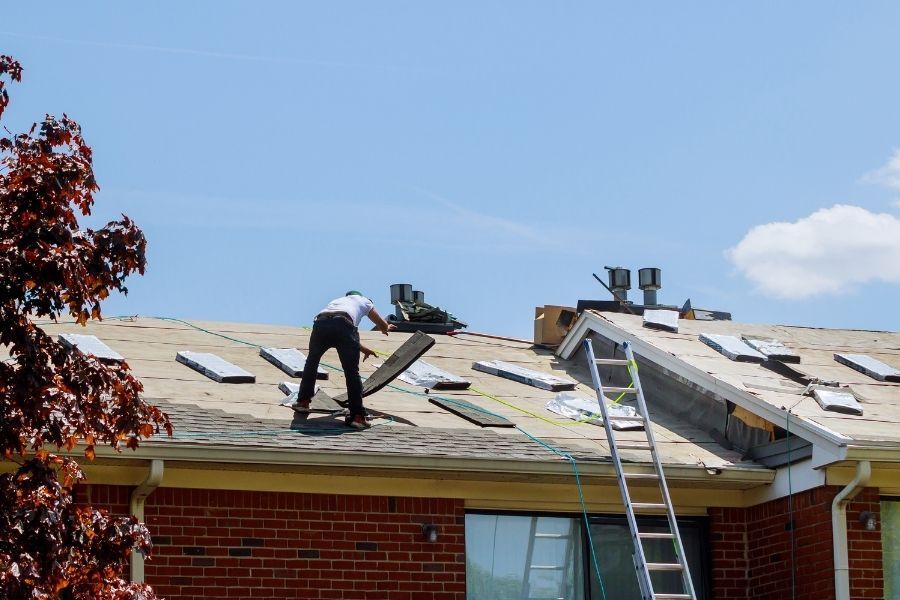
Don't climb on the roof. Wet roofing materials are slippery, and storm-weakened decking can give way without warning. That's a job for trained professionals with proper equipment.
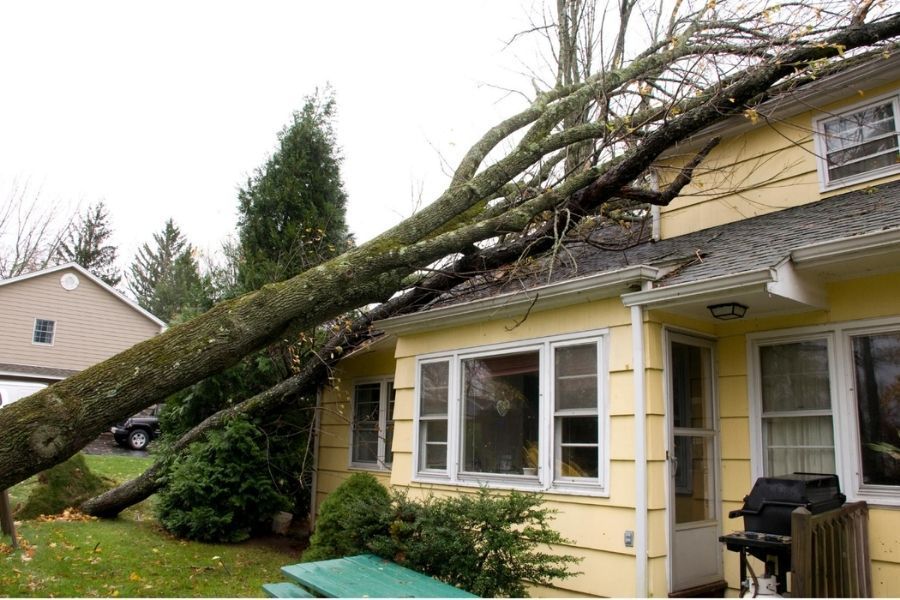
Step 2: Document Before You Touch Anything
Your phone is your most useful tool right now. Before you move debris or mop up water, photograph and video every bit of damage you can see. Gaps in documentation can cost you real money when it comes time to file your claim.
What to capture on camera
- Ceiling stains, bubbling paint, or sagging areas
- Water actively pooling on floors or running down walls
- Visible daylight through the attic roof deck
- Displaced, cracked, or missing shingles (from ground level only)
- Damaged gutters, downspouts, or fascia
- Fallen branches, hail accumulation, and exterior debris
Walk through each room and narrate as you record. Texting or emailing the photos to yourself immediately creates a clear, dated record that's easy to reference later.
Step 3: Apply Temporary Interior Protection
Once you've documented everything, you can start managing active water intrusion. The goal isn't to fix anything. It's to slow further damage while you wait for professionals.
Position buckets under active drips. Cover furniture and electronics with plastic sheeting, or move them out of the affected area. Roll up rugs and get them to dry ground. Towels and blankets can slow water spread across hard floors while you make calls.
Don't try to tarp the roof yourself. Storm-damaged decking can be compromised in ways that aren't obvious from below, and the fall risk is real. Our emergency board-up services handle this safely and quickly, protecting your home from further weather exposure right away.
Your First Hour After Storm Roof Damage
| 0-10 min | Storm has passed? Check for downed lines. Ground-level assessment only. |
| 10-25 min | Photo and video all damage before touching anything. |
| 25-40 min | Temporary protection: buckets, plastic sheeting, move vulnerable items. |
| 40-55 min | Call your insurance company to open the claim. |
| 55-60 min | Contact a licensed restoration company for assessment and emergency tarping. |
Step 4: Call Your Insurance Company
Report the damage the same day if at all possible. Most homeowners policies cover sudden storm damage, but prompt reporting is required. Waiting gives insurers room to question whether the damage pre-existed the storm.
When you call, have your policy number ready and a quick summary: when the storm hit, what you observed, and what temporary steps you've taken. Keep a written log of every call, with the date, time, and name of who you spoke with.
For Central Texas homeowners, the National Weather Service thunderstorm safety resources are worth bookmarking. Knowing when a watch becomes a warning gives you extra time to act before damage happens.
Step 5: Get a Restoration Professional on Site
Even when visible damage looks minor, a professional assessment is worth it every time. Water travels along rafters and ceiling joists, shows up far from the actual breach, and can soak insulation and drywall for days before you see it on the surface.
At Texas Certified Restoration, our IICRC-certified team uses moisture detection equipment to find water that hasn't surfaced yet. Catching it early keeps a manageable job from turning into something far larger, and we document everything to support your insurance claim from day one.
We've handled this exact sequence many times across Greater Austin. Read how it plays out in our case study on how we helped a homeowner recover after a roof leak. If water has already made it inside, our water damage restoration team can extract and dry moisture before secondary damage sets in.
Not sure if your damage is covered?
At Texas Certified Restoration, we work directly with insurance companies and can walk you through the claims process from start to finish.
Learn About Insurance Claim HelpWhat NOT to Do After Storm Roof Damage
Avoiding common mistakes can be just as important as taking the right steps.
| Mistake | Why It Causes Problems |
|---|---|
| Climbing onto a wet or damaged roof | Fall risk; weakened decking can give way without warning |
| Cleaning up before documenting | Removes evidence your insurance adjuster needs |
| Waiting days to contact your insurer | Late reporting gives them grounds to dispute the claim |
| Hiring door-to-door contractors after a storm | Post-storm "chasers" are common here; always verify credentials |
After any major storm, our area sees a wave of door-to-door contractors offering fast repairs. Some are legitimate, many are not. Texas Certified Restoration is IICRC-certified with over 10 years of combined experience, and those credentials protect you in ways a handshake deal never will.
For more on what responsible storm response looks like, read our post on emergency board-up services and protecting your property after storm damage.
Frequently Asked Questions

Tracy King
About The Author:
Tracy King, of Texas Certified Restoration, brings over 10 years of combined industry experience to the disaster restoration field. Since the founding of the company, Tracy has been committed to providing professional and dependable restoration services to homeowners and businesses throughout the Greater Austin area. With a passion for helping clients navigate the challenges of water damage, fire damage, and other disaster-related situations, Tracy leads a certified team dedicated to delivering quality service that helps families and businesses resume normal life after unexpected emergencies.
Read More: