
Refrigerator Water Line Leak Floods Four Rooms in Austin Home
Updated on: March 24, 2026
Author: Tracy King
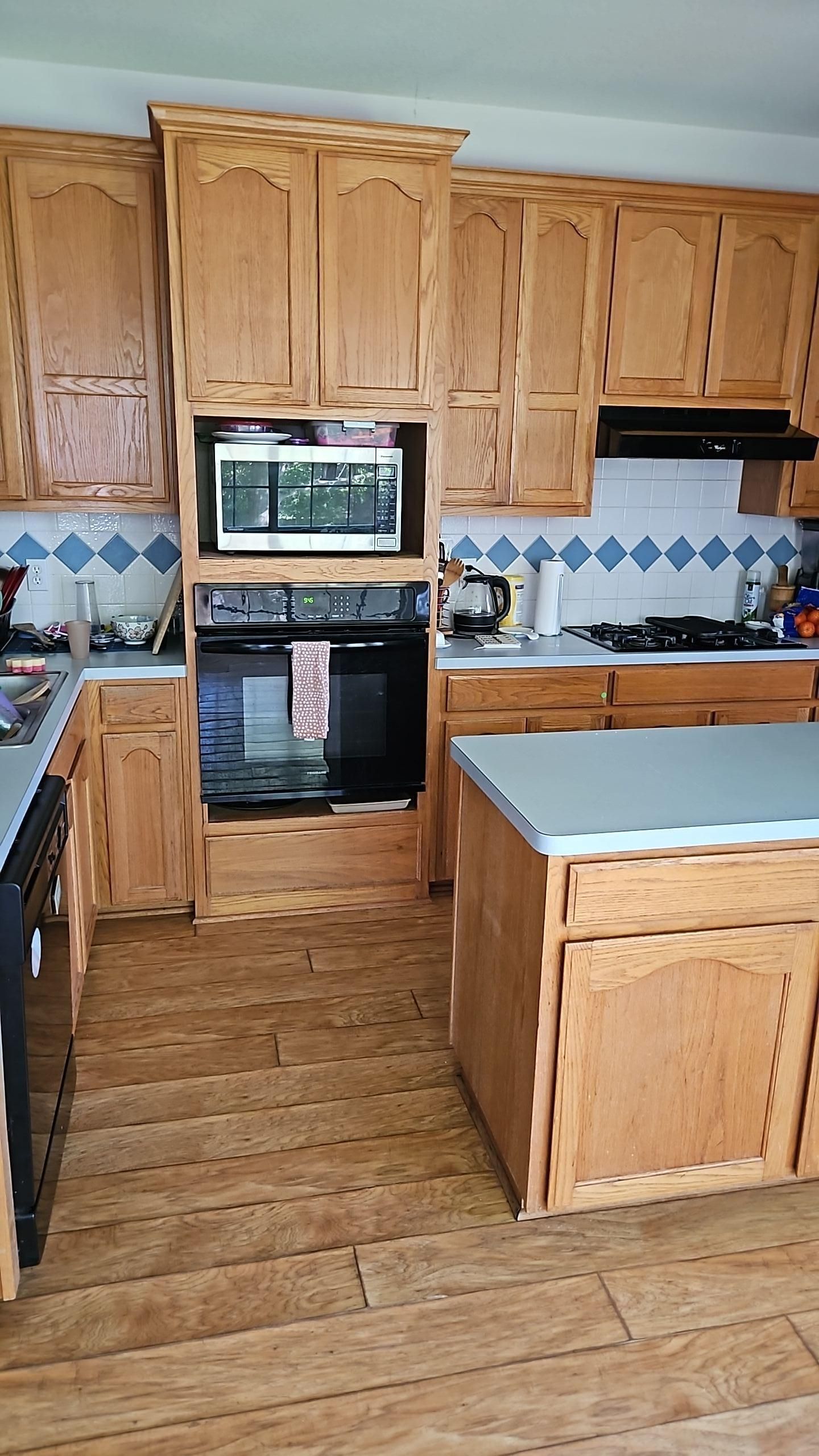
It started like any other August morning. An Austin homeowner walked into their kitchen to find water pooling across the floor. The culprit? A burst water line behind their refrigerator. What seemed like a small appliance issue had already sent water spreading through the kitchen, living room, breakfast nook, and pantry. When our team at Texas Certified Restoration arrived for emergency water damage restoration, we found warped laminate flooring, saturated baseboards, and moisture readings that told us this was far from a simple cleanup.
The Morning We Got the Call
We rolled up at 9:15 AM on August 8th with a three-person crew. The homeowner looked exhausted already. They had discovered the leak just hours earlier, and panic was setting in. Water had traveled fast, seeping under the laminate flooring and spreading in all directions.
Here is the thing about refrigerator water lines: they fail quietly. Most homeowners never think twice about that little plastic or copper tube running behind their fridge. But when it goes, water just keeps flowing until someone notices. By the time this family caught it, four rooms were affected.
Assessing the Full Scope of Damage
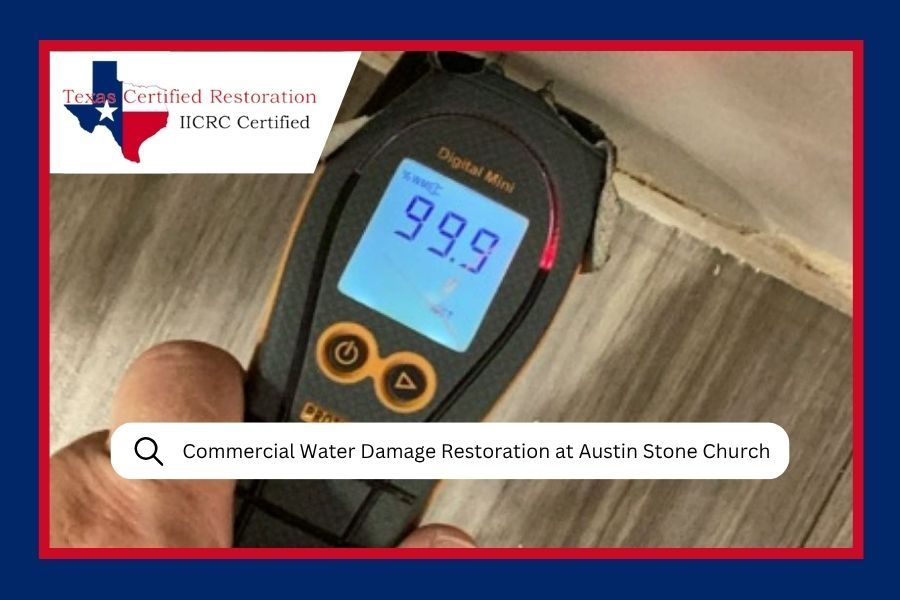
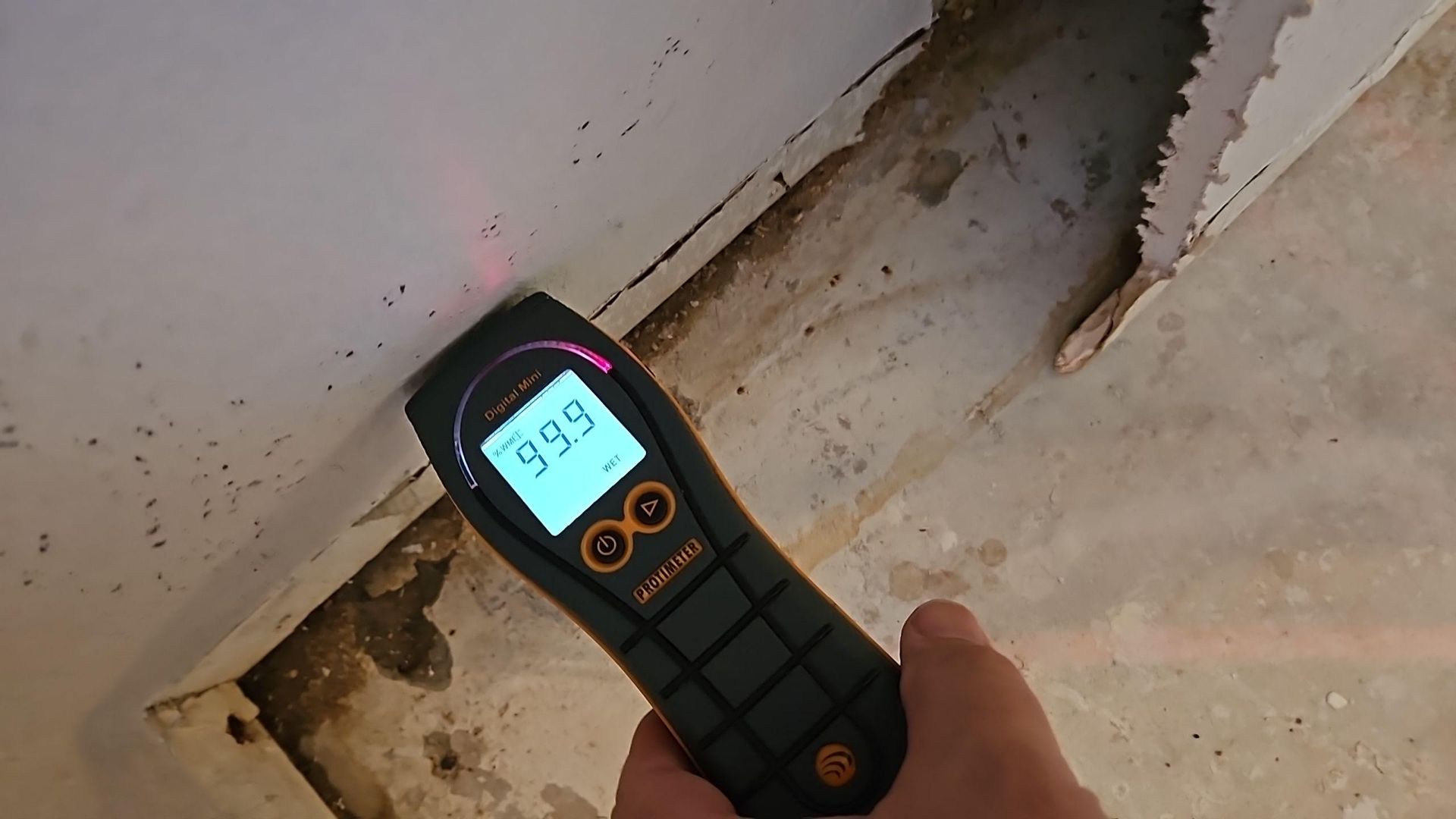
We started with moisture readings throughout the affected areas. The numbers confirmed what we suspected: water had penetrated deep into the subfloor and wicked up into the baseboards. The kitchen, breakfast nook, pantry, and living room all needed attention. According to the IICRC S500 water damage restoration standards, moisture trapped in building materials can lead to mold growth within 24 to 48 hours. We needed to move quickly.
The Kitchen and Breakfast Nook
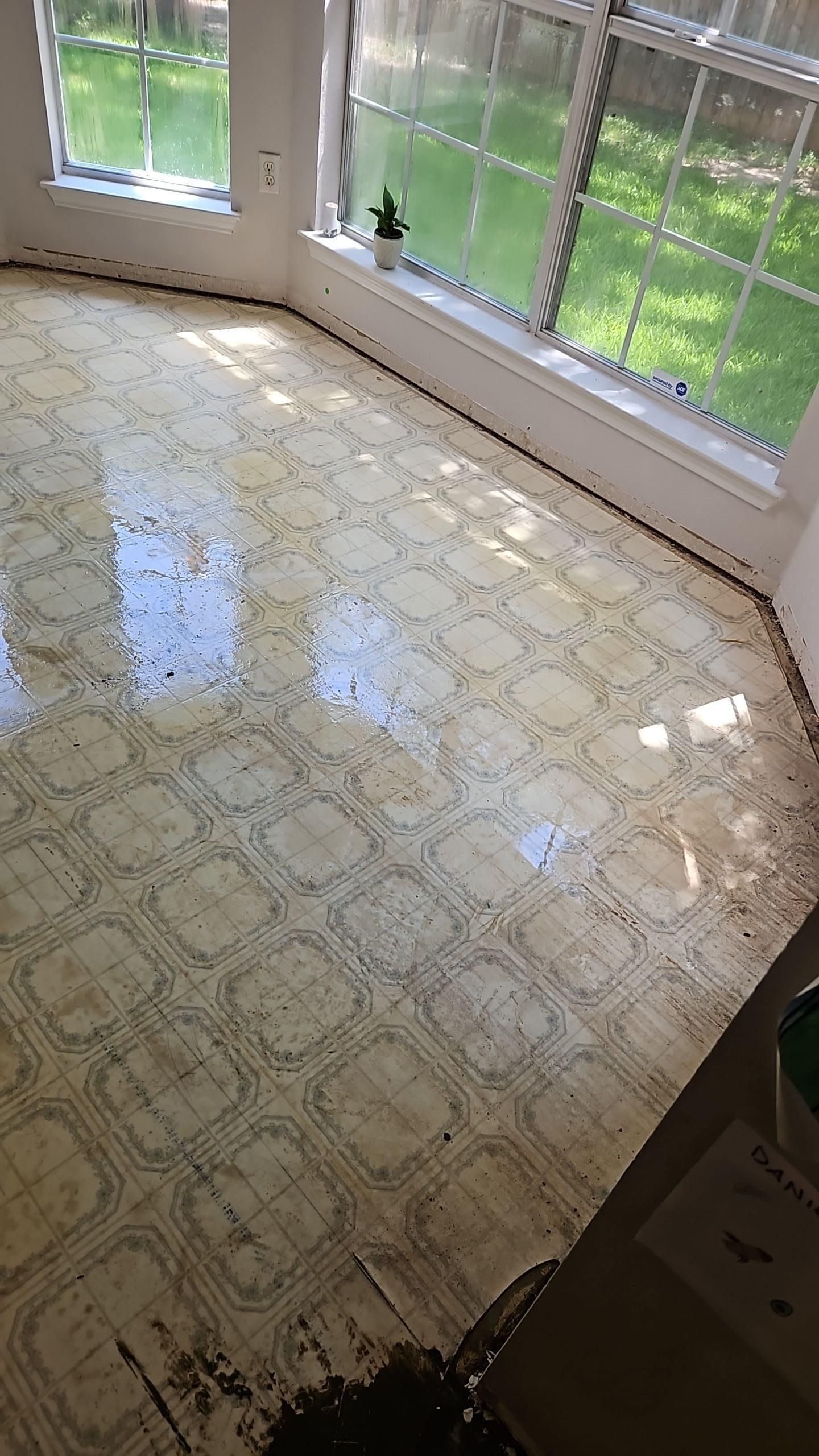
The kitchen was ground zero. We extracted standing water first, then got to work removing the damaged materials. This home had two layers of flooring, laminate over older vinyl, which meant double the demolition work. We pulled up roughly 80 square feet of laminate flooring and underlay, then removed the vinyl layer beneath.
The baseboards came out next. We drilled small holes in the toe kicks to promote airflow behind the cabinets, an important step many restoration companies skip. Hidden moisture behind cabinetry can cause long term problems if you do not address it properly. Every surface got treated with antimicrobial solution to prevent mold and bacterial growth.
The breakfast nook presented an additional challenge. Water had saturated a section of drywall and insulation near the exterior wall. We removed a small portion to ensure nothing got left behind to harbor moisture. This is where experience matters. You cannot just dry wet drywall in place and expect good results.
The Living Room Takes the Worst Hit
Of all the affected rooms, the living room had the most square footage impacted. Over 240 square feet of laminate flooring came up. The water had traveled far, following the path of least resistance under the floor. We carefully moved furniture and belongings to protect the homeowner's possessions while we worked.
Setting Up Professional Drying Equipment
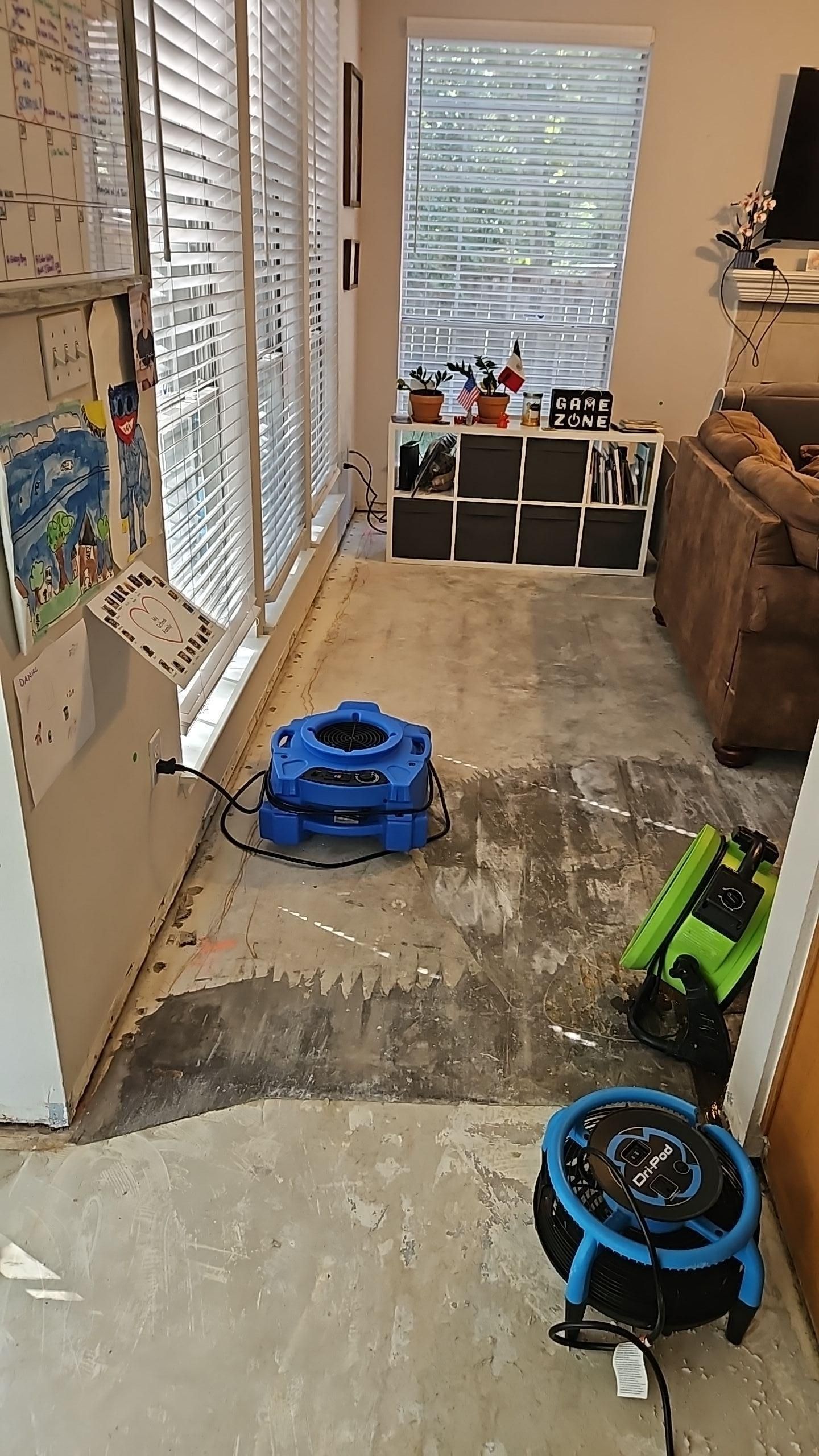
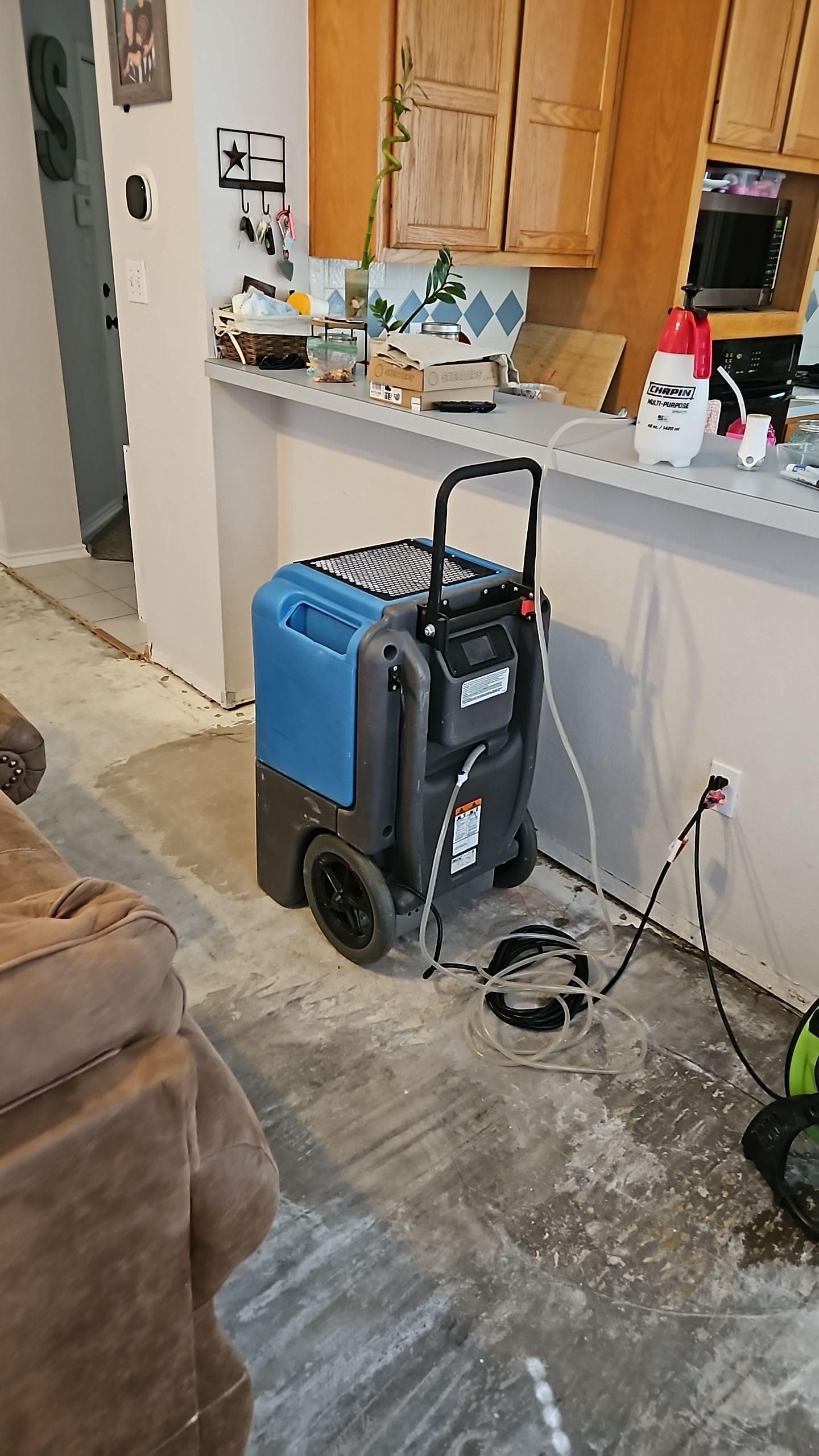
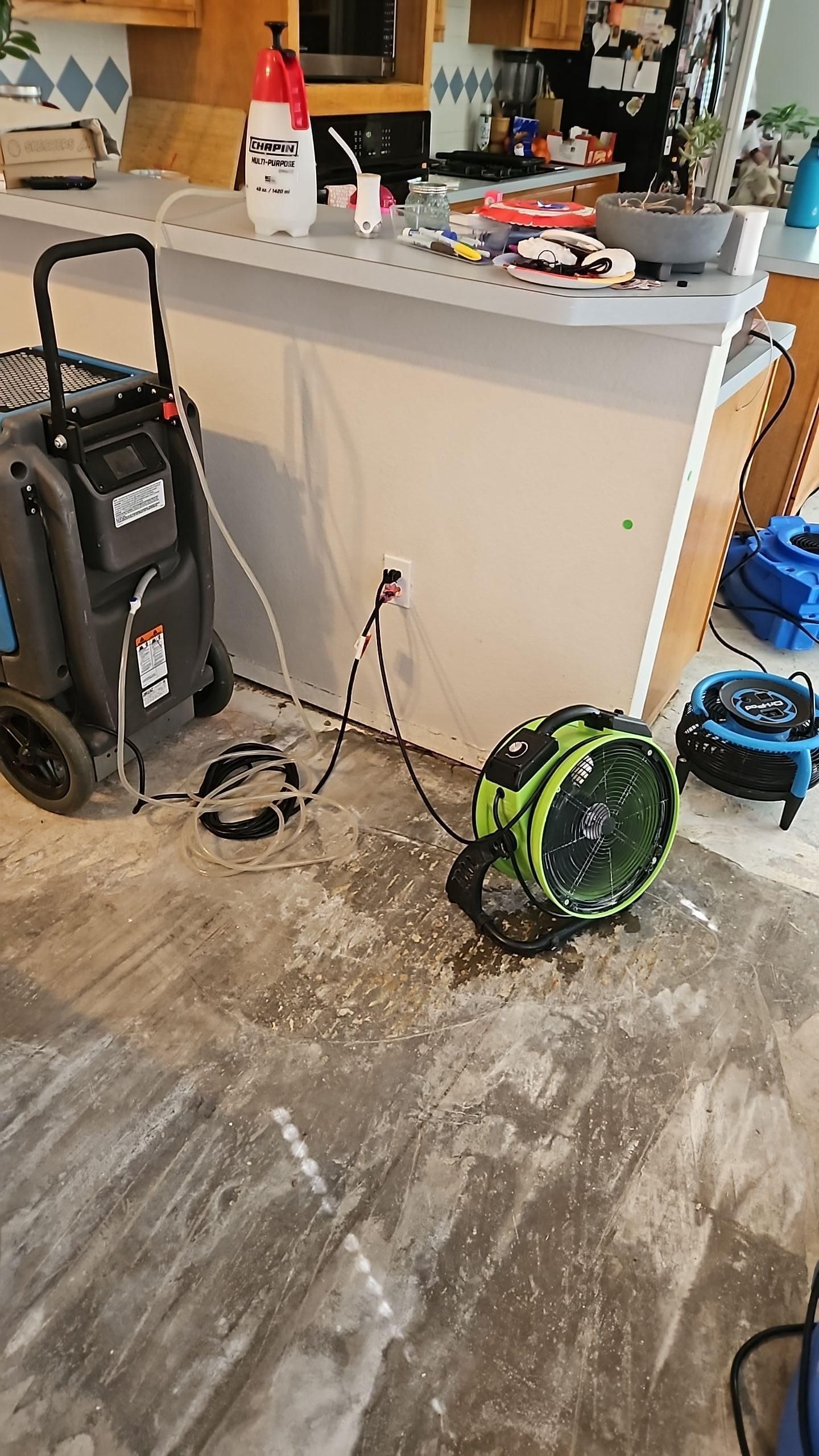
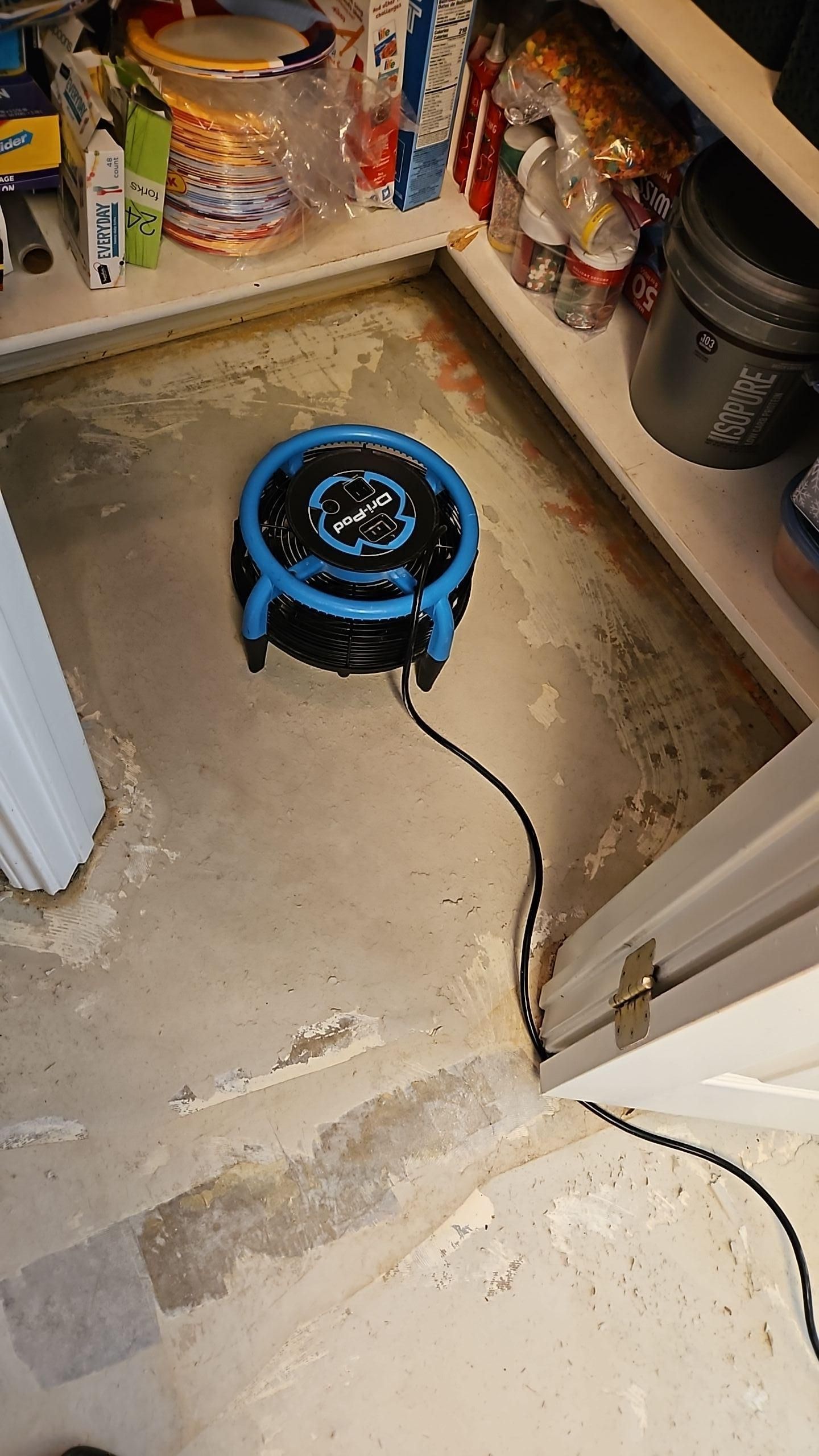
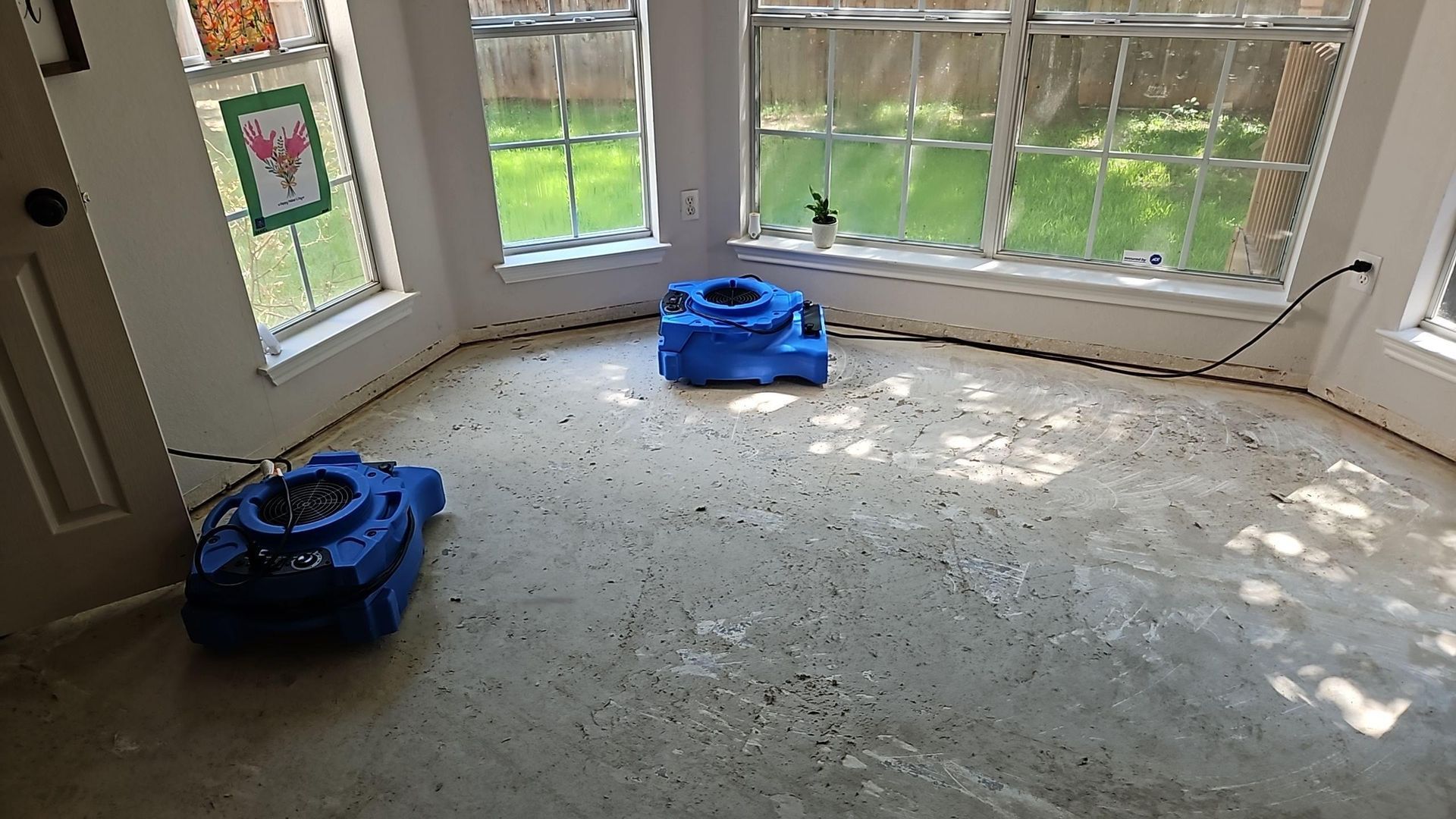
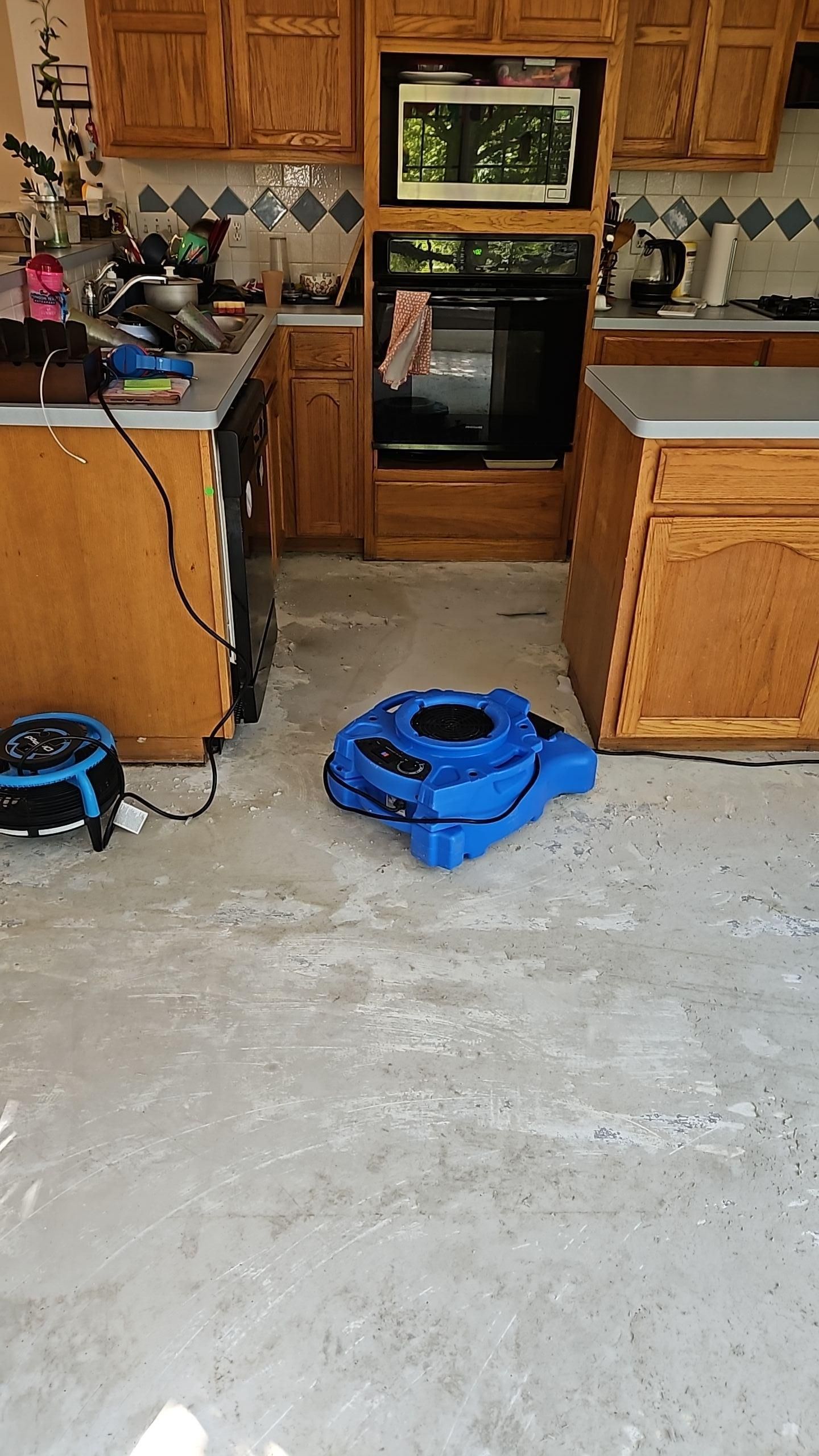
Once demolition wrapped up, we positioned our drying equipment throughout the home. This included:
- 9 air movers strategically placed across all four rooms
- 1 LGR dehumidifier to pull moisture from the air
- 1 air scrubber to filter airborne particles and improve air quality
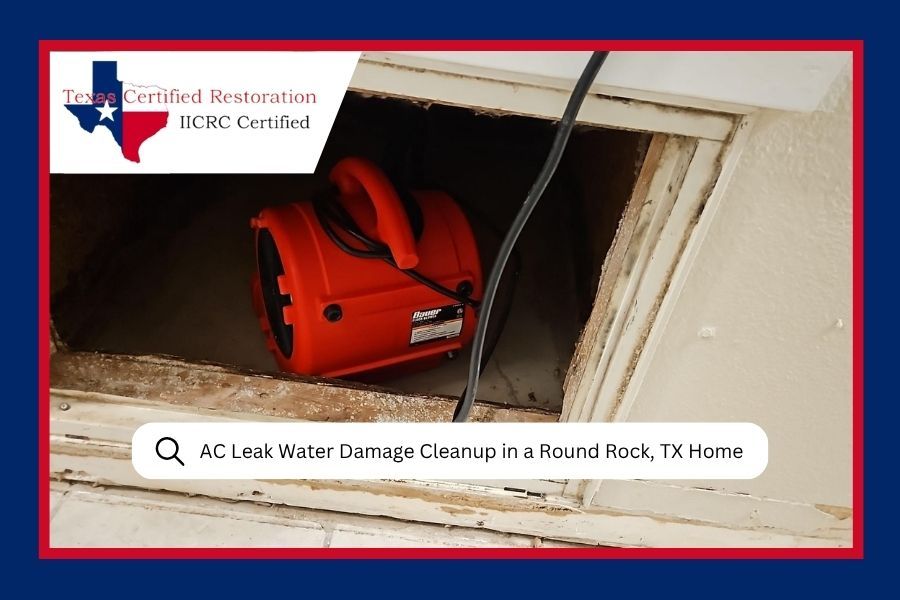
Professional flood damage restoration equipment works differently than what you can rent from a hardware store. Our commercial LGR (Low Grain Refrigerant) dehumidifiers extract significantly more moisture per day, especially in humid Central Texas conditions. The air scrubber filtered the indoor environment while everything dried.
We finished day one around 5 PM. The homeowner could stay in their home while the equipment ran, though the noise takes some getting used to. We always explain what to expect so there are no surprises.
An Unexpected Discovery: The Slab Leak
Two days later, we returned to monitor moisture levels. This is when things got interesting. While checking readings, we discovered the moisture levels were not dropping as expected in certain areas. Further investigation revealed an underlying slab leak, a completely separate issue from the refrigerator line.
Slab leaks are common in Central Texas homes. The soil here expands and contracts with moisture changes, putting stress on pipes running beneath concrete foundations. This homeowner had no idea they had a second problem brewing. If we had not been monitoring carefully, the slab leak could have continued undetected for weeks or months.
We coordinated with a plumbing company to address the slab leak while we continued drying the affected areas. This is exactly why regular monitoring matters during restoration work. Simply setting up equipment and walking away is not enough.
Reaching Dry Standard
After the plumbing repair, we continued monitoring and adjusting equipment placement as needed. On our final visit, moisture readings across all affected areas showed the home had reached dry standard. The subfloor, remaining drywall, and structural components were all within acceptable moisture ranges.
The homeowner was relieved. What started as a stressful emergency had turned into a thorough restoration, plus they caught a hidden slab leak before it caused even more damage. Sometimes these situations have silver linings.
Preventing Refrigerator Water Line Leaks
If your refrigerator has an ice maker or water dispenser, you have a water supply line running to it. These lines deserve attention. Here are some tips from our team:
- Inspect the line annually for cracks, bulges, or corrosion
- Replace plastic supply lines with braided stainless steel for better durability
- Check connections at both the wall and the refrigerator for drips
- Leave space behind the fridge so the line does not get kinked when pushing the appliance back
- Know where your main water shutoff is so you can stop flow quickly in an emergency
For more guidance on protecting your home, check out our post on common causes of water damage and how to prevent them.
Dealing With Water Damage in Austin?
Texas Certified Restoration provides 24/7 emergency water damage restoration throughout the Greater Austin area. Our IICRC certified technicians respond quickly to minimize damage and get your home back to normal. Whether it is a burst pipe, appliance leak, or storm damage, we are here to help.
Contact our team or call (512) 883-6760 for immediate assistance.
Get Emergency Help NowRelated Water Damage Resources
Want to learn more about water damage restoration? Check out these helpful resources from our blog:

Tracy King
About The Author:
Tracy King, of Texas Certified Restoration, brings over 10 years of combined industry experience to the disaster restoration field. Since the founding of the company, Tracy has been committed to providing professional and dependable restoration services to homeowners and businesses throughout the Greater Austin area. With a passion for helping clients navigate the challenges of water damage, fire damage, and other disaster-related situations, Tracy leads a certified team dedicated to delivering quality service that helps families and businesses resume normal life after unexpected emergencies.
Read More: